

Lead generation tools are software applications that identify, attract, capture, and qualify B2B prospects along the top-of-funnel journey from unknown visitor to sales-ready lead, spanning five categories (visitor identification, contact databases, email finders, form builders + CRM capture, and sequence engagement) each solving one part of the puzzle. In 2026, the B2B lead generation landscape has fractured into 20+ specialized tools per aggregated SERP benchmarks verified September 2026, with Salesforce’s 2026 State of Sales reporting 9 in 10 sales teams already using AI agents or expecting to within two years, driving a shift toward AI-first prospecting. This article maps the 4 funnel stages, the 20+ leading tools, the AI trend, cost benchmarks, compliance, and 3 FAQ.
For a Head of Sales, RevOps engineer, growth marketer, or founder building a lead generation stack, this article gives the stage-based tool framework and vendor grid.
On the agenda:
- What lead generation tools do (funnel-based framework)
- Stage 1: identify (who’s out there)
- Stage 2: attract (bring them to you)
- Stage 3: capture (turn visitors into leads)
- Stage 4: qualify + engage (route sales-ready leads)
- 20+ leading tools by category
- The 2026 AI-first shift
- Cost benchmarks by stack tier
- Compliance: GDPR, CAN-SPAM, CCPA
- 3 FAQ (stack build order, cost by team size, AI ROI)
Key takeaways:
- Funnel stages: identify → attract → capture → qualify + engage
- 5 tool categories: visitor ID, contact databases, email finders, form + CRM, sequence engagement
- 20+ leading tools: ZoomInfo, Apollo, Cognism, Leadfeeder (Dealfront), Lusha, UpLead, Hunter, HubSpot Marketing Hub, Marketo, Zeliq + more
- 2026 AI shift: 9 in 10 sales teams use AI agents or expect to within 2 years per Salesforce State of Sales
- Cost per stack: $500-$4,000/month for mid-market 5-SDR team depending on tool count
- Consolidation savings: 30-40% at 5+ SDRs vs stitched
- Compliance: FTC CAN-SPAM US, GDPR (CNIL 2025 €486M) EU
1. What lead generation tools do
Lead generation covers the top-of-funnel journey: turning unknown prospects into sales-ready leads. Four stages:
Stage 1, Identify: know who’s visiting your site, matching your ICP, or engaging with your content anonymously.
Stage 2, Attract: bring in-ICP prospects via content, ads, SEO, social, events.
Stage 3, Capture: convert visits or engagement into identified leads (form fills, gated content, chat).
Stage 4, Qualify + engage: score leads, route qualified ones to sales, engage via sequences.
Each stage has distinct tools. The stack is not one tool but a coordinated set solving each stage.
2. Stage 1: identify (who’s out there)
Two identification patterns:
Website visitor identification: reverse IP lookup identifies anonymous companies visiting your site. Tools: Leadfeeder (rebranded to Dealfront in March 2026), Albacross, RB2B. 60-80% of B2B site traffic can be identified at company level (not person level for compliance reasons).
Prospect database search: query B2B contact databases with ICP filters to identify prospects matching your criteria. Tools: ZoomInfo (500M+ contacts per vendor claim), Apollo (275M+), Cognism (EMEA-strong), Lusha (100M+), Zeliq (450M with waterfall built-in).
See B2B contact data for vendor selection at this stage.
3. Stage 2: attract (bring them to you)
Tools that drive top-of-funnel volume:
Content + SEO: HubSpot CMS, WordPress + Yoast, Surfer SEO, Clearscope for content optimization.
Paid ads: LinkedIn Ads, Google Ads, Meta Ads + retargeting tools (RollWorks for ABM ads).
Social outreach: LinkedIn Sales Navigator + LinkedIn organic content amplification.
Email marketing: newsletter tools (Substack, Beehiiv) for building audience before selling.
Events + webinars: Zoom Events, Hopin, Livestorm for hosting virtual events that generate opt-in leads.
Attraction is a discipline distinct from tool selection; tools amplify but don’t replace the content strategy.
4. Stage 3: capture (convert visits into leads)
Tools that turn engagement into identified leads:
Form builders: HubSpot Forms, Typeform, Jotform, Marketo Forms. Native to CMS or standalone.
Live chat and chatbots: Drift, Intercom, Qualified for real-time engagement with in-market visitors.
Content gates: PDF downloads, video walls, calculator tools behind form.
Meeting bookers: Chili Piper, Calendly for reducing friction from form fill to booked meeting.
CRM capture: HubSpot CRM, Salesforce Sales Cloud, Pipedrive as system of record for captured leads.
Capture is where lead quality is either preserved or destroyed. Forms with 15 fields lose 60% of prospects vs 3-field forms.
5. Stage 4: qualify + engage (route sales-ready leads)
Tools that score, route, and start outreach:
Lead scoring: HubSpot Marketing Hub, Marketing Cloud Account Engagement (Pardot), Marketo, ZoomInfo Copilot. Rules-based + predictive ML.
Enrichment: Apollo, Cognism, Clearbit-in-HubSpot (Breeze Intelligence), Zeliq waterfall for filling missing fields.
Verification: NeverBounce, MillionVerifier, ZeroBounce for SMTP verification before send.
Multichannel sequencing: Outreach, Salesloft, Apollo, Reply, Zeliq for the outbound execution layer.
See multichannel prospecting guide for the sequence design.
6. 20+ leading tools by category
Positioning verified September 2026 via aggregated SERP.
Website visitor ID: Leadfeeder / Dealfront, Albacross, RB2B, Warmly
Contact databases: ZoomInfo, Apollo, Cognism, Lusha, UpLead, SalesIntel, Kaspr, Zeliq
Email finders: Hunter, Snov.io, Skrapp, FindyEmail, RocketReach
Form + CRM capture: HubSpot CRM, Salesforce Sales Cloud, Pipedrive, Typeform, Chili Piper
Marketing automation + scoring: HubSpot Marketing Hub, Marketing Cloud Account Engagement, Marketo Engage, ActiveCampaign
Sequencing + engagement: Outreach, Salesloft, Apollo (bundled), Zeliq (bundled), Reply, Klenty, Instantly, Lemlist
Intent + ABM: Bombora, 6sense, Demandbase
AI-first prospecting: Amplemarket, Artisan, Reply AI
Most mature teams pick 3-5 tools across these categories. Beyond 7 tools, integration debt exceeds tool value.
7. The 2026 AI-first shift
Aggregated SERP commentary in 2026 (grounded in Salesforce’s 2026 State of Sales report cited across the top 10) shows 9 in 10 sales teams already use AI agents or expect to within two years, with 94% of sales leaders saying agents are essential to growth.
Practical implications for lead generation: - AI-driven ICP research at scale (identify accounts + decision-makers automatically) - AI-generated personalized outreach at scale - Autonomous sequence execution (AI-first platforms Artisan, Amplemarket) - AI-assisted lead scoring with less manual rule tuning
The shift favors platforms that unify identification + attraction + capture + engagement into single interfaces with AI orchestration, over stitched stacks with point tools.
8. Cost benchmarks by stack tier
Concrete math at typical mid-market pricing verified September 2026 for a 5-SDR team:
Entry stack (basic funnel): - HubSpot CRM Free + HubSpot Forms Free: $0 - Apollo Starter or Lusha Free tier: $0-49/user - Manual lead scoring + sequencer email tool: $50-100/user - Total for 5 SDRs: $250-750/month
Mid-market stack (professional funnel): - HubSpot Marketing Hub Professional: $800/month + Sales Hub Professional $100/seat - Apollo Professional or Zeliq mid-market: $150-400/user/month - Website visitor ID (Leadfeeder / Dealfront): $200-500/month - Verification tool: $0-50/user (often bundled) - Total for 5 SDRs: $2,000-4,000/month
Enterprise stack (full funnel + ABM): - Marketo Engage or Marketing Cloud Account Engagement: custom quote ~$1,500-5,000/month - ZoomInfo or 6sense enterprise: $30k-100k+/year allocated - Outreach or Salesloft enterprise: $150-300/user/month - Bombora or 6sense intent data: $50-150/user/month allocated - Total for 5 SDRs: $5,000-15,000/month
Consolidation savings: all-in-one platforms (Apollo, Zeliq for sourcing + engagement) save 30-40% vs stitched at mid-market scale.
9. Compliance: GDPR, CAN-SPAM, CCPA
EU GDPR: legitimate interest per ICP + opt-out on every touch + suppression + 3-year retention. CNIL 2025 sanctions hit €486M total, including SOLOCAL Marketing Services at €900k for prospecting without sufficient legal basis. Choose GDPR-native vendors for EMEA ICPs.
US CAN-SPAM: FTC compliance guide requires accurate subject line + valid physical address + functional opt-out + honor opt-out within 10 business days.
California CCPA/CPRA: right to know, delete, opt-out for California residents. B2B partial exemption but disclosures still expected.
Cookie compliance: website visitor identification tools that use cookies require cookie banner consent per GDPR and CCPA.
10. Common mistakes
Mistake 1: Buying too many tools. Above 7 tools in the stack, integration debt exceeds tool value.
Mistake 2: Skipping stage 1 (identify). Attraction without knowing who’s coming = wasted content.
Mistake 3: Long capture forms. 15-field forms lose 60% of prospects vs 3-field forms.
Mistake 4: No lead scoring. SDRs waste time on low-fit leads.
Mistake 5: Ignoring compliance on visitor ID. Cookie tracking without consent = regulatory exposure.
Zeliq and lead generation stack consolidation
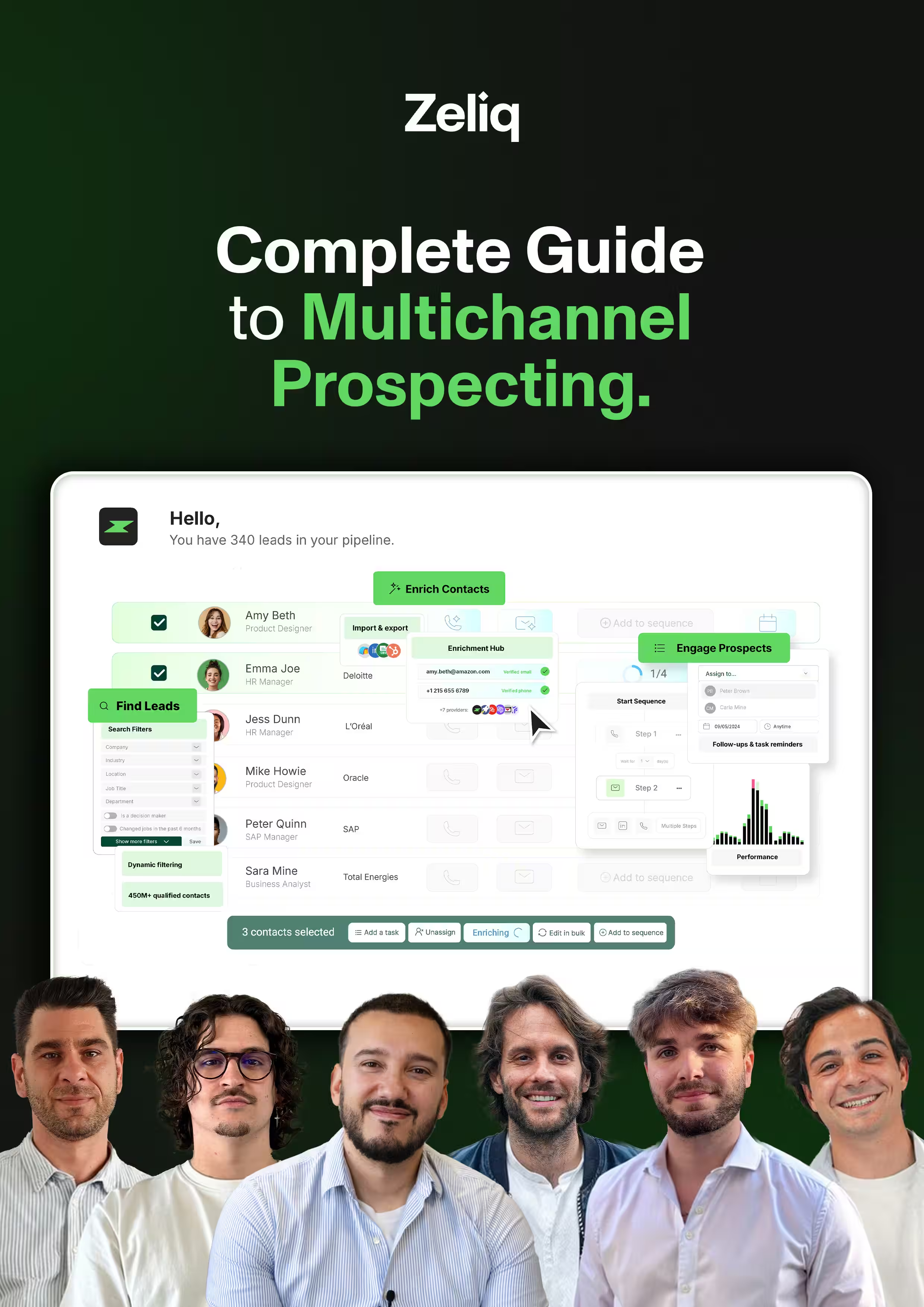
Zeliq combines a 450 million B2B contact database, waterfall enrichment across multiple sources with integrated email verification, and multichannel sequences (email + LinkedIn + phone) in one interface. Consolidates stages 1 (identify prospects) + 4 (qualify + engage) in a single platform. GDPR-native suppression, European positioning.
11. Frequently asked questions
In what order should I build a lead generation stack?
Start with CRM as system of record (stage 3-4 foundation), then attraction (SEO + content), then capture forms + chat, then identification tools, then scoring + engagement, because each layer depends on the previous being in place, and skipping backward is the most common failure pattern. Correct build order: (1) CRM first (HubSpot Free, Salesforce Essentials, Pipedrive Starter): unblocks every downstream layer by providing a system of record for captured leads. Without CRM, every other tool generates data with no home. Cost $0-150/seat/month. (2) Attraction second (SEO, content, ads): fills the top of funnel with volume. Cost varies; content is time not money. (3) Capture third (forms, chat, meeting bookers): converts attracted traffic into identified leads. HubSpot Forms + Calendly or Chili Piper covers 80% of cases. Cost $0-$200/seat/month. (4) Identification fourth (website visitor ID, contact database): identify anonymous visitors AND source new prospects to enter the funnel from outbound. Leadfeeder + Apollo/Cognism/Zeliq stack. Cost $250-800/seat/month combined. (5) Scoring + engagement fifth (marketing automation + sequencer): route qualified leads to sales, run sequences. HubSpot Marketing Hub + Sales Hub, or Marketo, or Outreach + Salesloft. Cost $150-400/seat/month depending on tier. Common failure: buying a sequencer first (“we need more meetings!”) without CRM or capture in place, then running sequences on garbage data. Correct sequence: unblock foundation first, then layer specialized tools.
What is the total cost of a lead generation stack for a mid-market team?
$500-$4,000 per month for a 5-SDR mid-market team depending on stack completeness, dropping to $1,000-$2,500 with consolidated all-in-one platforms that bundle stages 1 + 4. Concrete tiers verified September 2026: (1) Entry stack ($250-750/month for 5 SDRs): HubSpot CRM Free + free tiers of Apollo/Lusha + basic email sequencer. Missing website visitor ID + scoring + advanced enrichment. Sufficient for early-stage teams < 200 leads/month. (2) Mid-market stack ($2,000-4,000/month for 5 SDRs): HubSpot Marketing Hub Professional $800 + Apollo Professional or Zeliq $150-400/user + Leadfeeder $200-500 + verification bundled. Full funnel with waterfall enrichment. Sufficient for 5,000-10,000 leads/month. (3) Enterprise stack ($5,000-15,000/month for 5 SDRs): Marketo or Marketing Cloud Account Engagement + ZoomInfo enterprise + Outreach/Salesloft + Bombora/6sense. Complete stack with ABM + intent + conversation intelligence. Best above 20,000 leads/month or above 10-20 SDRs. Consolidation savings: platforms bundling stages 1 (identify) + 4 (engage), like Apollo or Zeliq, save 30-40% vs stitched stack combining separate database + enrichment + sequencer + CRM add-on. At 5 SDRs, consolidation saves ~$500-1,500/month. Above 10 SDRs, savings compound to $2,000-5,000/month. Beyond direct tool cost, factor CRM base cost (varies wildly), content and paid ad spend (highly variable), and integration debug (5-15 hours/month for stitched stacks, near zero for all-in-one).
Do AI-first lead generation tools deliver on their promise?
Emerging evidence in 2026 shows AI-first tools deliver 2-3× the volume of human-only teams at similar reply rates on stable-ICP campaigns per aggregated SERP benchmarks and Salesforce 2026 State of Sales, but ROI depends heavily on ICP maturity, deliverability guardrails, and human escalation on qualification stages. Category shift: Salesforce 2026 State of Sales reports 9 in 10 sales teams use AI agents or expect to within 2 years, with 94% of sales leaders saying agents essential to growth. Practical AI applications by stage: (1) Identify: AI-driven ICP research identifying accounts + decision-makers automatically (Amplemarket, ZoomInfo Copilot). (2) Attract: AI-generated content at scale for SEO + ads (varies widely by tool). (3) Capture: AI chatbots (Drift AI, Intercom AI) handle inbound qualification conversations. (4) Qualify + engage: AI-first sequencers (Artisan, Amplemarket) generate personalized openers + sequence + respond + book meetings autonomously. Where AI-first shines: stable ICP with templatable patterns (SaaS mid-market, e-commerce, specific verticals), high-volume outbound where SDR seat cost dwarfs tool cost, teams with mature deliverability operations. Where it falls short: niche ICP with < 5,000 addressable accounts, enterprise deals with multi-stakeholder committees, teams without deliverability guardrails. ROI math: AI-first at $200-500/user/month replaces roughly 1 SDR seat at $60,000/year fully-loaded, break-even if AI generates > 40% of meetings a human SDR would. Currently best-in-class AI-first generates 60-80% of human SDR volume on stable ICPs. Pilot approach: run AI-first on 20-30% of top-of-funnel for 3 months, measure meetings vs human baseline, expand or contract.
12. Conclusion: 3 actions to run
Audit current stack against 4 stages within 7 days. Which stage is missing? Missing identification is the most common gap.
Consolidate above 3 SDRs within 15 days. All-in-one platforms save 30-40% vs stitched at mid-market scale.
Pilot AI-first prospecting within 30 days if ICP is stable. 20-30% of top-of-funnel volume through AI-first tool for 3 months, measure vs human SDR baseline.
Consolidate identify + qualify + engage into a single lead generation stack
Zeliq combines 450 million B2B contacts, waterfall enrichment with integrated verification, and multichannel sequences in one interface. Stages 1 + 4 bundled without stitching four vendors. GDPR-native suppression, European positioning.
Try for freeAnd if you want to consolidate stages 1 (identify) + 4 (engage) of your lead generation stack into a single interface, try Zeliq for free: sourcing, waterfall enrichment, verification, and multichannel sequences in one platform, no credit card required.