

B2B Contact Data: How to Find, Verify, and Use It at Scale
B2B contact data covers the core fields you need to reach a prospect or partner: phone number, work email, postal address, social profiles, and website. Done right, this data is the foundation of every outbound motion. Done badly, it tanks your reply rates, your sender reputation, and your CRM hygiene.
Whether you are prospecting new accounts, retaining existing customers, or running a B2B partnership program, clean and current contact data is non-negotiable. In a world where data quality outweighs data quantity, the playbook is simple: find the right contacts, verify them, structure them in your CRM, and activate them at scale without losing the human read.
B2B contact data: what we actually mean
Company contact info vs personal contact info. Start by separating company-level contact info (a generic phone, a shared inbox like contact@company.com) from person-level contact info (a named work email like firstname.lastname@company.com or a direct line). Company-level data is fine for an institutional first touch. Person-level data is what gets you past the gatekeeper and into a real B2B exchange. The shorter your route to the decision-maker, the faster the deal moves.
The fields that actually matter. For a working prospect record, focus on the minimum viable data set: verified work email, direct phone number, LinkedIn profile, postal address of HQ, exact role or title, company name, website, and geographic location. These are the fields that make a record actionable. With them, you can personalize your pitch, route the lead correctly, and run multichannel outreach.
Where to find a company’s contact info (public sources)
Official site: Contact page, footer, legal notices. Start with the official website. Open the “Contact” or “Get in Touch” page, scroll to the footer on every page, and check the legal notices. These sections almost always include an address, a phone number, or a generic email. For B2B, target the right team: a commercial@ or partnerships@ alias is a better entry point than the catch-all contact@.
Google and Google Maps: the business listing. Search the company name or address on Google or Google Maps to surface the business listing. Listings typically show the phone number, hours, and a direct link to the official site. Always cross-reference what you find on the listing against the official site, as listings can carry stale numbers.
Business registries and public databases. Registries like Infogreffe or Sirene.fr are useful for SMB lookups and local searches. With a SIREN or SIRET number, you can pull the postal address, the registered directors, and public filings. These sources have limits though: irregular updates, no named work emails, and generic data only. Use them as a sanity check, not a primary outreach source.
Social platforms (company pages). Company pages on LinkedIn, Facebook, or X sometimes publish contact details in the “About” section. If nothing is visible, a polite direct message to the company page asking for the right contact often works. Stay professional, stay short, and respect each platform’s rules.
Finding a B2B decision-maker’s contact data
LinkedIn: identify the right person. On LinkedIn, work backward from the buying decision. Ask: who decides the purchase in this department, who influences the strategic call, who signs off on the budget. Filter by role (Sales Director, IT Director), seniority (C-level, manager), and scope (company size, region). That filtering surfaces the right profile fast.
Find the work email: reliable approaches vs guesses. To get a work email reliably, start by identifying the company’s email pattern (firstname.lastname@domain.com is the most common). Use a tool like Hunter.io, Dropcontact, or Apollo, or run a focused Google search. Avoid blind guessing across multiple variants: that produces hard bounces, which hit your sender reputation. Verify every address before sending.
Get a phone number: switchboard vs direct line. To reach a decision-maker by phone, call the main switchboard and politely ask to be transferred. Where possible, use a direct line found via an enrichment tool or confirmed in a LinkedIn exchange. Direct numbers boost your contact rate by skipping the gatekeeper.
When to switch to an enrichment tool. Once you handle more than 50 contacts a week, manual lookups stop scaling. Enrichment tools like Zeliq, Dropcontact, RocketReach, or ContactOut automate email, phone, and LinkedIn collection by cross-referencing opt-in databases. That is the threshold where a tool earns its place.
Verify and clean your contact data
Email verification: deliverability and bounce risk. A valid email passes a sequence of checks: syntax, MX records on the domain, mailbox existence. Send to risky addresses and your bounce rate climbs. Once your bounce rate crosses 2 to 5%, mailbox providers like Gmail and Outlook start treating you as low trust. The fix is upstream: clean your list before you send.
Phone validation: stale numbers, reassignment, switchboards. Validate a phone by making a short test call to confirm it rings. Cross-reference with directories, LinkedIn, or an enrichment tool. This catches reassigned numbers and dead lines, so you stop wasting time on numbers that go nowhere.
Cleaning: deduplication, normalization, inconsistent fields. Before you enrich, clean. Drop duplicates, normalize formats, and fix inconsistent fields. Clean import means a clean CRM afterward, which means your team actually uses it.
Structure contacts in your CRM
The fields every contact record needs. Each contact record should carry: email, phone, postal address, exact title, acquisition source, date of last update, and a status field (to contact, contacted, qualified, dormant). That set turns a record into something actionable instead of a static row your team scrolls past.
History and “next action”. Log every interaction (date, type: call, email, meeting). Add a “next action” field that names the next step (follow up in 7 days, send proposal, schedule demo). That structure keeps commercial momentum and prevents the “who was on this account?” lapse when a deal sits between two reps.
Data governance. Set clear rules. Reps own status changes; admins own contact info edits. Turn on audit logs to track who changed what and prevent accidental overwrites. Schedule periodic refreshes so the data does not rot.
Collect contact data via forms
Forms: ask for the minimum. To lift conversion and cut form abandonment, ask only for the essentials: name, company, email, phone. Once you have those, enrich progressively with additional data. A short form clears every objection.
Transparency and opt-out. Show your privacy policy clearly on the form page. State the purpose (B2B prospecting), the retention period, and the user’s rights. Offer a working unsubscribe and an opt-out box that is never pre-checked. Respect every opt-out by storing the contact in a “do not contact” suppression list.
Retention and updates. Set a clear retention rule: keep contacts for a maximum of three years from their last interaction. After that, archive or delete. Track the last update date on every record so you can run periodic purges and stay GDPR-compliant.
Scale with Zeliq: find, enrich, and activate B2B contact data
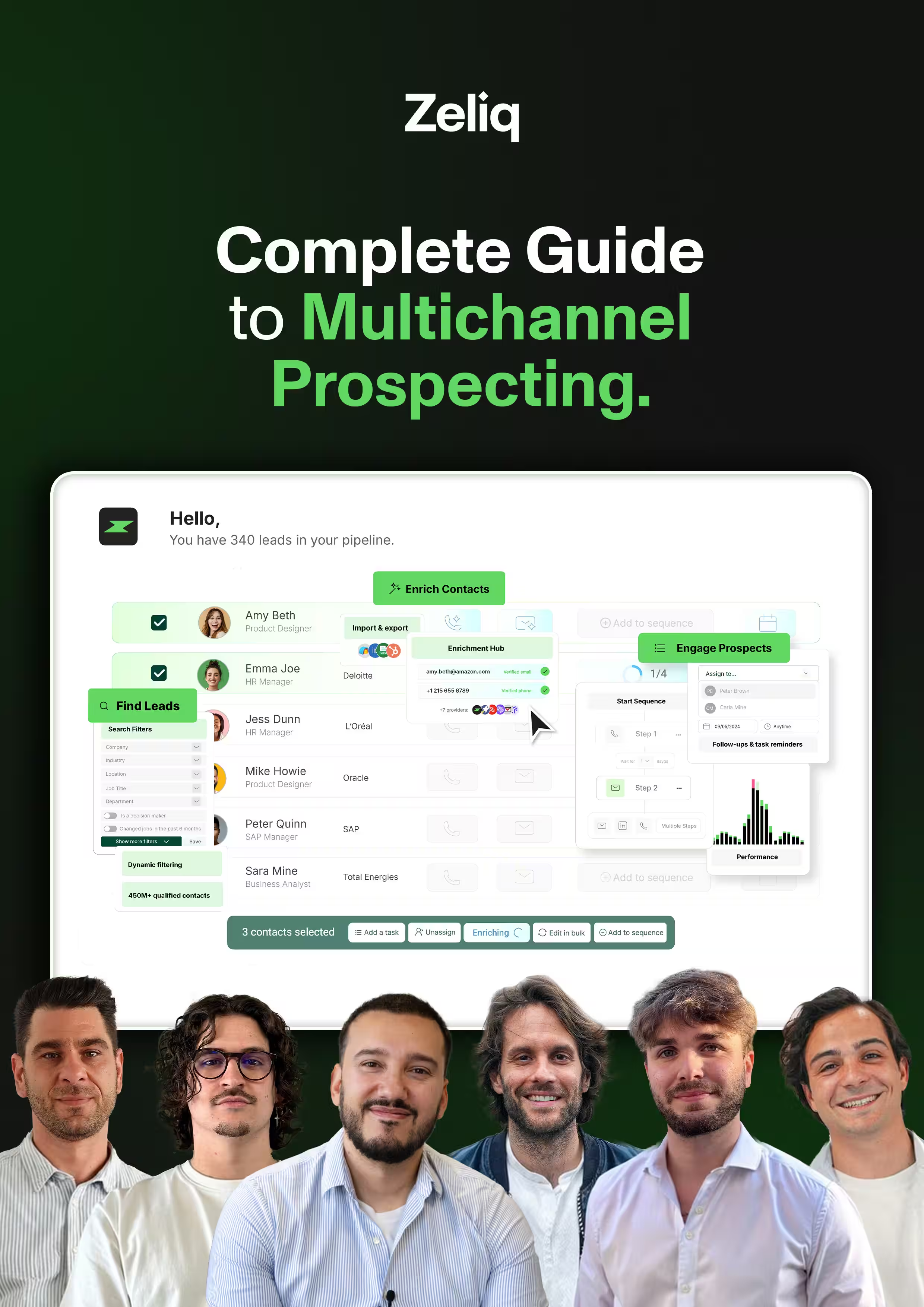
Targeting: build clean lists from your ICP. Stop wasting outbound on the wrong accounts. Segment your lists by ICP: industry, company size, geography, decision-making roles, and behavioral signals. Zeliq’s database of 450M+ verified B2B contacts lets you filter on each of these dimensions and build lists that actually convert.
Enrichment: complete emails and phones to go multichannel. Zeliq’s waterfall enrichment cross-references 40+ providers in real time. The result: about 80% match on emails and 60% on direct phones. Each contact is verified, so you start your campaign without the bounce risk that wrecks deliverability.
Chrome extension: save time directly from LinkedIn. Zeliq’s Chrome extension plugs into LinkedIn so you can enrich and export prospects in a single click. Find a decision-maker, add them to Zeliq, and pull their work email and direct phone without leaving the tab.
Multichannel sequences and engagement-based prioritization. Build multichannel sequences that combine emails, LinkedIn touches, and call tasks, with timing controls between steps. The platform reads engagement signals (opens, clicks, callbacks) and helps you double down on the warmest prospects.
Integrations (CRM, telephony, messaging). Zeliq syncs natively with HubSpot, plugs into Aircall and Ringover for one-click calling, and exposes an API for custom workflows. That removes the manual export-import cycle and keeps your contact data flowing in real time.
Common mistakes to avoid
Settling for generic emails (contact@). Generic addresses like contact@ or info@ rarely reach decision-makers. They get filtered, redirected to support queues, or ignored. Target role-specific aliases instead, or better, find the named work email of the actual person.
Buying lists without traceability or refresh. A bought list with no provenance is a guarantee of stale data (bounce rates of 20 to 30% are common) and GDPR exposure. Use sources with a freshness rate above 95% and monthly refreshes.
Enriching without cleaning or rules. Enriching a dirty database produces mass duplicates, mismatched records, and a CRM no one trusts. Always run deduplication, normalize formats, and set governance rules before you enrich.
Spray-and-pray prospecting and generic copy. Outreach without an ICP and without segmentation drops to reply rates below 1%. Segment by industry, company size, and pain. Tailor your copy to each segment. Pair it with clean contact data to get qualified replies, not silence.
Ready to build a clean, verified B2B contact database? See how Zeliq helps you target, enrich, and activate at scale.
Book a demo