
A sales cadence is the timing pattern and channel mix of a structured outbound sequence, calibrated to deal size and buying cycle so that touchpoint frequency, spacing, and channel selection produce reply rates without triggering fatigue. In 2026, aggregated SERP benchmarks (verified September 2026) show the optimal cadence structure varies materially by deal size: 6-8 touchpoints over 2-3 weeks for low-ACV deals, 8-12 over 4-6 weeks for mid-market, and 12-18 over 6-12 weeks for enterprise, with a channel mix around 50-60% email + 20-30% LinkedIn + 20-30% phone. On average it takes 4.81 touches to get a response from a B2B prospect regardless of temperature, and the final break-up email is often the highest-converting single touch in the entire cadence. This article maps deal-size cadence structures, channel mix ratios, timing science, tools, compliance, and 3 FAQ.
For an SDR, RevOps engineer, growth manager, or founder designing a sales cadence for a specific buying motion, this article gives the deal-size framework and the channel mix ratios.
On the agenda:
- What a sales cadence is (timing + channel mix vs raw sequence)
- Low-ACV cadence: 6-8 touches over 2-3 weeks
- Mid-market cadence: 8-12 touches over 4-6 weeks
- Enterprise cadence: 12-18 touches over 6-12 weeks
- The channel mix (50-60% email + 20-30% LinkedIn + 20-30% phone)
- The 4.81 average touch benchmark
- Why the break-up email converts
- Timing science: best days and times
- Tools and platforms
- Compliance: GDPR, CAN-SPAM, TCPA
- 3 FAQ (cadence by deal size, break-up email, timing)
Key takeaways:
- Cadence by deal size: low-ACV 6-8 touches / 2-3 weeks; mid-market 8-12 / 4-6 weeks; enterprise 12-18 / 6-12 weeks
- Average touches to response: 4.81 per aggregated SERP benchmark (regardless of lead temperature)
- Channel mix: 50-60% email + 20-30% LinkedIn + 20-30% phone
- Diminishing returns: after touch 12 for mid-market, extend only for enterprise
- Break-up email: often the single highest-converting touch
- Timing sweet spot: mid-market cadence runs 17-21 days
- Enterprise variance: multi-stakeholder coordination extends 6-12 weeks
- Compliance: FTC CAN-SPAM US, GDPR (CNIL 2025 €486M) EU
1. What a sales cadence is
A sales cadence and a sales sequence are related but distinct. The sequence is the list of touchpoints; the cadence is the timing pattern and channel mix that governs how those touchpoints are executed.
Three parameters define a cadence:
Touchpoint count: total number of outreach actions in the cadence (typically 6-18 depending on deal size).
Duration: total elapsed time from first touch to break-up (typically 2-12 weeks).
Channel mix: percentage split across email, LinkedIn, phone, and emerging channels (SMS, WhatsApp, iMessage, AI voice).
The right cadence matches the buying cycle. Low-ACV deals with fast decisions get short, high-intensity cadences; enterprise deals with committee buying get long, patient cadences.
2. Low-ACV cadence: 6-8 touches over 2-3 weeks
For small-ticket deals (under $10k annual contract value), buyers decide quickly and lose patience with long sequences.
Structure: - Total touches: 6-8 - Duration: 2-3 weeks (10-15 business days) - Channel mix: 60% email + 20% LinkedIn + 20% phone - Break-up email: mandatory day 15-18
Example day-by-day: | Day | Channel | Touch | |-|-|-| | Day 0 | LinkedIn | Connect + brief note | | Day 2 | Email | Opener | | Day 5 | Phone | Cold call + voicemail | | Day 8 | Email | Value-add resource | | Day 12 | Phone | Second call | | Day 15 | Email | Direct meeting ask | | Day 18 | Email | Break-up |
Total: 7 touches over 18 days. Best for SMB SaaS, freelancers, small services.
3. Mid-market cadence: 8-12 touches over 4-6 weeks
For mid-market deals ($10k-$100k ACV), the standard sweet spot per aggregated SERP benchmarks.
Structure: - Total touches: 8-12 - Duration: 17-21 business days (the widely-cited sweet spot) - Channel mix: 50-60% email + 20-30% LinkedIn + 20-30% phone - Break-up email: mandatory day 20-25
Example structure (10 touches over 21 days): - 4 emails (opener + value-add + case + break-up) - 3 LinkedIn touches (connect + message + comment/engage) - 3 phone touches (cold call + second attempt + voicemail follow-up)
For deeper multichannel design, see multichannel prospecting guide.
4. Enterprise cadence: 12-18 touches over 6-12 weeks
For enterprise deals ($100k+ ACV), longer patience windows match the committee buying cycle.
Structure: - Total touches: 12-18 - Duration: 6-12 weeks - Channel mix: 40-50% email + 25-30% LinkedIn + 20-25% phone + 5-10% other (video, physical mailer, event-triggered) - Multi-stakeholder coordination: touch 3-5 decision-makers in parallel with orchestrated messaging - Signal-triggered re-entries: pause on prospect engagement (opened but no reply); restart on fresh signal (funding, hire)
Enterprise cadences require CRM sync and orchestration tooling. Manual tracking breaks above ~10 touches per prospect. Category leaders: Outreach, Salesloft, Apollo enterprise.
5. The channel mix: 50-60% email + 20-30% LinkedIn + 20-30% phone
Aggregated SERP benchmarks in 2026 converge on a channel split heavily anchored on email:
- Email: 50-60% of touches. Highest scale, easiest to personalize with signal-led openers, best for value-add and case studies.
- LinkedIn: 20-30% of touches. Context anchor before or between email touches. Connect requests + messages + engagement (likes, comments on prospect posts).
- Phone: 20-30% of touches. Highest signal, lowest scale. Best positioned after email exposure so prospect has context.
- Other channels (SMS, WhatsApp, iMessage, AI voice): 0-10% of touches. Emerging category; use only when prospect industry/geography norms support the channel.
Coordination principle: email opens → phone call within 24-48h; LinkedIn engagement → email within 48h; phone voicemail → email confirmation within same day.
6. The 4.81 average touch benchmark
Aggregated SERP research in 2026 indicates that on average it takes 4.81 touches to get a response from a B2B prospect, regardless of lead temperature.
Practical implications: - Shortening cadence below 5 touches sacrifices most of the potential replies - Extending above 12 touches for mid-market hits diminishing returns per aggregated SERP - Break-up email at touch 8-12 captures replies that were “considering but not urgent”
The 4.81 average is a mean; the distribution has a long tail. About 20% of replies come after touch 5-8; a further 15-20% come from the break-up email itself. Never end a cadence before the break-up.
7. Why the break-up email converts
The final break-up email is often the highest-converting single touch in the entire cadence. Mechanism:
- Removes pressure (prospect thinks “this is my last chance”)
- Signals scarcity (rep is moving on)
- Triggers fence-sitters who liked the pitch but hadn’t prioritized responding
- Often the shortest, cleanest message in the cadence
Typical break-up template patterns: - “Moving on / assume not a fit” - “Should I close the loop?” - “One-line update on what changed” - “Direct meeting ask + politeness”
Break-up emails routinely generate 10-15% of total cadence replies per aggregated SERP commentary, sometimes more than any single earlier email.
8. Timing science: best days and times
Aggregated SERP benchmarks on send timing (verified September 2026, US business hours):
- Best days for email: Tuesday, Wednesday, Thursday
- Worst days: Monday morning (inbox flood), Friday afternoon (weekend mindset)
- Best times: 8-11am local prospect time (start of day) or 1-4pm (afternoon focus)
- LinkedIn: similar Tuesday-Thursday preference; message engagement highest 9am-2pm
- Phone: 10-11am and 3-5pm connect rates highest (avoid 11am-2pm meeting slots)
Regional variance: EMEA sends align to 9am-noon local; APAC often morning-only due to time-zone constraints.
Sequence spacing rule of thumb: 2-3 business days between touches on the same channel; 24-48 hours between touches on different channels (email → phone same-week).
9. Tools and platforms
Categories that run cadences at scale:
- All-in-one: Apollo, Zeliq, Reply combine sourcing + engagement + cadence
- Dedicated sequencers: Outreach, Salesloft category leaders for enterprise
- Email-first: Instantly, Lemlist, Smartlead focus on email deliverability
- LinkedIn automation: Waalaxy, Expandi within LinkedIn ToS limits
- CRM-embedded: HubSpot Sales Hub, Salesforce Engage
See cold email best practices for the email layer deliverability guardrails.
10. Compliance: GDPR, CAN-SPAM, TCPA
US CAN-SPAM: FTC compliance guide requires accurate subject line + valid physical address + functional opt-out + honor opt-out within 10 business days on every email touch.
EU GDPR: legitimate interest per ICP + opt-out on every touch + suppression + 3-year retention. CNIL 2025 sanctions hit €486M total, including SOLOCAL Marketing Services at €900k for prospecting without sufficient legal basis.
US TCPA: cold calling restrictions. Abandoned-call rate < 3% on parallel dialers.
LinkedIn ToS: ~100 connection requests per week per account. Automation risks account restrictions.
SMS / WhatsApp opt-in: varies by state and country. Verify per-jurisdiction before enabling.
Zeliq and multichannel sales cadences
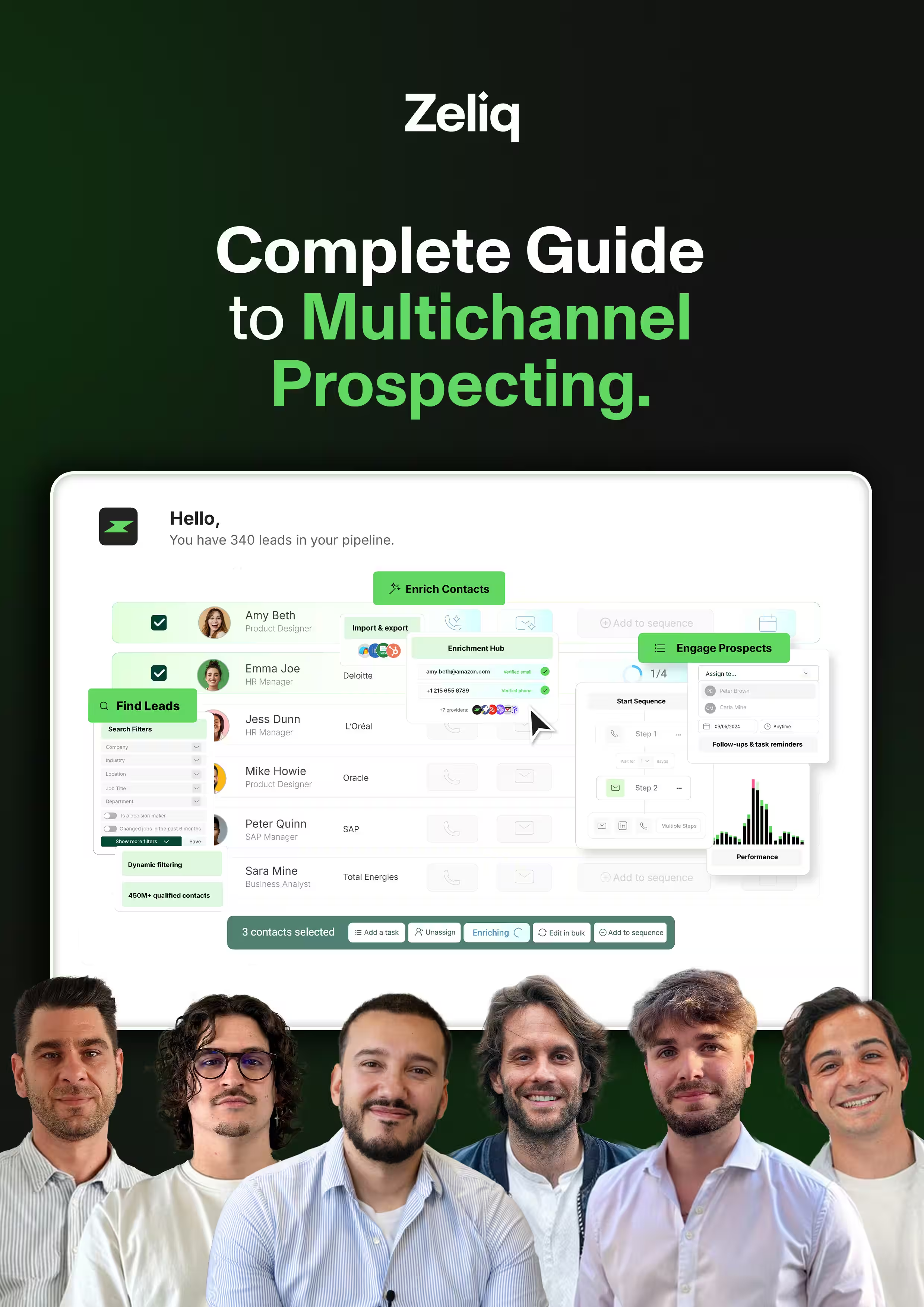
Zeliq combines a 450 million B2B contact database, waterfall enrichment across multiple sources with integrated email verification, and multichannel cadences (email + LinkedIn + phone) in one interface. Cadence templates for low-ACV, mid-market, and enterprise deal sizes. GDPR-native suppression, European positioning.
11. Common mistakes
Mistake 1: One cadence for all deal sizes. Enterprise cadence on SMB deals wastes SDR time; SMB cadence on enterprise misses the buying cycle.
Mistake 2: No break-up email. Loses 10-15% of potential replies.
Mistake 3: Wrong channel mix. Email-only caps reply rate 3%. LinkedIn or phone alone cap similarly.
Mistake 4: Ignoring timing. Monday morning emails lost in inbox flood.
Mistake 5: No signal-triggered re-entry. Cadence ends → prospect triggers a fresh signal (funding, hire) → sequence doesn’t restart → missed timing.
12. Frequently asked questions
What is the optimal sales cadence length by deal size?
Low-ACV (< $10k): 6-8 touches over 2-3 weeks; mid-market ($10k-$100k): 8-12 touches over 4-6 weeks (17-21 business day sweet spot); enterprise ($100k+): 12-18 touches over 6-12 weeks, per aggregated SERP benchmarks verified September 2026. Cadence length matches buying cycle. Rationale: (1) Low-ACV: buyers decide fast, lose patience with long sequences. 6-8 touches over 2-3 weeks captures the fast-decider window without fatigue. Break-up email mandatory around day 15-18. (2) Mid-market: 17-21 business days = 3.5-4 weeks calendar time, widely cited sweet spot. 8-12 touches split 50-60% email + 20-30% LinkedIn + 20-30% phone. Diminishing returns kick in hard after touch 12 for mid-market. (3) Enterprise: multi-stakeholder committee buying cycles take months. 12-18 touches across 6-12 weeks match. Add multi-decision-maker parallel coordination (touch 3-5 stakeholders per account with orchestrated messaging). Signal-triggered re-entries important: pause on prospect engagement, restart on fresh signal. (4) Ultra-enterprise / strategic accounts ($500k+ ACV): custom cadences over 3-6 months with account-based marketing coordination beyond simple sequencing. Common failure: applying one cadence template across all deal sizes. Solution: three cadence templates per SDR queue, assigned based on ACV bracket at CRM record creation.
Why does the break-up email often convert best in a cadence?
Break-up emails routinely capture 10-15% of total cadence replies per aggregated SERP commentary, because they remove pressure, signal scarcity, and trigger fence-sitters who liked the pitch but hadn’t prioritized responding. Psychology: prospect who has been receiving your touches for 2-3 weeks now sees “this is my last email” and either responds because they were interested but not urgent, or ignores it and confirms they were never a fit. Mechanism advantages: (1) Shortest and cleanest message in the cadence, easy to read on mobile. (2) No sell pressure; the ask is either “should I close the loop?” or “moving on unless you’re interested”. (3) Scarcity signal (“rep is moving on”) triggers loss-aversion response in prospects who were on the fence. (4) Serves as a final touchpoint the prospect can respond to even weeks later without feeling awkward. Templates that work: “Is this priority for now? / If not I’ll close the loop” (short, no sell), “One-line update on [signal since first touch]” (contextual), “Direct meeting ask + politeness” (concrete offer). Templates that fail: “Sorry to bother you” (weak), “Just following up on my last 8 emails” (needy), aggressive last-chance framing. Optimal timing: 7-10 days after previous touch, on Tuesday-Thursday, mid-morning local time. Never skip the break-up: sequences that end without it lose 10-15% of potential replies.
What are the best days and times to send cadence touches?
Tuesday, Wednesday, Thursday mornings (8-11am local prospect time) or afternoons (1-4pm) are the sweet spots for email; phone connect rates peak at 10-11am and 3-5pm; LinkedIn engagement highest Tuesday-Thursday 9am-2pm. Aggregated SERP benchmarks converge on this timing pattern for US business hours; regional variance (EMEA 9am-noon local, APAC often morning-only). Bad timing: (1) Monday morning: inbox flood as prospects catch up over the weekend; your email is buried. (2) Friday afternoon: prospects in weekend mindset, low engagement. (3) 11am-2pm phone: lunch and meeting slot, low connect rate. (4) Late evenings / weekends: signals desperation, worse response rates. Coordination principles across touches: (1) same channel, same prospect: 2-3 business days between touches. Sending 3 emails in 3 days = spam. (2) Different channels, same day: email + phone within same day works if email opened, LinkedIn message + email next-day works. (3) Signal-triggered escalation: prospect engages (opens, clicks, LinkedIn views your profile) → escalate faster within 24-48h. (4) No response: hold cadence spacing; don’t shorten touches out of impatience. Sequence spacing rule of thumb: cadence over 21 days with 10 touches = 1 touch every 2 days average; feels natural not aggressive. Modern sequencer tools schedule sends automatically based on prospect timezone if you populate the geography field; ensure enrichment includes reliable geography before enabling smart-send timing.
13. Conclusion: 3 actions to run
Segment cadences by deal size within 7 days. Three templates: low-ACV / mid-market / enterprise. Assign based on ACV bracket at CRM record creation.
Add break-up email to every cadence within 15 days. Loses 10-15% of replies otherwise.
Audit send timing within 30 days. Concentrate on Tuesday-Thursday, 8-11am and 1-4pm local prospect time. Never Monday morning or Friday afternoon.
Multichannel cadences by deal size, verified data, break-up email built in
Zeliq combines 450 million B2B contacts, waterfall enrichment with integrated verification, and multichannel cadences (email + LinkedIn + phone) in one interface. Templates for low-ACV, mid-market, enterprise. GDPR-native suppression.
Try for freeAnd if you want deal-size-appropriate cadences with verified data and multichannel touches in one interface, try Zeliq for free: sourcing, enrichment, cadence design, and multichannel sequences in a single platform, no credit card required.