

Cold calling software lets SDRs and BDRs make high-volume outbound calls efficiently, spanning three dialer types (power dialer, parallel dialer, predictive dialer) each with distinct throughput, compliance profile, and best-fit team size, plus optional AI features (transcription, coaching, sentiment analysis) that surfaced across most 2026 platforms. In 2026, calls from a local area code answer at significantly higher rates than toll-free or out-of-state numbers per aggregated SERP benchmarks (verified September 2026), which is why “local presence” number matching became a standard feature across the top platforms. This article maps the 3 dialer types, the 10 leading vendors, cost benchmarks by team size, compliance considerations (TCPA/DNC), and 3 FAQ.
For an SDR lead, RevOps engineer, Head of Sales, or founder selecting cold calling software, this article gives the dialer type framework and vendor grid.
On the agenda:
- What cold calling software delivers (call + workflow + AI layers)
- The 3 dialer types (power, parallel, predictive)
- 10 leading vendors compared
- Local presence: why it matters and how it works
- AI features in 2026 (coaching, transcription, sentiment)
- Cost benchmarks by team size
- Compliance: TCPA, DNC, GDPR
- Selection framework
- 3 FAQ (dialer choice, local presence lift, cost per SDR)
Key takeaways:
- 3 dialer types: power (sequential), parallel (simultaneous), predictive (algorithm-scheduled)
- 10 leading vendors: JustCall, Dialpad, Aircall, Orum, CloudTalk, Five9, Saleshandy Dialer, Outreach, Salesloft, RingCentral
- Local presence lift: local area code numbers answer at higher rates than toll-free (aggregated SERP)
- Cost per SDR: $30-$200/month at mid-market pricing for standalone dialers; bundled with sequencers in enterprise platforms
- AI features standard 2026: transcription, coaching, sentiment analysis across most top vendors
- Compliance: TCPA (US), DNC (Do Not Call), GDPR (CNIL 2025 €486M) EU
- CAN-SPAM adjacent: FTC compliance also touches related outbound rules
1. What cold calling software delivers
Modern cold calling software packages three layers into a unified workflow:
Layer 1, Call layer: dial mechanics (power, parallel, predictive), local presence number matching, voicemail drop, call recording.
Layer 2, Workflow layer: CRM sync (log calls to HubSpot CRM, Salesforce, Pipedrive), lead lists, dispositions, follow-up scheduling.
Layer 3, AI layer: real-time transcription, sentiment analysis, coaching suggestions, post-call summary, deal risk detection.
Vendors range from standalone dialers (JustCall, Aircall, Dialpad) to sequencer-embedded dialers (Outreach, Salesloft, Zeliq) to specialized high-volume dialers (Orum, PhoneBurner, Nooks).
2. The 3 dialer types
Three dialer patterns dominate B2B cold calling in 2026, each with distinct throughput and compliance profile.
Power dialer: sequential dialing with 1-3 second gap between calls. Rep hears the call ring; if answered, rep speaks; if not, dialer moves to next number automatically. Throughput: 40-60 calls per hour vs 15-25 for manual dialing. Compliance: standard TCPA rules apply.
Parallel dialer: dials 3-6 numbers simultaneously, connects the first to answer, drops the others. Throughput: 80-150 calls per hour. Compliance-sensitive because abandoned calls (dialed but not connected) must stay below TCPA thresholds (US) or trigger fines.
Predictive dialer: algorithm predicts rep availability and dials ahead. Throughput 100-200+ calls per hour. Compliance most complex; typically only enterprise call centers with dedicated compliance operations use predictive.
Rule of thumb: teams below 10 reps default to power dialer; 10-50 reps mixed power + parallel; 50+ reps in high-volume outbound consider parallel or predictive with dedicated compliance oversight.
3. 10 leading vendors compared
Positioning verified September 2026 via aggregated SERP.
JustCall
Mid-market power dialer with AI coaching. Balance of features + price + CRM depth. Best for 10-50 rep teams.
Dialpad
AI-first calling platform with real-time transcription and coaching. Mid-market pricing.
Aircall
Business phone system with dialer + CRM sync. Best for mid-market teams already using cloud phone. Strong European presence.
Orum
Parallel dialer purpose-built for high-volume B2B outbound. Best for 50-200 rep outbound organizations.
CloudTalk
Cloud calling with power + parallel dialing. Strong European coverage.
Five9
Enterprise contact center platform with predictive dialing. Best for large call operations.
Saleshandy Dialer
Positioned as AI-first cold calling in 2026 per vendor claim. Bundled with cold email + LinkedIn touches in one campaign engine.
Outreach
Sequencer-first platform with embedded dialer. Best for enterprise sales teams already invested in Outreach for multichannel sequencing.
Salesloft
Similar to Outreach: sequencer with dialer embedded. Category leader for enterprise revenue orchestration.
RingCentral
Enterprise cloud communications with dialer + contact center features. Best for enterprise teams needing full communications stack.
For a broader view of the sales prospecting stack including dialing, see the multichannel prospecting guide.
4. Local presence: why it matters and how it works
Calls from a local area code answer at significantly higher rates than toll-free (800/888) or out-of-state numbers per aggregated SERP benchmarks in 2026. The mechanism: prospects screen unknown numbers, and a local area code lowers the screening bar because the call feels local.
How local presence works technically: the dialer maintains a pool of phone numbers across many area codes; on outbound, it selects a number matching the prospect’s area code. Some vendors offer this on all plans; others gate it to higher tiers.
Cost consideration: local presence numbers add $5-30/month per additional area code. Teams calling across the US may need 20-50+ local numbers, adding $100-1,500/month to the dialer bill.
Compliance note: some jurisdictions restrict local presence because it can appear misleading. Verify per-state and per-country rules before enabling nationwide local presence.
5. AI features in 2026
Aggregated SERP commentary in 2026 shows AI features standard across top platforms:
- Real-time transcription: converts calls to text for search + review
- AI coaching: real-time suggestions during calls (“ask about budget”, “handle objection X”)
- Sentiment analysis: tags emotional tone of calls for pattern detection
- Post-call summary: auto-generates call notes for CRM
- Deal risk detection: identifies at-risk deals based on conversation patterns
- Talk-to-listen ratio: measures rep talking time vs prospect (target: ~40% rep / 60% prospect for discovery calls)
Category leaders for AI features specifically: Gong, Chorus, Sybill. Standalone dialers embed lighter AI features; enterprise conversation-intelligence platforms specialize in deeper analysis.
6. Cost benchmarks by team size
Concrete math at typical mid-market pricing verified September 2026:
1-5 reps (self-serve): - JustCall Team or Aircall Essentials: $30-50/user/month - Additional local presence numbers: $50-200/month - Total per rep: $40-90/month
10-50 reps (mid-market): - JustCall Pro or Dialpad AI Sales: $60-150/user/month - Local presence numbers: $500-1,500/month allocated - Total per rep: $80-180/month
50-200 reps (high-volume): - Orum enterprise or CloudTalk enterprise: $150-300/user/month - Full local presence coverage: $2,000-5,000/month allocated - Analytics + AI add-ons: $50-100/user/month - Total per rep: $200-450/month
Enterprise (bundled with sequencer): - Outreach or Salesloft including dialer: $100-200/user/month for the sequencer + $50-100/user allocated for dialer - Total per rep: $150-300/month
7. Compliance: TCPA, DNC, GDPR
US TCPA (Telephone Consumer Protection Act): restricts autodialing and pre-recorded calls. B2B calls to work phones have narrower restrictions than B2C consumer calls, but abandoned-call rates on parallel/predictive dialers must stay below 3% or trigger fines up to $500-$1,500 per violation.
Do Not Call Registry: US DNC covers residential numbers; B2B calls typically exempt but honor internal DNC list requests within 30 days.
EU GDPR: legitimate interest per ICP applies to cold calling as well as email. CNIL 2025 sanctions reached €486M total, including SOLOCAL Marketing Services at €900k for prospecting without sufficient legal basis. Cold calling in EU without documented legitimate interest exposes to CNIL enforcement.
State-level restrictions: California, Texas, Florida, and others impose additional restrictions on cold calling frequency and disclosure. Verify per-state rules before high-volume campaigns.
For downstream email compliance, see cold email best practices and FTC CAN-SPAM guidance.
Zeliq and multichannel outbound including phone
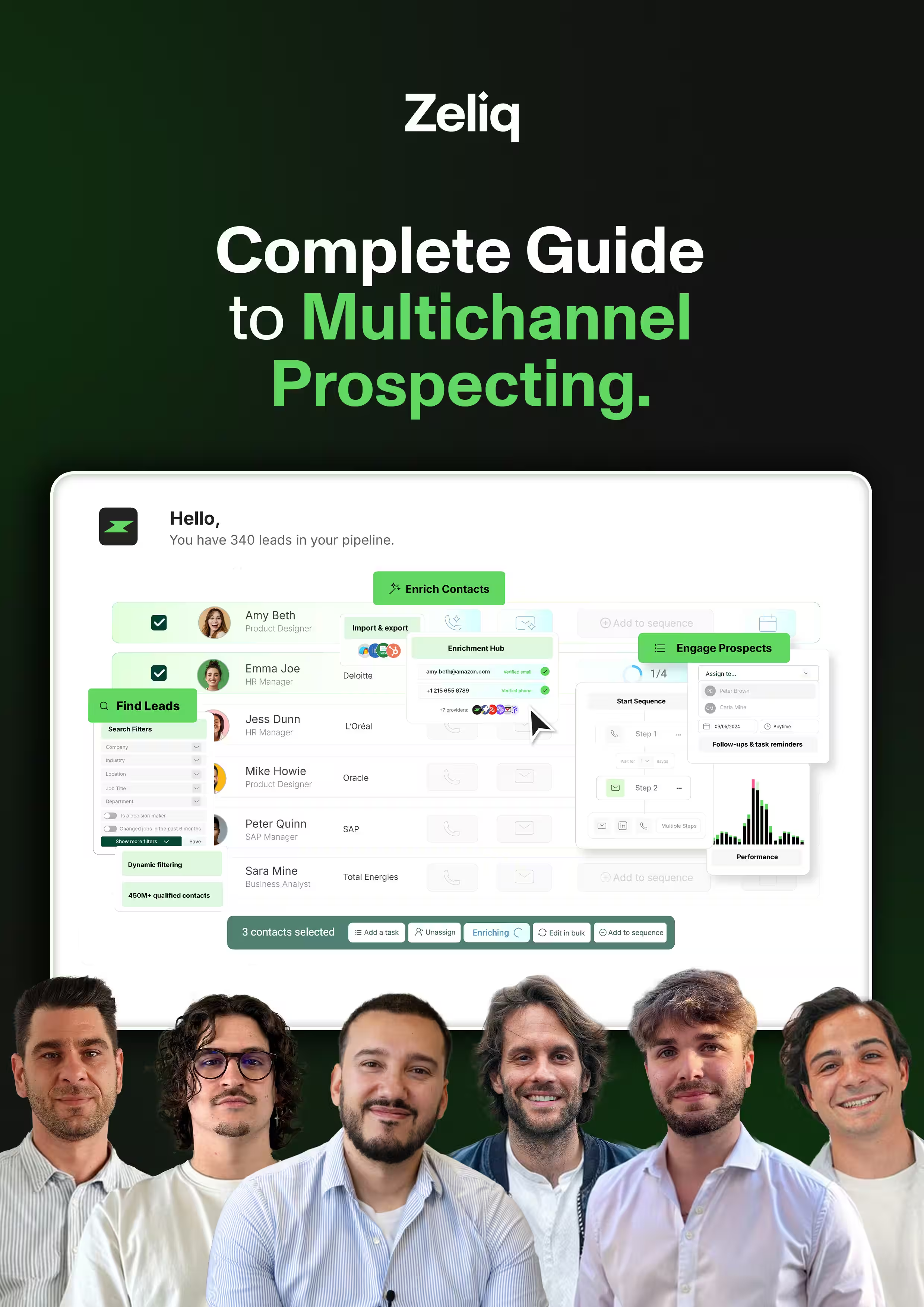
Zeliq combines a 450 million B2B contact database, waterfall enrichment across multiple sources with integrated email verification, and multichannel sequences bundling email + LinkedIn + phone in one interface. Direct phone numbers waterfall-verified for higher connect rates. GDPR-native suppression list, European positioning.
8. Selection framework
Three questions to select a cold calling software:
Question 1, Team size and call volume: 1-10 reps low volume → power dialer; 10-50 reps mid volume → power + local presence; 50-200 reps high volume → parallel or predictive.
Question 2, Existing stack: already on Outreach or Salesloft → use embedded dialer; already on Aircall for business phone → extend for outbound; blank slate → pick standalone (JustCall, Dialpad) or all-in-one (Apollo, Zeliq for bundled).
Question 3, Geography: US-heavy → any leading vendor; EMEA-heavy → Aircall, CloudTalk, Cognism-integrated dialers; APAC → verify vendor coverage.
9. Common mistakes
Mistake 1: Wrong dialer type for team size. Parallel dialer on a 3-rep team = wasted throughput. Power dialer on a 100-rep team = missed volume.
Mistake 2: Skipping local presence. Toll-free or out-of-state numbers cap connect rate 30-50% below local numbers.
Mistake 3: Ignoring TCPA compliance. Parallel dialer with > 3% abandoned rate = fines.
Mistake 4: No CRM sync. Calls in dialer + logs in CRM don’t automatically match = broken pipeline reporting.
Mistake 5: Bad data. 15-30% wrong phone numbers = wrecked SDR productivity. Verify phone data before campaigns.
10. Frequently asked questions
Which dialer type should I choose: power, parallel, or predictive?
Power dialer fits 90% of B2B teams below 50 reps; parallel dialer only above 50 reps with dedicated compliance oversight; predictive dialer only for enterprise call centers with 100+ agents and full TCPA operations. Trade-offs by dialer type: (1) Power dialer: sequential 1-3 second gap between calls, throughput 40-60 calls/hour, standard TCPA rules apply, easiest setup. Best for 1-50 rep B2B teams. Reps hear each call ring and can prepare for the conversation. (2) Parallel dialer: 3-6 simultaneous calls, connects first answer, drops others, throughput 80-150 calls/hour. Compliance-sensitive: abandoned-call rate must stay below 3% to avoid TCPA fines. Best for 50-200 rep outbound with volume metrics prioritized over conversation quality. Requires dedicated ops to monitor abandonment rate. (3) Predictive dialer: algorithm-scheduled dialing that predicts rep availability. Throughput 100-200+ calls/hour. Most complex compliance. Best only for enterprise contact centers. Selection: verify current team size and monthly call volume. Below 5,000 calls/month across the team → power. 5,000-30,000 → power + local presence + AI coaching. Above 30,000 → parallel with compliance oversight. Never jump directly to parallel or predictive without validating compliance operations. Common failure: mid-market team enables parallel dialing to hit volume target, hits 5% abandonment rate, receives TCPA complaint, incurs fines that dwarf months of tool savings.
Does local presence really lift connect rates?
Yes, calls from a local area code answer at significantly higher rates than toll-free or out-of-state numbers per aggregated SERP benchmarks in 2026, with typical lift of 2-3× vs toll-free numbers, though the exact magnitude depends on prospect industry, geography, and screening habits. Mechanism: prospects screen unknown numbers, and a local area code lowers the screening bar because the call feels local (from someone in the same region, possibly a client or colleague). Toll-free numbers (800/888) signal telemarketing to most professionals and get screened at higher rates. Out-of-state numbers signal spam or unknown business. Practical setup: the dialer maintains a pool of phone numbers across many area codes; on outbound, it selects a number matching the prospect’s area code. Some vendors include local presence on all plans (JustCall, Aircall); others gate to higher tiers or charge per additional number ($5-30/month per area code). Teams calling nationwide US may need 20-50+ local numbers, adding $100-1,500/month to the dialer bill. Compliance caveat: some jurisdictions restrict local presence because it can appear misleading (a number the prospect thinks is local when the rep is actually elsewhere). Verify per-state and per-country rules before enabling nationwide local presence. Alternative: some teams use a single well-known regional number that builds recognition over time (e.g., a number that starts appearing in Google search results tied to the company). For high-volume US B2B outbound, local presence typically pays for itself within the first month via connect-rate lift.
What is the total cost of cold calling software per SDR?
$30-$450 per SDR per month depending on team size and features: $30-90 self-serve for 1-5 reps, $80-180 mid-market for 10-50 reps, $200-450 high-volume for 50-200 reps. Concrete tiers verified September 2026: (1) Self-serve (1-5 reps): entry-level dialer (JustCall Team, Aircall Essentials) at $30-50/user/month, plus 3-10 local numbers at $50-200/month allocated across the team. Total $40-90/rep/month. Best for founding teams or early SDR pilots. (2) Mid-market (10-50 reps): pro tier dialers (JustCall Pro, Dialpad AI Sales) at $60-150/user/month, full local presence coverage $500-1,500/month allocated, occasional AI coaching add-ons. Total $80-180/rep/month. Best for standard B2B SDR operations. (3) High-volume (50-200 reps): enterprise parallel dialers (Orum, CloudTalk enterprise) at $150-300/user/month, full local presence coverage $2,000-5,000/month, AI + analytics add-ons $50-100/user/month. Total $200-450/rep/month. Best for high-volume outbound organizations. (4) Bundled with sequencer (enterprise): Outreach or Salesloft with embedded dialer at $150-300/user/month combined. Simpler stack, lower integration overhead. Beyond direct tool cost, factor CRM sync overhead, refresh cadence on phone data (phone numbers decay ~2-3%/month), and training time. Team of 20 SDRs at mid-market: ~$2,000-$3,600/month dialer stack, or ~$3,000-$6,000/month if bundled with sequencer + database.
11. Conclusion: 3 actions to run
Audit current dialer type vs team size within 7 days. Wrong dialer type caps throughput. Power for < 50 reps, parallel above with compliance oversight.
Test local presence lift within 15 days. A/B toll-free vs local area code on 500 calls. Measure connect rate delta.
Verify phone data quality within 30 days. If bounce or wrong-number rate > 15%, refresh phone enrichment before scaling calls.
Waterfall-verified phone numbers with multichannel sequences bundled
Zeliq combines 450 million B2B contacts, waterfall enrichment with verified phone numbers, and multichannel sequences (email + LinkedIn + phone) in one interface. Higher connect rates through verified data + signal-led timing. GDPR-native suppression.
Try for freeAnd if you want waterfall-verified phone numbers with multichannel sequences bundled and CRM sync included, try Zeliq for free: sourcing, enrichment, verification, and outreach in one interface, no credit card required.