
Cold email software is the specialized subset of sales engagement platforms optimized for high-volume outbound email with deliverability protection at its core, combining sequencers with mailbox warmup, domain health monitoring, inbox placement testing, and rotating sender infrastructure. In 2026, category leaders Instantly and Smartlead differentiate through unlimited connected mailboxes and per-platform pricing rather than per-seat pricing per aggregated SERP benchmarks verified September 2026, reflecting the outbound reality that domain warmup + mailbox rotation matter more for email results than per-user seat features. This article maps the 5 deliverability components, the 10 leading vendors, cost benchmarks, compliance, and 3 FAQ.
For a Head of Sales, RevOps engineer, SDR lead, or founder building cold email operations at scale, this article gives the deliverability framework, the vendor grid, and the cost math.
On the agenda:
- What cold email software delivers vs generic email tools
- The 5 deliverability components (warmup, rotation, SPF/DKIM/DMARC, inbox placement, health monitoring)
- 10 leading vendors compared
- Per-mailbox vs per-seat pricing (2026 shift)
- Cost benchmarks by volume
- Compliance: CAN-SPAM, GDPR, CCPA
- 3 FAQ (deliverability vs sequencer, warmup mechanics, cost)
Key takeaways:
- Cold email software = sequencer + deliverability infrastructure bundled
- 5 deliverability components: mailbox warmup, mailbox rotation, SPF/DKIM/DMARC config, inbox placement testing, domain health monitoring
- 10 leading vendors: Instantly, Smartlead, Salesforge, Warmforge, Lemlist, Woodpecker, Mailshake, Klenty, Apollo, Zeliq
- Per-mailbox pricing shift: Instantly and Smartlead offer unlimited mailboxes; per-platform pricing
- Cost per month: $30-$500+ depending on volume and vendor tier
- Warmup mandatory: unwarmed domains land in Promotions or spam
- Bounce rate target: 1-3% after verification (skipping = domain reputation damage)
- Compliance: FTC CAN-SPAM US, GDPR (CNIL 2025 €486M) EU
1. What cold email software delivers vs generic email tools
Generic email tools (Gmail, Outlook, standard email service providers like Mailchimp) are optimized for one-to-many transactional or marketing sends where recipients opted in.
Cold email software is optimized for one-to-few outbound sends where recipients did not opt in. Different problem, different toolset:
- Higher spam-classification risk (recipients don’t recognize sender) → warmup + rotation needed
- Higher personalization required (each email tailored) → sequencer + tokens
- Higher deliverability sensitivity (single bad batch destroys reputation) → domain health monitoring
Using generic email tools for cold outbound produces predictable outcomes: bounce rates 15-30%, spam classifications within 3-5 campaigns, wrecked domain reputation.
2. The 5 deliverability components
Cold email software bundles five capabilities that generic tools lack.
Component 1, Mailbox warmup: automated sending of low-volume warm emails to peer mailboxes to build sender reputation over 2-6 weeks. Warm inboxes see your domain, engage with the mails, teach the spam filter that this domain is legitimate.
Component 2, Mailbox rotation: sending across multiple mailboxes (10-50+) instead of one, spreading volume so no single mailbox triggers rate limits. Requires multiple domains typically for maximum rotation.
Component 3, SPF/DKIM/DMARC configuration: DNS records that authenticate the sender. Missing these = 40-60% of emails auto-classified as spam by Gmail and Outlook.
Component 4, Inbox placement testing: sends test emails to seed mailboxes across Gmail, Outlook, Yahoo, iCloud, tracks which folder each landed in. Real inbox placement > 80% target.
Component 5, Domain health monitoring: tracks blacklist status, DMARC reports, bounce rates, spam complaints in real time. Alerts on degradation before campaigns are impacted.
Vendors that bundle all five are true cold email software; vendors that offer only sequencing are sequencers, not cold email software.
3. 10 leading vendors compared
Positioning verified September 2026 via aggregated SERP.
Instantly
Category leader for unlimited mailboxes + built-in warmup. Per-platform pricing (not per-seat). Best for high-volume outbound with mailbox rotation strategy.
Smartlead
Similar to Instantly, unlimited mailboxes + per-platform pricing. Best for teams wanting mailbox rotation without per-seat cost.
Salesforge
Cold email software with Warmforge warmup + inbox placement testing + DNS health checks in one dashboard.
Warmforge
Dedicated warmup tool bundled inside Salesforge subscription. Best for teams needing dedicated warmup + testing separately.
Lemlist
Email + LinkedIn engagement with creative personalization (video, custom images). Lemwarm bundled warmup.
Woodpecker
Deliverability-first sequencer that meters what you use rather than what you might use. Per-slot pricing.
Mailshake
Sequencer with deliverability features. Mid-market pricing.
Klenty
Multichannel sequencer covering email + LinkedIn + phone. Mid-market pricing.
Apollo
All-in-one platform bundling database + sequencer + basic deliverability features. Starts $49/user/month per Apollo public pricing.
Zeliq
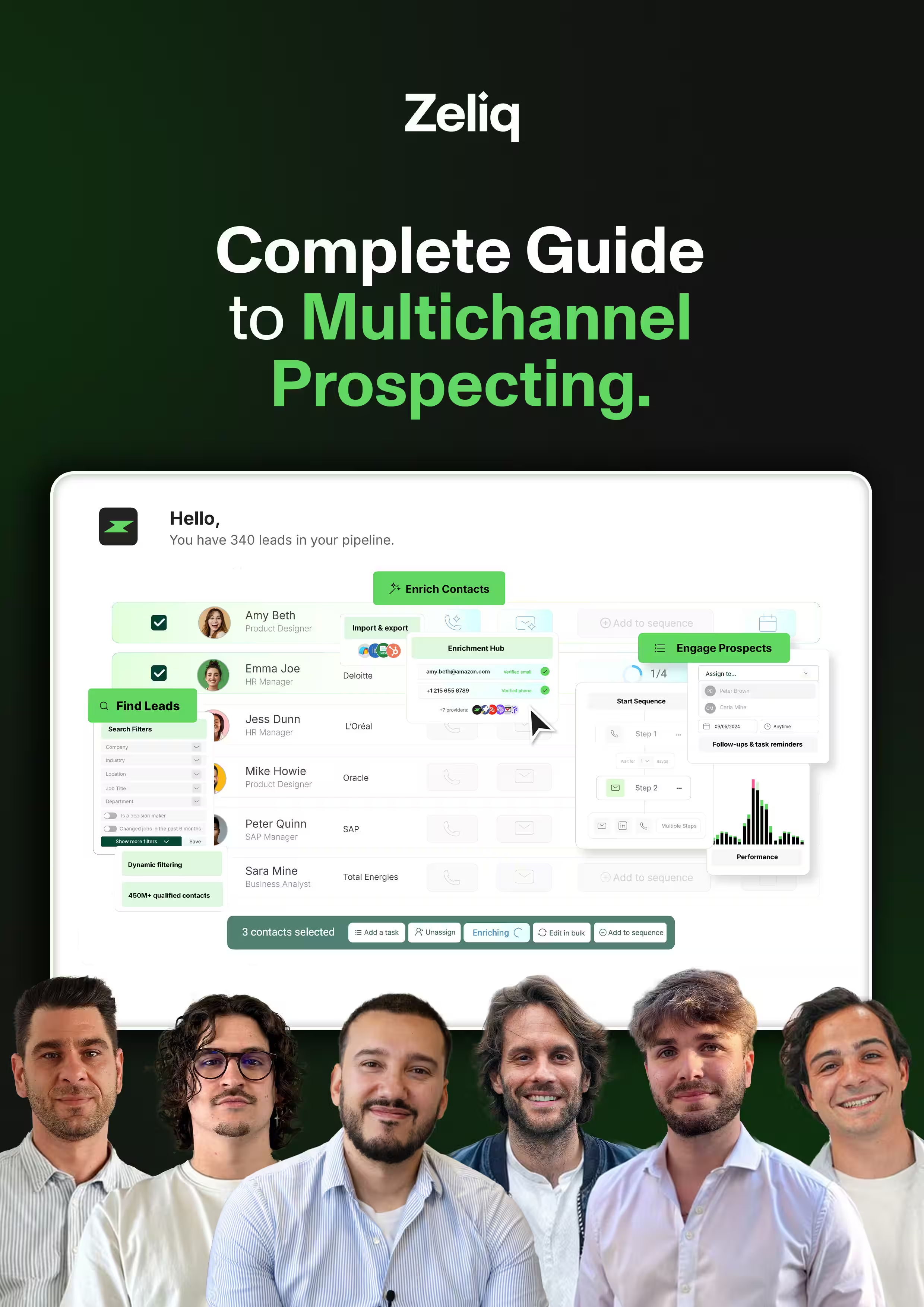
450M B2B contact database + waterfall enrichment + integrated verification + multichannel sequences in one interface. European positioning, GDPR-native. Mid-market pricing bundles sourcing + engagement.
For email copy design that pairs with deliverability infrastructure, see cold email best practices.
4. Per-mailbox vs per-seat pricing (2026 shift)
Traditional sales engagement platforms (Outreach, Salesloft, Apollo) price per user seat. Cold email specialists (Instantly, Smartlead, Woodpecker) shifted toward per-mailbox or per-platform pricing.
The reason: cold email at scale requires 10-50+ mailboxes for rotation. Per-seat pricing at $100/user × 20 mailboxes = $2,000/month. Per-platform pricing at $97/month for unlimited mailboxes = 20× less. Category leaders capitalized on this economics gap.
Practical implication: for high-volume outbound (5,000+ emails/day per team), per-platform pricing wins. For low-volume email + LinkedIn + phone multichannel, per-seat sequencers can still win.
5. Cost benchmarks by volume
Concrete math at typical pricing verified September 2026:
Low volume (< 1,000 emails/day): - Woodpecker Basic or Mailshake: $30-79/user/month - Apollo Basic: $49/user/month bundling database + sequencer - Total: $30-100/user/month
Mid volume (1,000-5,000 emails/day): - Instantly or Smartlead: $97-197/month per-platform - Warmup bundled or separate warmup tool: $0-99/month - Multiple mailboxes ($10-30/each on Google Workspace): $100-300/month for 10 mailboxes - Total: $200-600/month for the team
High volume (5,000-20,000 emails/day): - Instantly or Smartlead scale tier: $200-500/month per-platform - 30-50 mailboxes across 5-10 domains: $500-1,500/month - Dedicated warmup + inbox placement testing: $100-300/month - Total: $800-2,300/month for the team
Enterprise (bundled with sequencer + database): - Apollo, Zeliq mid-market or enterprise: $150-400/user/month - Deliverability bundled - Total: variable by team size
6. Compliance: CAN-SPAM, GDPR, CCPA
US CAN-SPAM: FTC compliance guide requires accurate subject line + valid physical address + functional opt-out + honor opt-out within 10 business days. Cold email compliance rests on getting these four right consistently.
EU GDPR: legitimate interest per ICP + opt-out on every email + suppression + 3-year retention. CNIL 2025 sanctions hit €486M total (vs €55M in 2024), including SOLOCAL Marketing Services at €900k for prospecting without sufficient legal basis. Cold email to EMEA without documented legitimate interest = enforcement exposure.
California CCPA/CPRA: right to know, delete, opt-out. B2B partial exemption but disclosures still expected.
Google/Yahoo Sender Guidelines (Feb 2024): bulk senders (5,000+ emails/day to Gmail) must have SPF + DKIM + DMARC configured, spam complaint rate < 0.3%, one-click unsubscribe. Missing = immediate spam classification.
7. Common mistakes
Mistake 1: Skipping warmup. Unwarmed domains land in Promotions or spam. Warmup takes 2-6 weeks; plan ahead.
Mistake 2: One mailbox at high volume. Rate limits + reputation risk. Rotate across 10+ mailboxes.
Mistake 3: Missing SPF/DKIM/DMARC. 40-60% auto-classified as spam by Gmail/Outlook.
Mistake 4: No inbox placement testing. Blind to whether emails land in Primary vs Promotions.
Mistake 5: Bad data with high bounce. 15-30% bounce wrecks reputation regardless of warmup. Verify data first.
Zeliq and cold email deliverability
Zeliq combines a 450 million B2B contact database, waterfall enrichment across multiple sources with integrated email verification, and multichannel sequences (email + LinkedIn + phone) in one interface. Verified emails feed sequences at 1-3% bounce rate; sequences run within deliverability guardrails. GDPR-native suppression, European positioning.
8. Frequently asked questions
Cold email software vs generic sequencer, what’s the difference?
Cold email software bundles a sequencer with 5 deliverability components (warmup, mailbox rotation, SPF/DKIM/DMARC config, inbox placement testing, domain health monitoring); generic sequencers offer only the sequencing layer, leaving deliverability to the sender’s manual configuration. Trade-offs: (1) Cold email software (Instantly, Smartlead, Salesforge): deliverability infrastructure built-in. Best for high-volume cold outbound where domain reputation is the primary constraint. Per-platform or per-mailbox pricing typically. (2) Generic sequencer (Outreach, Salesloft, Apollo): focuses on sequence orchestration + CRM sync + analytics. Deliverability is up to the customer. Best when team already has strong deliverability operations (dedicated DMARC monitoring, domain warmup done separately, mailbox rotation via infrastructure team). (3) Hybrid: some sequencers (Apollo, Zeliq) bundle basic deliverability without matching cold email specialists’ depth. Sufficient for teams doing 1,000-5,000 emails/day; specialists needed above 5,000/day. Selection driver: measure your bounce rate + spam complaint rate + inbox placement rate over 90 days. If bounce > 5% or spam complaints > 0.1% or inbox placement < 70%, you need cold email specialist. If all metrics healthy, generic sequencer suffices. Above 5,000 emails/day per team, cold email specialists win because their infrastructure investment matches the domain reputation risk.
How does mailbox warmup actually work?
Mailbox warmup automatically sends low-volume warm emails to peer mailboxes over 2-6 weeks, gradually increasing volume as inbox providers (Gmail, Outlook, Yahoo) build reputation for the sending domain, so that when real outbound campaigns launch, emails land in the Primary inbox rather than Promotions or spam. Mechanism: (1) Peer network: warmup tool maintains a network of mailboxes that agree to receive warmup emails. When you enable warmup on your mailbox, it sends 5-10 low-volume emails per day to peers in the network, and peers reply and engage. (2) Reputation signal: engagement (opens, replies, folder moves to Primary) teaches Gmail/Outlook algorithms that your domain sends legitimate mail. (3) Volume ramp: warmup starts at 5-10 emails/day and gradually ramps to 40-80/day over 4-6 weeks. (4) Continuous warmup: many tools keep warmup running in parallel with cold campaigns to maintain reputation. Duration: 2-3 weeks minimum for a new domain, 4-6 weeks recommended before full-volume campaigns. Cost: $0 (bundled in Instantly, Smartlead, Salesforge) to $50-100/month (Warmy, Lemwarm standalone). Common failure: launching campaigns without warmup on fresh domain = immediate spam classification. Rule of thumb: minimum 3 weeks warmup, minimum 30 emails/day sending capacity before starting real campaigns. Domain reputation, once damaged, takes 4-8 weeks to recover. Better to warm up right the first time.
What is the cost of professional cold email software?
$30-$2,300 per month depending on volume: low-volume $30-100/user, mid-volume $200-600/team, high-volume $800-$2,300/team including 30-50 mailboxes. Concrete tiers verified September 2026: (1) Low volume < 1,000 emails/day: Woodpecker Basic $30-79/user/month, Mailshake starting tier, or Apollo Basic at $49/user bundling database + sequencer. Best for solo operators or 1-3 SDR pilots. (2) Mid volume 1,000-5,000 emails/day: Instantly or Smartlead per-platform at $97-197/month covering unlimited mailboxes + built-in warmup. Add mailbox costs (Google Workspace $10-30/mailbox/month) at 10 mailboxes = $100-300/month. Total $200-600/month for the team. (3) High volume 5,000-20,000 emails/day: Instantly or Smartlead scale tiers at $200-500/month per-platform. 30-50 mailboxes across 5-10 domains at $500-1,500/month total. Dedicated warmup + inbox placement testing tools $100-300/month. Total $800-$2,300/month for the team. (4) All-in-one enterprise: Apollo, Zeliq, or Outreach at $150-400/user/month bundling database + enrichment + sequencer + basic deliverability. Adds up quickly per seat but consolidates 3-4 tool categories. Beyond direct tool cost, factor: domain costs ($10-15/domain/year × 5-10 domains), CRM integration debug time, and enrichment tool for verified data ($100-300/user/month). Consolidation opportunity: teams that were paying $600/month cold email + $500/month enrichment + $200/month verification often save 30-40% moving to all-in-one platform bundling all three.
9. Conclusion: 3 actions to run
Audit deliverability metrics within 7 days. Bounce rate, spam complaint rate, inbox placement rate. Below 70% inbox placement or above 5% bounce = need cold email specialist.
Set up warmup within 15 days for any new domain. 3-week minimum. Domain reputation is the constraint, not sequencing features.
Verify all-in-one consolidation within 30 days if stack cost > $500/user/month. All-in-one platforms bundling database + enrichment + verification + sequencer save 30-40% vs stitched.
Cold outbound on verified data with multichannel sequences bundled
Zeliq combines 450 million B2B contacts, waterfall enrichment with integrated email verification (1-3% bounce), and multichannel sequences in one interface. Deliverability guardrails built in. GDPR-native suppression, European positioning.
Try for freeAnd if you want cold outbound on verified data with multichannel sequences and deliverability guardrails bundled, try Zeliq for free: sourcing, enrichment, verification, and outreach in one interface, no credit card required.