

Clay pricing in 2026 starts at a permanent Free plan (100 Data Credits + 500 Actions per month), scales to Launch from $185 per month, Growth from $495 per month, and custom Enterprise contracts, with unlimited seats on every plan per the vendor’s public pricing page (verified September 2026). Since March 2026, Clay operates on a two-credit system (Data Credits for enrichment lookups + Actions for workflow steps), which shifts total cost of ownership away from seat count and toward workflow complexity. This article breaks down each plan, the two credit types, the real cost per enriched contact, positioning vs alternatives, and 3 FAQ.
Transparency note: Zeliq operates a prospecting platform competing with Clay. This article is therefore published by a competitor. To keep the analysis useful, prices, features, and credit mechanics rest on Clay’s official pricing page and dated public sources indexed in the top-10 SERP as of September 2026.
For a Head of Sales, RevOps engineer, growth manager, or founder evaluating Clay for a prospecting workflow, this article gives the plan breakdown, the credit math, and the fit vs alternative decision.
On the agenda:
- Clay’s 2026 plan structure (Free, Launch, Growth, Enterprise)
- The two-credit system: Data Credits vs Actions
- Real cost per enriched contact (single vs waterfall)
- Unlimited seats: why team size does not affect subscription
- What Clay does well vs where it stops
- When Clay fits vs when another tool fits better
- Reproducible test methodology
- 3 FAQ (Free plan real limits, hidden costs, alternatives)
Key takeaways:
- Free plan: 100 Data Credits + 500 Actions per month, unlimited seats (verified 2026-09-22)
- Launch: from $185/month, aimed at solo operators and small teams
- Growth: from $495/month, mid-market prospecting workflows
- Enterprise: custom, for teams with heavy waterfall + workflow load
- Unlimited seats on all plans: subscription cost is workflow-driven, not team-driven
- Two credit types: Data Credits (enrichment lookups) + Actions (workflow steps, introduced March 2026)
- Credit math: single-provider email lookup 2-3 Data Credits, 3-provider waterfall 4-8 Data Credits
- Hidden cost driver: workflow complexity generates Actions faster than typical estimates suggest
1. Clay’s 2026 plan structure
Clay is a workflow-first B2B data platform: users compose enrichment sequences from a marketplace of 100+ data providers, run them at scale, and push enriched contacts to a CRM. The plan structure reflects this workflow-heavy positioning.
| Plan | Base cost | Included Data Credits | Included Actions | Seats |
|---|---|---|---|---|
| Free | $0 | 100/month | 500/month | Unlimited |
| Launch | from $185/month | included pack + expandable | included pack + expandable | Unlimited |
| Growth | from $495/month | larger included pack | larger included pack | Unlimited |
| Enterprise | custom | negotiated | negotiated | Unlimited |
All figures per Clay’s public pricing page as of September 2026. Data Credits and Actions can be expanded on any plan via add-ons; the base plan cost is the entry point, not the full expected spend.
2. The two-credit system
Since March 2026, Clay operates on two separate credit systems (per multiple SERP sources verified 2026-09-22):
Data Credits: consumed when purchasing enrichment data from Clay’s marketplace of 100+ providers. Each provider charges a different number of credits per lookup. Typical benchmarks: - Single-provider email lookup: 2-3 Data Credits - 3-provider waterfall email lookup: 4-8 Data Credits - Phone lookup: variable, often 3-8 credits - Firmographic enrichment: 1-3 credits
Actions: workflow steps, introduced March 2026. Each filter, AI call, integration write, or conditional branch in a Clay workflow consumes Actions. Complex workflows can burn Actions faster than Data Credits.
The dual-credit model means total cost of ownership depends on both the volume of enrichments AND the complexity of the workflows. Teams running simple lookups may hit Data Credit limits first; teams running complex AI-augmented workflows may hit Actions first.
3. Real cost per enriched contact
Clay’s public pricing does not translate directly to cost-per-contact because credits stack across Data + Actions. Rough model based on typical workflow patterns aggregated from SERP top 5:
Simple lookup workflow (1 enrichment provider, 1 destination write): - 2-3 Data Credits + 2-3 Actions per contact - At Launch plan base allocation, ~500-1,000 contacts/month included
Waterfall workflow (3 providers, filtering, CRM write): - 4-8 Data Credits + 5-10 Actions per contact - At Launch plan base allocation, ~150-300 contacts/month included - At Growth plan, ~500-1,000 contacts/month included
AI-augmented workflow (waterfall + AI email generation + branch logic): - 4-8 Data Credits + 15-30 Actions per contact - Actions become the constraint, Data Credits secondary
Effective cost per waterfall-enriched contact at Growth plan: roughly $0.50-$1.50 depending on workflow density. Adds-on can shift this range widely.
4. Unlimited seats: why team size does not affect subscription
All Clay plans include unlimited seats (verified 2026-09-22). Team size, therefore, does not affect base subscription cost. This is a differentiator vs seat-based pricing at competitors like ZoomInfo, Cognism, or LinkedIn Sales Navigator.
Practical implication: a 15-person RevOps team on Clay Growth pays $495/month base, same as a 3-person team. The cost multiplier is workflow throughput, not team size. This works well for teams where a few power users generate most of the enrichment volume; it works less well for teams where every SDR enriches at similar volume, since credit exhaustion happens faster.
5. What Clay does well
Based on public documentation and SERP top 5:
Marketplace depth: 100+ enrichment providers stitched into workflows, with the ability to swap providers per step. Coverage matches most B2B ICPs including niche verticals.
Workflow composability: users design multi-step enrichment sequences with filters, AI calls, conditional branches. Well-suited to teams with technical RevOps who want to design custom pipelines.
Unlimited seats: no per-seat cost lets a broader team read and reuse workflows without licensing friction.
Community and templates: active user community sharing workflow templates, which accelerates learning curve for new users.
6. Where Clay stops or fits less well
Clay is a workflow platform, not an all-in-one prospecting suite. Where it stops:
No native sequencer: Clay enriches; sending the outbound sequence is delegated to a separate tool (email tool, CRM sequencer, or third-party sequencer).
No native dialer: same pattern for phone outbound.
Learning curve for non-technical users: workflow composition assumes comfort with data operations, filters, and API concepts. Non-RevOps sales users often need training.
Actions credit system complexity: forecasting monthly cost requires simulating workflows before running them. Common failure: teams under-budget Actions and hit ceilings mid-month.
Not GDPR-native by design: uses third-party providers whose GDPR compliance varies; customer holds responsibility for ensuring the sourcing meets EU legitimate interest requirements.
7. When Clay fits vs when another tool fits better
Clay is more adapted if you have a technical RevOps team, you want fine-grained control over enrichment steps, you need to compose workflows that combine multiple data sources with custom logic, or you value unlimited seats for a broad team accessing the same workflows.
Zeliq is more adapted if you want sourcing + waterfall enrichment + verification + multichannel sequences in a single interface without composing workflows, your ICP is EMEA-heavy where GDPR-native compliance matters, or you want a lower total cost of ownership by consolidating the enrichment layer with the sequencing layer.
A traditional database (Cognism, Apollo, ZoomInfo) is more adapted if you need a broad pre-built database without composing workflows, your team is primarily SDRs (not RevOps engineers), or you want per-seat pricing rather than usage-based.
Reader picks the tool that matches their ICP, team composition, and workflow style. No single tool wins across every dimension.
8. Reproducible test methodology
To decide fit for your specific ICP without generic pros/cons:
Step 1: build a 30-50 prospect sample representative of your ICP (title, industry, geography).
Step 2: enrich the same sample through Clay’s Free plan (up to the 100 Data Credit limit, or subscribe Launch temporarily).
Step 3: enrich the same sample through 1-2 alternatives (Zeliq free trial, Apollo free tier, Cognism trial where available).
Step 4: measure per tool: (a) verified email match rate, (b) verified phone match rate, (c) firmographic completion, (d) freshness (cross-check titles vs current LinkedIn).
Step 5: layer the workflow effort: how many steps did each tool require to reach the same output? How much SDR/RevOps time?
Step 6: compute total cost per usable enriched contact at your expected monthly volume.
Document the results. This methodology is more defensible than any vendor’s published benchmark.
Zeliq and integrated prospecting
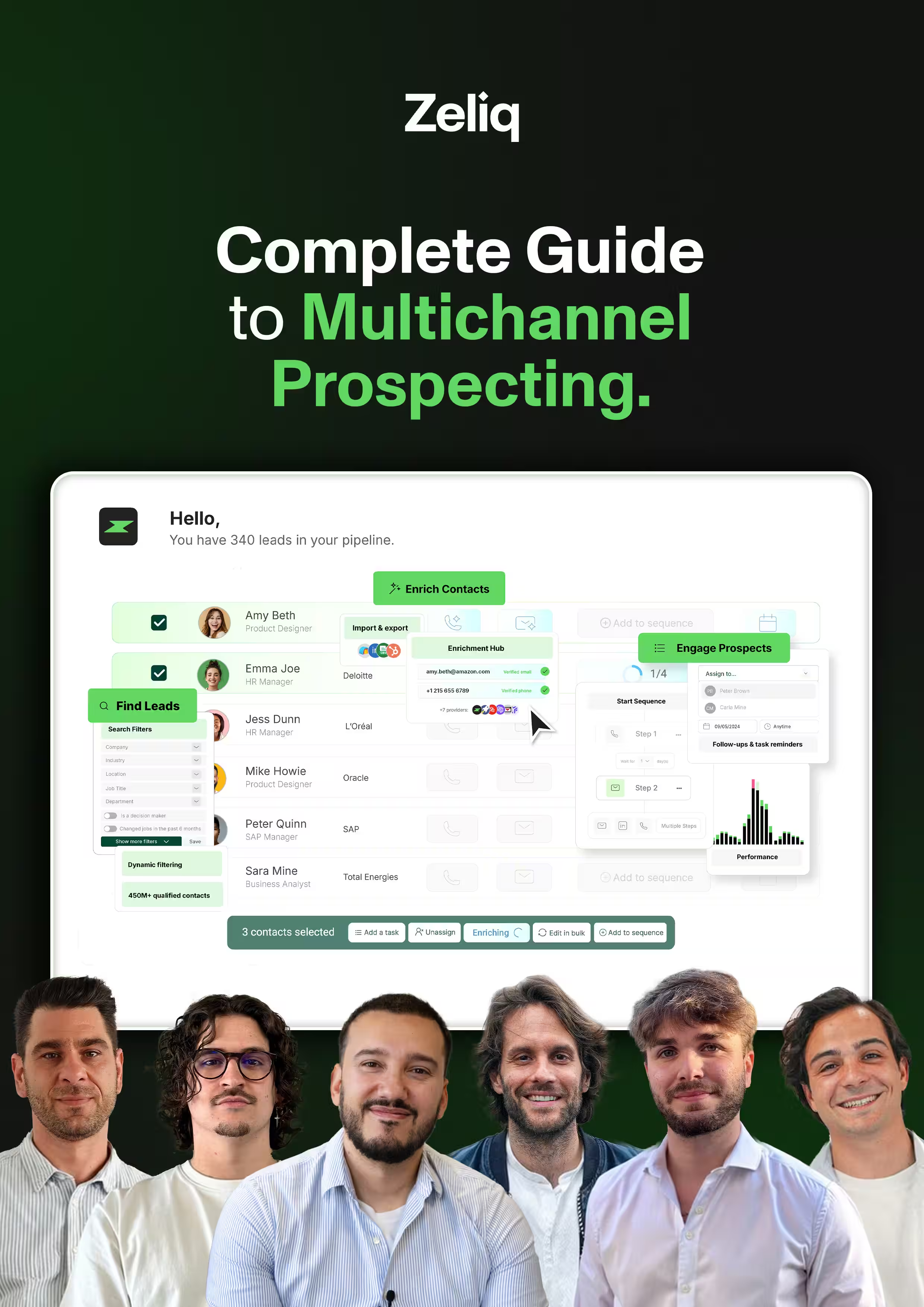
Zeliq combines a 450 million B2B contact database, waterfall enrichment across multiple sources with integrated email verification, and multichannel sequences in a single interface, without workflow composition. Total cost of ownership sits below stitched stacks that combine Clay + a sequencer + a verifier. GDPR-native suppression list, European positioning.
9. Compliance context
Enrichment workflows compose multiple data providers, and GDPR compliance depends on each provider’s suppression list and legitimate interest documentation. CNIL 2025 sanctions reached €486 million total (vs €55M in 2024), including SOLOCAL Marketing Services at €900,000 for prospecting emails without sufficient legal basis. On the US side, FTC CAN-SPAM compliance governs outbound.
Any prospecting tool that composes third-party providers (Clay, Zeliq, and others) shifts the compliance burden to workflow design: the customer must ensure each step respects the destination legal framework.
10. Common mistakes with Clay adoption
Mistake 1: Under-budgeting Actions. Teams estimate Data Credits accurately but miss Actions for AI calls, filters, and integrations. Result: hitting Actions ceiling mid-month, workflows halt, credits purchased urgently at higher rate.
Mistake 2: Skipping the Free plan test. The Free plan (100 Data Credits + 500 Actions per month) is enough to run a controlled 30-50 contact sample. Skipping it means signing Launch or Growth blind.
Mistake 3: Comparing subscription cost only. Clay’s subscription cost is unlimited-seats. Alternatives may charge per seat but bundle sequencing and verification. Compare on total cost per outbound-ready verified contact, not on subscription line.
Mistake 4: No workflow simulation before commit. Actions consumption depends heavily on workflow design. Simulate a typical workflow before committing to a plan.
11. Frequently asked questions
What are the real limits of the Clay Free plan?
The Free plan gives 100 Data Credits and 500 Actions per month with unlimited seats, per Clay’s public pricing verified September 2026, enough to run a 30-50 contact controlled test or a very low-volume ongoing workflow but not a live outbound motion. Practical scope: 100 Data Credits at 4-8 credits per waterfall enrichment gives 12-25 enriched contacts per month; 500 Actions at 5-10 per workflow step covers 50-100 workflow executions. That is enough to (1) test whether Clay’s marketplace covers your ICP, (2) prototype 1-2 workflows before committing, (3) run a controlled A/B test against alternatives on a small sample. It is not enough for any team running > 100 outbound contacts per month, which lands you on Launch (from $185/month) at minimum. Two catches worth noting: (a) Free plan Actions may reset differently than Data Credits in some cases; check Clay’s current billing terms, (b) Free plan users report support response times slower than paid tiers, which matters if debugging a workflow blocks production. Recommendation: use the Free plan strictly for evaluation, not for ongoing operations, and simulate your Launch or Growth plan volume before committing to a paid tier.
What are the hidden costs beyond Clay’s base subscription?
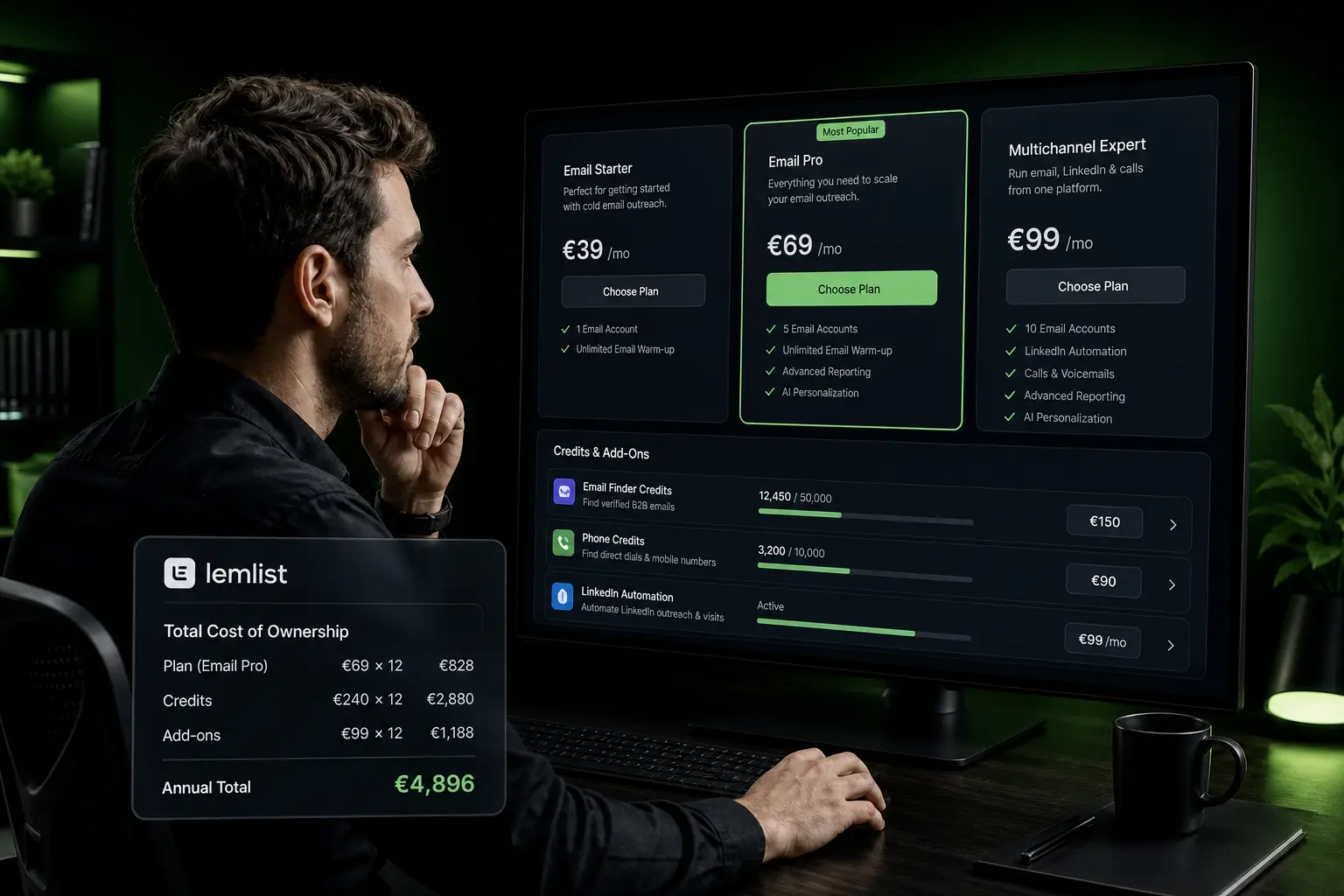
Beyond the base subscription, three cost centers routinely surprise teams: Actions overage above the plan allocation, Data Credit overage from waterfall workflows, and the integration cost of running Clay without a native sequencer. (1) Actions overage: complex AI-augmented workflows consume Actions faster than teams estimate. A workflow with 10-15 steps burns 500-1,500 Actions per 100 contacts. Growth plan allocations get exhausted mid-month if the workflow uses AI heavily. Overage rates vary but historically add 20-40% to the base subscription in typical usage. (2) Data Credit overage: waterfall workflows (4-8 credits per contact) at high volume overwhelm base allocations. A team running 5,000 enrichments/month on a 3-provider waterfall consumes 20,000-40,000 Data Credits, which requires plan upgrade or credit packs. (3) Downstream stack cost: Clay does not send outbound emails or make calls. Teams add a sequencer ($100-300/month per seat: Outreach, Salesloft, or similar), a dialer if needed ($30-80/seat), and time integrating Clay’s output into these tools. Total real cost of a Clay-anchored stack for 5 SDRs often lands $1,500-$3,500/month, before counting SDR time managing the workflows. Model your full stack cost, not just the Clay line item, when comparing to alternatives.
What are the main alternatives to Clay?
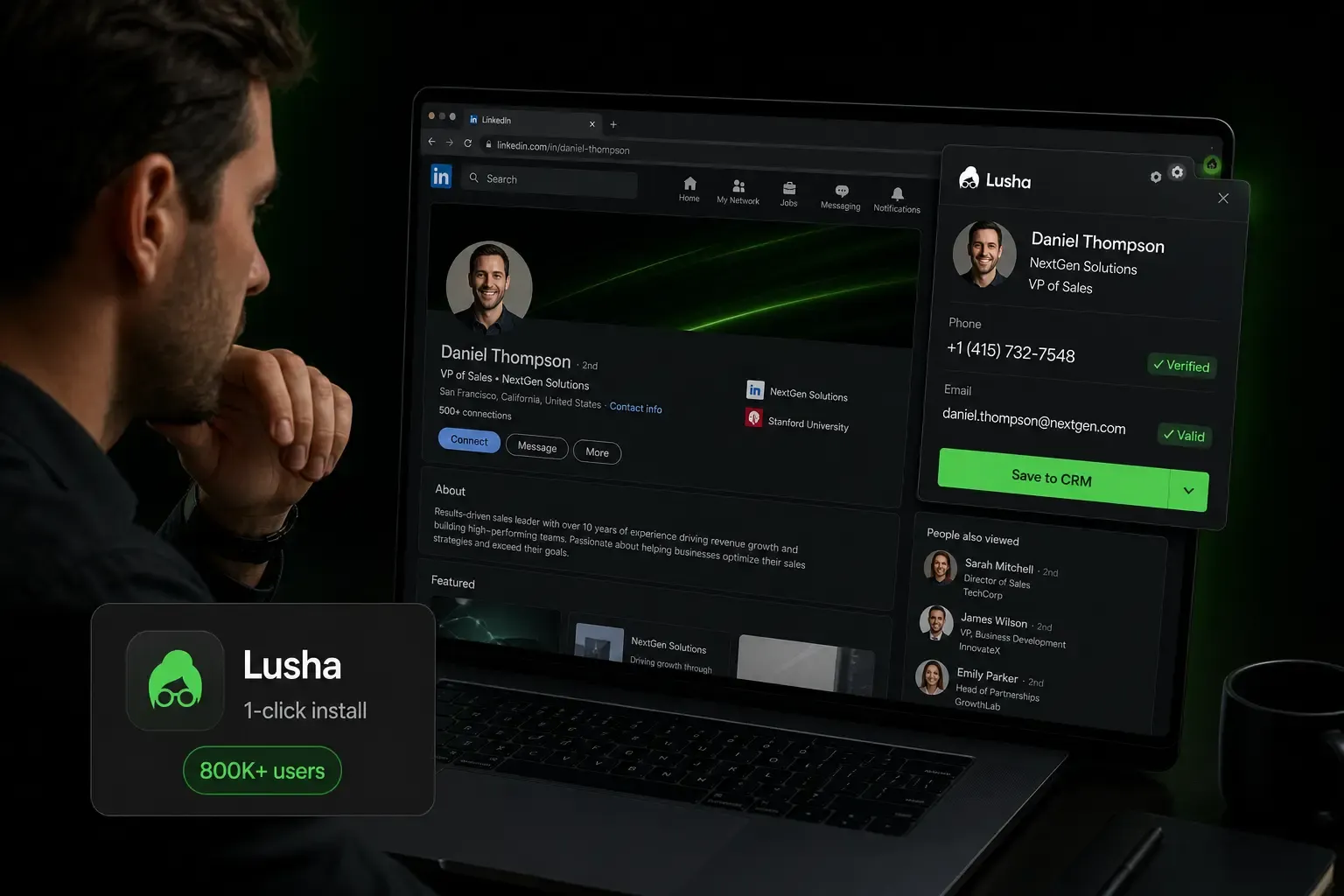
Main alternatives fall in three categories: workflow-first platforms (Zeliq for consolidated sourcing + enrichment + sequencing, and a few smaller platforms), traditional databases (ZoomInfo, Cognism, Apollo) with pre-built vs composable enrichment, and single-purpose enrichment tools (Lusha, Kaspr, Hunter) at lower price but narrower scope. Choose the category based on team composition and workflow style: (1) Workflow-first consolidated (Zeliq): sourcing + waterfall enrichment + verification + sequencing in one interface, no workflow composition required, per-user pricing typically $150-400/seat/month. Best for SDR teams without dedicated RevOps engineers. (2) Traditional database + sequencer (Cognism + Outreach, Apollo + Salesloft): database vendor provides pre-built enrichment via search + export, sequencer sends the outreach. Best for teams where SDR volume is high and workflow composition is not needed. (3) Single-purpose enrichment (Lusha, Kaspr, Hunter): cheaper subscription, narrow scope (typically email or phone only), often used as a supplement to a database. Best for solo operators or SDR who want a cheap tactical tool. Selection driver: technical RevOps team + workflow ambition = Clay-adjacent workflow-first tools; traditional SDR team + speed-to-value = consolidated all-in-one; solo operator = single-purpose enrichment. Run the reproducible test methodology in section 8 before committing to any of them.
12. Conclusion: 3 actions to run
Test the Clay Free plan within 7 days. Run a controlled 30-50 contact sample through your typical workflow. Measure Data Credits + Actions burned per contact.
Extrapolate to your monthly volume within 15 days. Multiply per-contact credit consumption by target monthly volume. Compare against Launch and Growth plan allocations. Identify likely overage.
Run the reproducible methodology vs 1-2 alternatives within 30 days. Zeliq free trial, Cognism trial, or Apollo free tier. Compare per-tool: match rate, workflow effort, total cost per outbound-ready contact.
Consolidated sourcing, enrichment, verification, and sequencing without workflow composition
Zeliq combines 450 million B2B contacts, waterfall enrichment with integrated verification, and multichannel sequences in one interface. No workflow composition required, GDPR-native suppression included. Free trial credits to test on your ICP.
Try for freeAnd if you want a consolidated prospecting stack that combines the enrichment and sequencing layers without composing workflows, try Zeliq for free: sourcing, enrichment, verification, and multichannel sequences in a single platform, no credit card required.