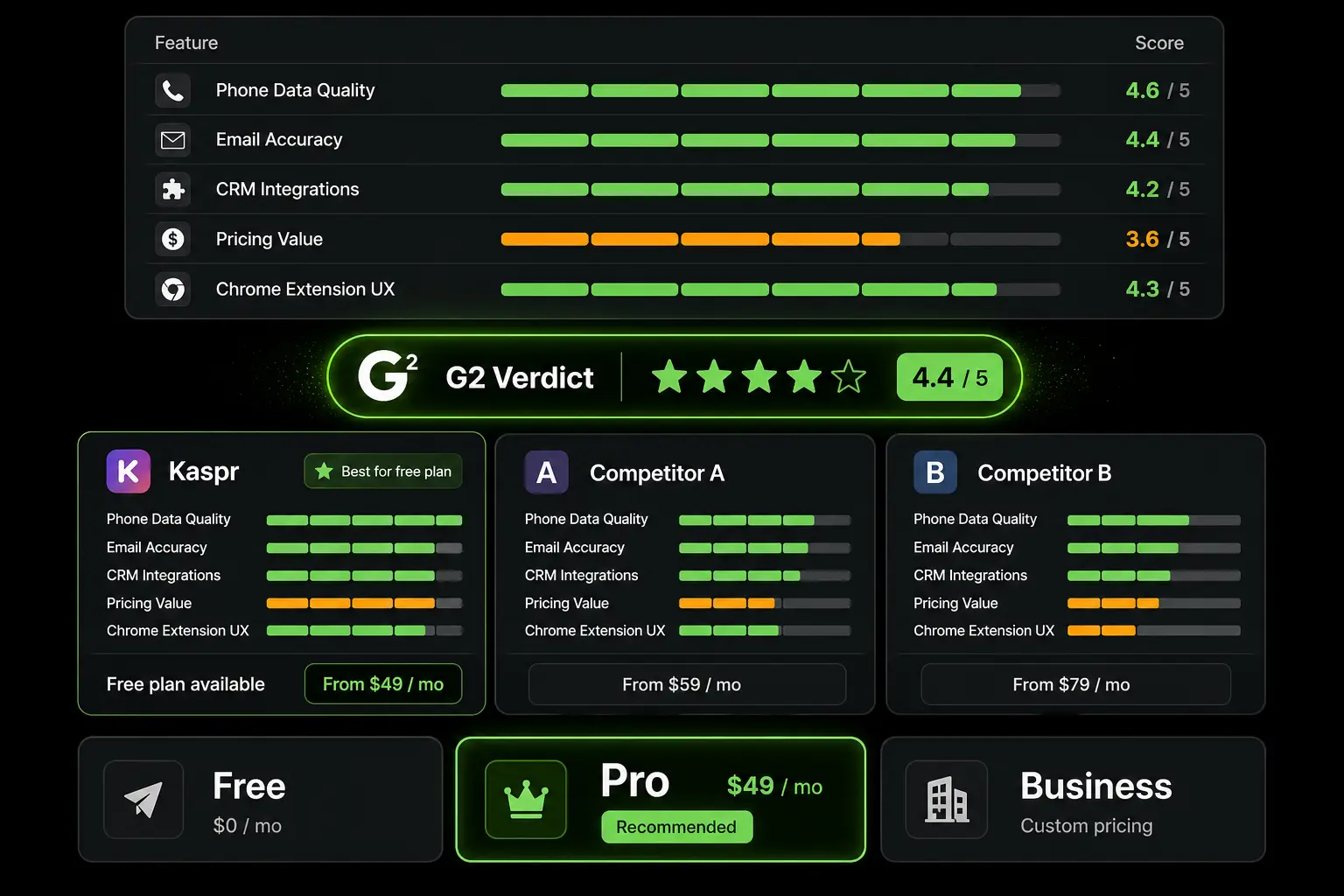

Kaspr reviews are broadly positive about the product’s speed, simplicity and integration with LinkedIn, but they also reveal recurring limitations around credit allowances, phone-number availability and the need to combine Kaspr with other sales tools. In July 2026, G2 displays a 4.4/5 rating from 837 reviews, giving it enough volume to identify meaningful patterns. Capterra currently displays only three reviews, so its 3.3/5 score should be treated as anecdotal rather than representative.
Kaspr is not a complete sales engagement platform. It is primarily a contact-data and enrichment product built around a Chrome extension, a web dashboard, lists, enrichment workflows, exports and CRM integrations. That focused positioning is exactly why many users like it—and why some teams eventually outgrow it.
This review separates verified product facts from user sentiment. It examines what reviewers consistently appreciate, where complaints recur, how the current plans and credits work, what the 2024 CNIL decision means in 2026, and when an all-in-one alternative such as Zeliq may provide a more efficient workflow.
In this article:
- Kaspr’s current positioning and ownership
- The product features that reviewers use most
- Kaspr pricing and credit rules in 2026
- The strongest positive themes in verified reviews
- The most common limitations and complaints
- GDPR and the closure of the CNIL order
- Kaspr versus Lusha, Cognism, Apollo and Zeliq
- A reproducible testing framework
- Frequently asked questions
Key takeaways:
- G2 currently shows 4.4/5 from 837 reviews, making it the most useful review source for Kaspr.
- The Chrome Web Store shows 4.7/5 from roughly 1,200 ratings and 100,000 users.
- Users most often praise ease of use, quick LinkedIn enrichment and simple CRM exports.
- Recurring criticisms concern limited credits, incomplete phone coverage and occasional outdated or inaccurate data.
- Kaspr is best suited to teams that already prospect in LinkedIn and mainly need contact details.
- Its public pricing starts at €45 per user/month on annual billing for Starter and €79 for Business.
- Zeliq is more suitable when the objective is to combine lead search, multi-provider enrichment, assignment, CRM sync and multichannel sequences in one workspace.
Our verdict: Kaspr is a credible and easy-to-adopt LinkedIn enrichment tool. Its high review scores are consistent with a product that solves one narrow problem well. The trade-off is that teams still need to manage sourcing, sequencing, reporting and pipeline execution elsewhere. The right decision therefore depends less on the average star rating than on whether you want a focused data extension or a complete prospecting workflow.
1. Kaspr in 2026: overview and review verdict
What Kaspr is
Kaspr is a B2B contact-data platform whose main entry point is a Chrome extension. Users open the extension from LinkedIn, Sales Navigator or Recruiter Lite, reveal available contact details, save the person to a list and export the record to a CRM, spreadsheet or connected tool.
The platform also includes a dashboard, team workspaces, enrichment workflows, CSV enrichment, API access and LinkedIn cadences. However, its strongest product identity remains extension-led enrichment rather than end-to-end prospecting.
The Cognism acquisition
Cognism acquired Kaspr in April 2022. The acquisition was designed to strengthen Cognism’s presence in France and to serve earlier-stage businesses and individual contributors through a product-led, freemium model.
The two products remain distinct. Kaspr is positioned as the more accessible, self-service product, while Cognism targets larger organisations with broader data, compliance and enterprise capabilities.
Current public signals
- G2: 4.4/5 from 837 reviews
- Chrome Web Store: 4.7/5 from approximately 1,200 ratings
- Chrome Web Store users: 100,000
- Chrome extension version: 2.0.20, updated on 15 June 2026
- Public database claim: more than 500 million phone numbers and email addresses
- Minimum LinkedIn requirement: 20 connections
These figures show adoption and customer satisfaction, but they do not prove that the data will perform equally well for every geography, role or segment. Data quality must always be tested against your own ideal customer profile.
Who Kaspr fits best
Kaspr is most relevant for:
- individual SDRs or recruiters working primarily from LinkedIn;
- small sales teams that already use a CRM and sequencing tool;
- European teams looking for a self-service enrichment product;
- users who value a quick browser workflow over a complex sales-intelligence platform.
It is less compelling when a team wants to identify accounts, enrich contacts through many providers, distribute leads, launch email and social sequences, manage tasks and measure execution from one product.
2. Kaspr features users review most
The Chrome extension workflow
The extension is the feature most frequently associated with positive reviews. It reduces the number of steps required to move from a LinkedIn profile to usable contact data.
Depending on the plan and the data available, users can reveal:
- B2B email addresses;
- direct email addresses;
- phone numbers;
- job and company information;
- options to save, export or send the contact to an integration.
The free plan supports standard LinkedIn. Sales Navigator requires Starter, and Recruiter Lite requires Business.
Lists, workflows and LinkedIn cadences
Kaspr lets users save leads into lists and enrich them through workflows. Starter includes up to ten lead lists and three enrichment workflows, while Business removes several of those limits and adds more administration and reporting options.
Kaspr also refers to LinkedIn cadences in its plan documentation. These should not be confused with a complete multichannel sales-engagement system. Teams that need native email sequencing, calls, social steps and unified campaign analytics should test the entire workflow, not just the data-reveal stage.
CRM integrations and exports
Kaspr supports integrations with tools such as Salesforce, HubSpot, Pipedrive and Zoho, as well as other sales applications. This is useful for reducing manual copy-and-paste work.
Exports are nevertheless a distinct part of the credit model. A team can find a contact and still face an additional export allowance when it moves that person to a CSV or integration. This matters for high-volume workflows.
CSV and bulk enrichment
CSV enrichment is available for files containing standard LinkedIn URLs. Kaspr’s documentation recommends keeping the file simple and notes that Sales Navigator URLs are not accepted in this workflow.
Teams should run a small sample before a bulk operation because the credit behaviour can differ between the extension, workflows and CSV enrichment.
Important: review scores usually reflect the visible extension experience. They do not automatically account for the total cost of Sales Navigator, a sequencing platform, CRM administration and the credits required to move data between systems.
3. Kaspr pricing and plans in 2026
Plans at a glance
| Plan | Public price | Main annual allowances | Typical use |
|---|---|---|---|
| Free | €0 | 15 B2B email credits/month, 5 phone credits/month, 5 direct email credits/month, public page shows 100 exports | Initial data-quality test on standard LinkedIn |
| Starter | €45/user/month annually; €59 monthly | Unlimited B2B emails, 1,200 phone credits, 60 direct email credits, 12,000 exports | SDRs using Sales Navigator |
| Business | €79/user/month annually; €99 monthly | Unlimited B2B emails, 2,400 phone credits, 2,400 direct email credits, 30,000 exports | Teams needing Recruiter Lite, permissions and reporting |
| Enterprise | Custom | Custom or unlimited allowances, intent data, advanced Salesforce enrichment and SSO | Larger teams with negotiated requirements |
Annual billing is advertised with savings of up to 25%. Starter and Business credits are added for the year and can be shared within the account, subject to the terms of the plan.
A documentation discrepancy to check
Kaspr’s public pricing page and help centre are not fully aligned on every Free-plan allowance. The pricing page currently shows 15 B2B email credits and 100 exports, while the help article describes a referral mechanism for unlimited B2B emails and a smaller initial export allowance.
This does not necessarily mean the product is incorrectly billed: pricing pages, referral rewards and in-app allowances can be updated at different times. It does mean that buyers should confirm the exact allowance displayed in their own workspace before calculating ROI.
What the price does not include
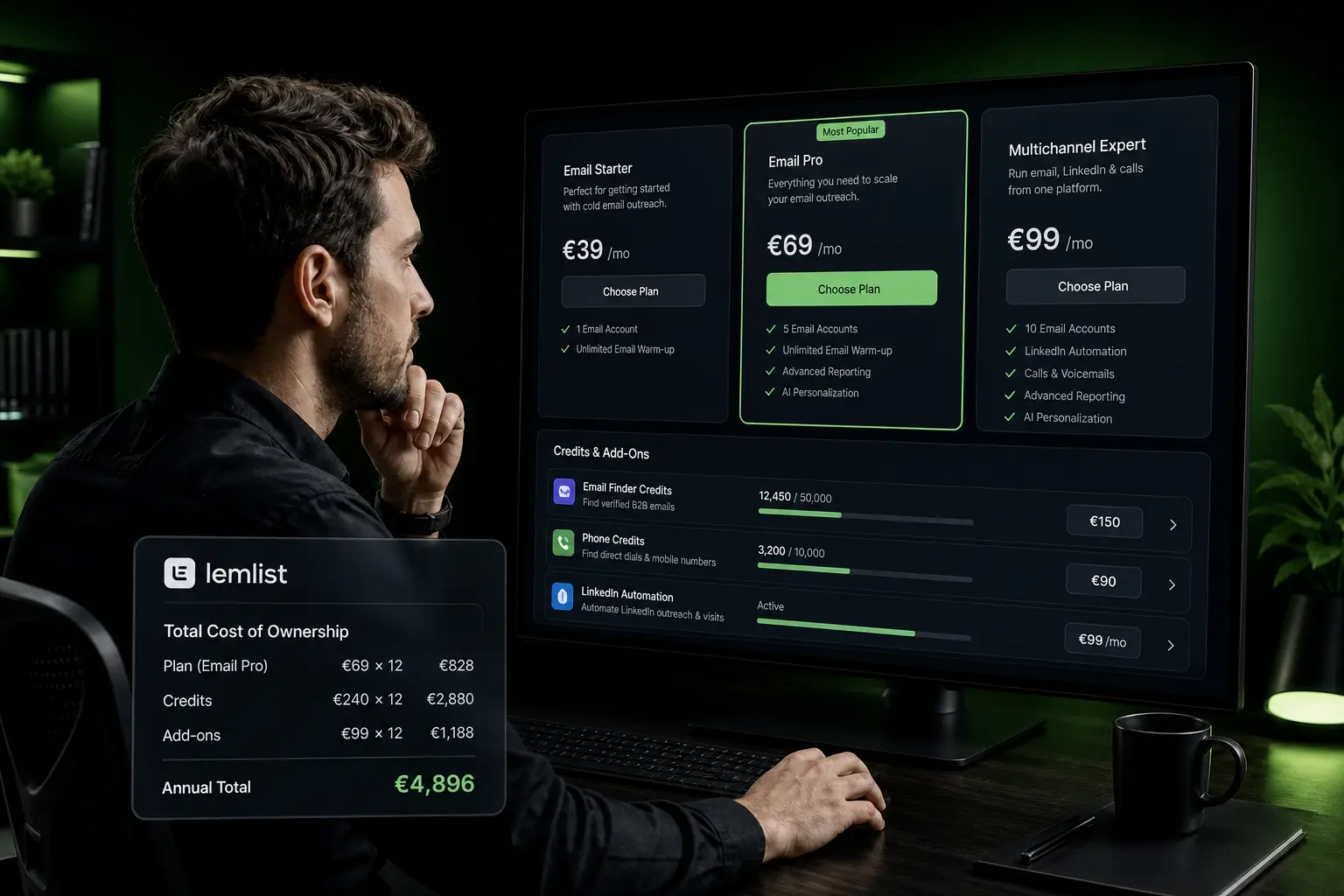
A realistic total-cost calculation may also include:
- LinkedIn Sales Navigator or Recruiter Lite;
- a cold-email or sales-engagement platform;
- a dialler;
- CRM licences and integration work;
- additional Kaspr credits;
- time spent reconciling data and campaign reporting across tools.
Kaspr can remain cost-effective when those systems already exist. The stack becomes harder to justify when several new subscriptions are needed to turn the enriched contact into an executed campaign.
4. How the Kaspr credit system affects reviews
Four types of credits
| Credit | What it unlocks | What buyers should monitor |
|---|---|---|
| B2B email | A professional email address | Free allowance and referral rules can differ between pages |
| Phone | The phone numbers available for one profile | Phone coverage is a frequent review topic |
| Direct email | A personal or direct email address | Allowance differs sharply between Starter and Business |
| Export | Moving a profile to CSV, Excel or an integration | Exports can become a separate volume constraint |
Why credit limits create friction
Reviewers who use Kaspr occasionally often consider the product affordable and convenient. High-volume users are more likely to notice the separation between phone, direct-email and export credits.
The practical problem is not simply “running out of credits.” It is forecasting the correct mix. A team may have enough B2B emails but too few phone credits, or enough data reveals but insufficient exports for the CRM workflow.
Shared credits and rollover
Starter and Business plans advertise shared credits and rollover. This is useful for teams whose activity is uneven across users, because one rep can consume more of the common allowance while another consumes less.
The Free workspace works differently: individual allowances are not pooled in the same way. Buyers should also verify what happens to unused credits when a subscription is downgraded, cancelled or renewed.
How to size a plan
Use real activity rather than a theoretical number of prospects:
- Count the unique profiles enriched per rep each month.
- Measure how many require a phone, B2B email and direct email.
- Measure how many are exported.
- Add a buffer for failed searches and seasonal campaigns.
- Compare the expected usage with annual and monthly allowances.
This method prevents a team from choosing Business only because it appears more complete or choosing Starter when the direct-email requirement makes it unsuitable.
5. What positive Kaspr reviews consistently say
1. The product is easy to use
Ease of use is the strongest recurring theme. Reviewers frequently describe installation and onboarding as simple, and they value the ability to retrieve data without leaving LinkedIn.
This matters because a data tool with a low learning curve is more likely to be adopted by SDRs and recruiters. The extension also makes the product easy to trial without a long implementation project.
2. The extension speeds up contact discovery
Users appreciate seeing available emails and phone numbers while they browse profiles. The perceived time saving comes from eliminating manual searches and reducing the number of browser tabs, not from a guaranteed number of hours saved.
The gain is highest when the prospect is already known. Kaspr does not remove the need to define an ICP, identify accounts or decide which people deserve outreach.
3. LinkedIn integration feels natural
Kaspr’s interface is closely aligned with the way many sales and recruiting teams already work. That makes the extension attractive to users who spend most of their sourcing time inside LinkedIn and Sales Navigator.
The workflow becomes less differentiated for teams that source contacts from company websites, CRM records, events, spreadsheets and other databases as well as LinkedIn.
4. The data is useful when available
Many positive reviews say that Kaspr provides relevant and current contact details. This should be interpreted as a user-experience trend, not as proof of a universal accuracy rate.
No public star rating can tell you the coverage for French CFOs, German plant managers, US SaaS founders or another specific segment. A representative sample is still required.
6. What negative or mixed reviews reveal
1. Phone-number coverage is inconsistent
Some reviewers report that phone numbers are missing, outdated or incorrect. This is normal in B2B data markets, where people change jobs, numbers are reassigned and coverage varies by country and seniority.
The important metric is not an advertised database size. It is the percentage of target profiles for which a usable direct number is found and the percentage that connects to the intended person.
2. Free and paid credits can feel restrictive
The Free plan is enough for a small test but not for sustained prospecting. Paid plans offer much higher allowances, yet the separate credit categories still require monitoring.
This criticism is especially relevant for teams that want both phone numbers and direct emails, or that export every contact into another system.
3. Support experiences vary
Most public reviews focus on the product rather than support, but some low-scoring reviews mention difficulty obtaining a satisfactory resolution. The available evidence is not sufficient to generalise that the support service is poor.
During a trial, teams should therefore test a real support request: ask about a credit discrepancy, integration issue or missing record and evaluate the response time and quality.
4. Kaspr solves enrichment, not the full sales process
Kaspr can save a contact, launch LinkedIn cadences and push records to other systems, but many teams still need separate tools for advanced prospect search, cold-email sequences, calling, lead distribution and campaign reporting.
This is not a product defect. It is a scope decision. It becomes a limitation only when the buyer expects Kaspr to replace an all-in-one sales platform.
5. Review platforms have their own limitations
G2 has enough Kaspr reviews to identify patterns, but its review population may overrepresent active software users and invited reviewers. Capterra currently has only three reviews, which is too small a sample for a stable score.
The Chrome Web Store rating evaluates the extension experience but says less about team administration, annual contracts, API usage or CRM operations.
7. Kaspr, GDPR and the CNIL decision
What happened in 2024
In December 2024, the French data protection authority fined Kaspr €240,000 and issued an order covering several GDPR issues. The CNIL said the company had collected contact details from LinkedIn users who had limited profile visibility, renewed retention periods when profiles changed, provided incomplete or insufficiently accessible information to individuals, and did not provide enough detail about data sources in response to access requests.
What changed by March 2026
On 6 March 2026, the CNIL announced the closure of the order. It stated that Kaspr had demonstrated compliance with the required measures within the deadline.
According to the CNIL, Kaspr chose to delete its database and stop collecting data from LinkedIn, removed the automatic renewal mechanism for retention periods, made information available in all official EU languages and responded to the relevant access requests.
How buyers should interpret this
The closure means the CNIL considered the corrective order satisfied and did not impose the additional daily penalty. It does not erase the original infringement or turn compliance into a permanent guarantee.
A professional buyer should still assess:
- the lawful basis for its own prospecting activities;
- how data subjects are informed;
- objection and deletion processes;
- data retention inside the CRM;
- the sources and contractual commitments applicable to current data.
Compliance is shared between the data provider and the customer using the data. Buying access to a database does not remove the customer’s obligations.
8. Kaspr versus Lusha, Cognism, Apollo and Zeliq
Kaspr vs Lusha
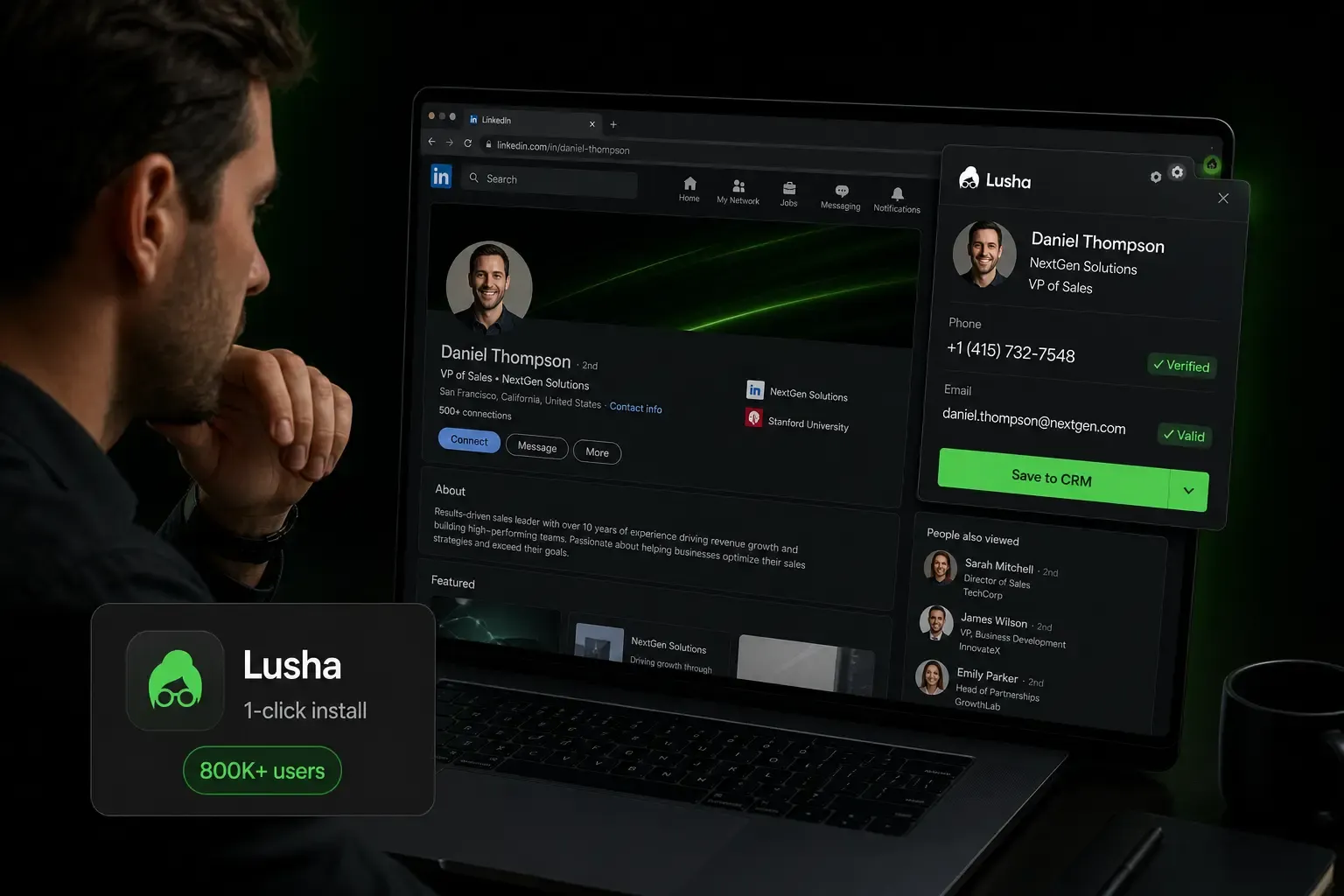
Kaspr and Lusha are close functional competitors because both use a browser-extension workflow to reveal contact details. The best choice depends on actual coverage for your target market, the credit model and the systems already present in your stack.
Do not rely on generic claims that one provider always wins in Europe and the other always wins in North America. Test the same contacts in both products and compare found rate, usable rate and cost per usable record.
Kaspr vs Cognism
Kaspr is the self-service, product-led option within the Cognism group. Cognism is designed for organisations that need enterprise sales intelligence, broader governance and a sales-led buying process.
Choose between them based on procurement, data requirements and team scale, not simply because one is the parent company of the other.
Kaspr vs Apollo
Apollo provides a broader database and sales-engagement environment, including prospect search and sequences. Kaspr is narrower and can be faster for a user who simply wants to enrich a LinkedIn profile.
Apollo is more comparable to a platform; Kaspr is more comparable to a specialised data layer. Teams should compare total workflow complexity and data performance rather than feature counts alone.
Kaspr vs Zeliq
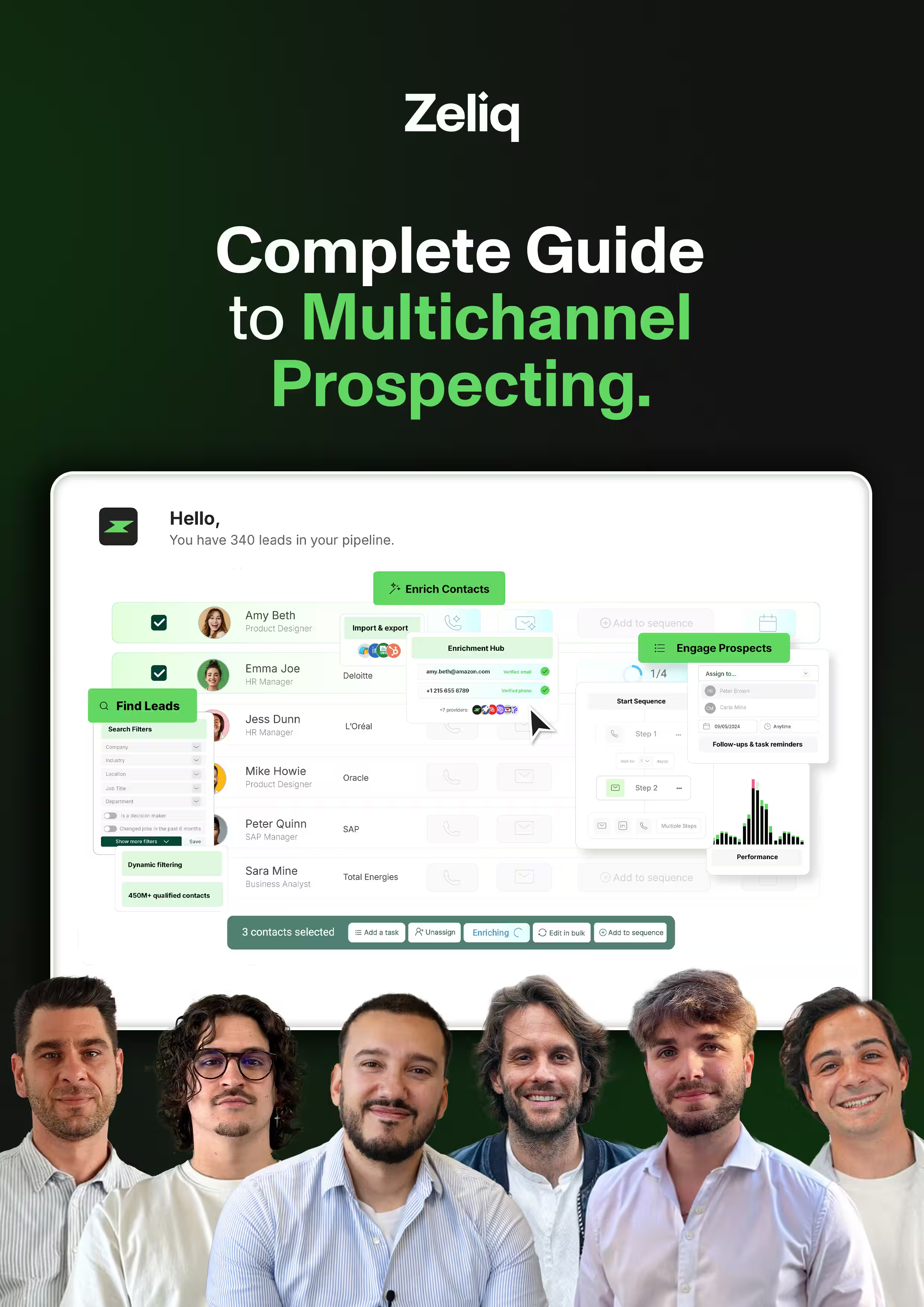
Zeliq combines lead discovery, a database of more than 450 million contacts, waterfall enrichment across more than 40 providers, browser-based capture, lead assignment, CRM synchronisation and multichannel sequences.
Kaspr may be the better fit when:
- your team already has sourcing and engagement tools;
- most work starts on LinkedIn;
- you want a focused extension with a self-service plan;
- the Kaspr test performs well on your target segment.
Zeliq may be the better fit when:
- you want to reduce the number of tools in the stack;
- contacts come from several sources, not only LinkedIn;
- you need multi-provider enrichment rather than one enrichment workflow;
- reps should assign, enrich and launch outreach without exporting between systems;
- managers need a unified view of prospecting execution.
See how Zeliq compares to Kaspr before choosing a data-only or all-in-one approach.
9. How to test Kaspr instead of trusting reviews blindly
Build a representative sample
Select 50 to 100 real prospects across the countries, functions, seniority levels and company sizes that matter to your team. Avoid cherry-picking profiles you already know will be easy to enrich.
Define measurable outcomes
Track at least:
- phone found rate;
- B2B email found rate;
- direct email found rate;
- valid email rate after verification;
- correct-person phone rate;
- time from profile to CRM-ready record;
- credits consumed per usable contact;
- cost per usable email and phone number.
Test the complete workflow
Do not stop when data appears in the extension. Export the contact, map fields to the CRM, assign the lead, place it into a campaign and confirm that opt-out and suppression rules are respected.
This is where differences between a focused enrichment tool and an integrated platform become visible.
Compare alternatives on the same profiles
Run Kaspr and one or two alternatives against the same sample. Keep the evaluation blind where possible so the person validating the results does not know which provider produced each record.
Then compare performance by segment. A provider can be excellent for one country and weak for another, making a blended or multi-provider approach more efficient than a single global winner.
Make a go/no-go decision
Define the minimum acceptable thresholds before the test. For example:
- a minimum phone found rate;
- a maximum invalid email rate;
- a maximum cost per usable contact;
- a maximum number of manual steps;
- a minimum support-response standard.
If Kaspr meets those thresholds and integrates cleanly with the existing stack, the positive reviews are relevant to your use case. If it does not, its overall 4.4/5 rating should not override your own evidence.
10. Frequently asked questions
Is Kaspr a good tool?
Kaspr is a good tool for LinkedIn-centred contact enrichment, especially when users value speed and ease of adoption. Its 4.4/5 G2 score across 837 reviews and 4.7/5 Chrome Web Store rating support that conclusion. It is less suitable as a standalone replacement for prospect search, multichannel sequencing and sales-pipeline management.
Is Kaspr free?
Kaspr has a permanent Free plan, but its allowances are designed for evaluation rather than sustained prospecting. The current public pricing page shows 15 B2B email credits, five phone credits and five direct-email credits per month. Because the help centre describes some different referral and export rules, verify the exact figures displayed in your account.
How accurate is Kaspr?
There is no reliable public accuracy percentage that applies to every market. Reviews suggest that many users find useful data, while others report missing or inaccurate phone numbers. Test at least 50 representative prospects and calculate found rate, validity and correct-person reachability separately.
Is Kaspr GDPR compliant after the CNIL fine?
The CNIL closed its corrective order against Kaspr in March 2026 after the company demonstrated that it had implemented the required measures. This is an important compliance update, but customers must still assess their own legal basis, information duties, retention periods and objection processes.
Should you choose Kaspr or Zeliq?
Choose Kaspr for a focused LinkedIn enrichment workflow; choose Zeliq when you want to find, enrich, assign and engage prospects from one platform. The correct choice depends on data performance for your ICP and the number of additional tools required around the product.
11. Conclusion: our final Kaspr review
Kaspr earns positive reviews because it is simple, fast and clearly focused. For a salesperson or recruiter who already works inside LinkedIn, the extension can remove friction and provide contact details without a complex implementation.
The main limitations are equally clear: data coverage varies, credits require careful sizing, review scores do not prove accuracy for a particular segment, and Kaspr does not replace the full prospecting stack for most teams.
The most rational decision is to run a controlled test against real prospects, validate the complete path from profile to outreach, and calculate total cost rather than subscription price alone.
- Test Kaspr on 50 to 100 representative contacts.
- Measure usable data and credits consumed, not just records found.
- Compare the complete workflow with an all-in-one alternative.
Test a complete alternative to Kaspr
Zeliq combines contact search, enrichment across more than 40 providers, browser capture, CRM synchronisation and multichannel sequences in one workspace. Compare both products on the same prospects before committing.
Try for freeTo compare enrichment and execution in one environment, try Zeliq for free and run the same sample through both workflows.