

Agentic AI for sales is software that takes actions on its own toward a sales goal rather than waiting for a human to act on its suggestions, meeting four academic criteria per aggregated SERP commentary verified September 2026 (receives goal specification not task specification, selects and invokes tools autonomously, maintains state across multiple steps, produces completed work without human intervention at intermediate steps). In 2026, most B2B teams deploy two to four agentic AI agents in combination picked by which part of the funnel is the binding constraint per aggregated SERP, with multi-agent setups becoming standard where specialized agents collaborate on complex workflows (prospecting, qualifying, booking, forecasting). This article maps the agentic definition, 5 characteristics, multi-agent architecture, 6 leading tools, autonomy levels, compliance, and 3 FAQ.
For a Head of Sales, VP Revenue, RevOps engineer, or founder evaluating agentic AI for sales, this article gives the definition framework + tool grid + autonomy guardrails.
On the agenda:
- What makes AI “agentic” vs AI “assistive”
- The 4 academic criteria for agentic systems
- 5 characteristics checklist (goal-oriented, independent, aware, learning, adaptive)
- Multi-agent architectures in 2026
- 6 leading agentic AI sales tools
- Autonomy levels (approval-bounded to fully unsupervised)
- When agentic AI wins vs when assistive AI wins
- Compliance: GDPR, AI governance, approval workflows
- 3 FAQ (definition, deployment, risks)
Key takeaways:
- Core distinction: agentic AI takes action; assistive AI produces insights for humans
- 4 academic criteria: goal (not task) specification, autonomous tool selection, state across steps, completed work product
- 5 characteristics: goal-oriented, independent decision, environmental awareness, continuous learning, adaptive execution
- Multi-agent pattern: 2-4 agents typical, specialized per funnel stage
- 6 leading tools: Artisan Ava, 11x.ai, Amplemarket Duo Copilot, Outreach AI agents, Clay AI blocks, Zeliq
- Practical reality 2026: most deployments are human-approved + bounded, not fully unsupervised
- Autonomy risk: fully unsupervised selling rarely safe in B2B; approval-bounded wins
- Compliance: AI governance + FTC CAN-SPAM + GDPR (CNIL 2025 €486M)
1. What makes AI “agentic” vs AI “assistive”
The vendor marketing in 2026 blurs the line between agentic AI and AI assistants. The useful distinction per aggregated SERP commentary verified September 2026:
Assistive AI: produces insights and recommendations (forecasts, lead scores, suggested next steps). A human acts on them. Scales human cognition.
Agentic AI: takes action itself (sends emails, books meetings, updates CRM, generates quotes). Operates autonomously within boundaries. Scales human throughput.
Example in sales: scoring a lead as “high priority” = assistive AI. Automatically routing the high-priority lead to the right SDR + enqueuing in sequence + sending first touch = agentic AI.
The 2026 shift: agentic AI moved from research concept to deployed product category with multiple commercial platforms.
For broader AI context see B2B contact data.
2. The 4 academic criteria for agentic systems
Per aggregated arxiv paper commentary indexed in the SERP top 10, an agentic system meets four criteria:
Criterion 1, Goal specification: receives a goal (“book 50 meetings this quarter in SaaS mid-market”) rather than a task specification (“send this email at 9am”).
Criterion 2, Autonomous tool selection: selects and invokes tools (databases, enrichment APIs, email, LinkedIn, CRM) on its own based on the goal.
Criterion 3, State across multiple steps: maintains context across sequential actions (remembers that it sent an email yesterday when planning follow-up today).
Criterion 4, Completed work product: produces a finished output (booked meeting, qualified pipeline, forecast report) without human intervention at intermediate steps.
Marketing claims aside, verify a tool against these four criteria during vendor demo. If vendor can’t demonstrate all four = assistive AI with marketing veneer, not agentic.
3. 5 characteristics checklist
Monday.com’s working checklist for agentic AI (per aggregated SERP commentary, not industry standard):
- Goal-oriented behavior: operates toward measurable outcomes not individual actions
- Independent decision-making: picks actions without per-step approval
- Environmental awareness: perceives signals (customer activity, pipeline state, CRM updates) and adapts
- Continuous learning: improves over time based on outcomes
- Adaptive execution: changes approach when environment shifts (prospect replies, meeting canceled, deal stalls)
Tools scoring 4-5 out of 5 characteristics qualify as genuinely agentic. 2-3 out of 5 = agentic-ish; 0-1 = assistive AI dressed up.
4. Multi-agent architectures in 2026
Mutiny observes that most B2B teams deploy 2-4 agentic AI agents in combination, specialized per funnel stage. Common patterns:
Pattern A, 3-agent prospecting: Signal agent (detects buying signals) + Research agent (compiles account briefs) + Sequence agent (writes + sends touches). Example: Amplemarket Duo Copilot.
Pattern B, 2-agent qualify + book: Qualify agent (reads replies + scores interest) + Booking agent (handles meeting scheduling + CRM updates). Common in inbound-heavy teams.
Pattern C, 4-agent full funnel: Discovery + Research + Sequence + Reply handling agents, coordinated via shared memory. Example: Artisan Ava multi-stage architecture.
Pattern D, specialist agents: separate agents for forecasting (Clari), coaching (Gong), prospecting (Artisan), coordinated by human orchestration.
Blue Prism describes the shift as “multiple AI agents collaborating on complex tasks to pass context, share long-term memory, analyze data and coordinate decisions in real time” per aggregated SERP.
See multichannel prospecting guide.
5. 6 leading agentic AI sales tools
Positioning verified September 2026:
Artisan Ava
AI BDR persona executing full outbound workflow end-to-end: sourcing + enrichment + multichannel + replies + booking. Meets all 4 academic criteria. > 90% of customers run fully autonomously per vendor claim.
11x.ai Alice
Autonomous digital worker for SDR function. Research + personalized emails + sequence management + meeting booking 24/7. Multi-persona platform (Alice for SDR, Mike for AE support).
Amplemarket Duo Copilot
3-agent architecture (Signal + Research + Sequence) with human-approval loop. Mid-autonomy, bounded agentic.
Outreach AI agents
Enterprise sequencer adding agentic AI layer. Multi-step workflow recommendations inside existing Outreach workflow. Approval-bounded.
Clay AI blocks
Workflow-first platform where users compose multi-agent workflows from LLM blocks + data providers + API calls. Highest flexibility; requires technical build.
Zeliq
AI-ready data layer feeding agentic AI workflows with verified contacts at 85-95% match rate. API-first + multichannel sequences for execution.
6. Autonomy levels (approval-bounded to fully unsupervised)
Four autonomy levels in 2026 agentic AI deployment:
Level 0, Human-driven with AI suggestions: AI recommends; human decides every action. Not agentic.
Level 1, Approval-per-task: AI drafts; human approves each individual task before execution. Lightly agentic.
Level 2, Approval-per-sequence: AI designs sequence; human approves template; AI executes all touches. Mid agentic.
Level 3, Approval-per-exception: AI runs autonomously; human reviews flagged exceptions (unusual replies, failed enrichment, compliance questions). Highly agentic.
Level 4, Fully unsupervised: AI runs end-to-end; human only reviews aggregate output periodically. Fully agentic.
Practical reality 2026 per aggregated SERP: most B2B deployments operate at Level 2-3; Level 4 remains rare and risky in B2B contexts because single bad campaigns can damage sender reputation + brand + customer relationships.
7. When agentic AI wins vs when assistive AI wins
Agentic AI wins when: - Stable templatable workflow (same ICP, same message, same cadence structure) - Volume-first motion (seat cost of human agents prohibitive) - Mature guardrails (approval boundaries, exception handling, compliance checks built in) - 24/7 time-zone coverage valuable - Clear measurable goal (meetings booked, pipeline generated)
Assistive AI wins when: - Complex multi-stakeholder enterprise deals requiring human judgment per step - Niche ICP (< 5,000 addressable accounts) where per-touch nuance matters - Early-stage startup iterating on product-market fit via human SDR learning loops - Relationship-based selling (long cycles, trust building, custom proposals) - Compliance-sensitive environments (regulated industries, custom brand voice)
Most mature teams run hybrid: agentic AI for templatable prospecting + assistive AI augmenting human SDR for complex deals.
8. Compliance: GDPR, AI governance, approval workflows
EU GDPR: automated decision-making affecting individuals requires disclosure + opt-out. Agentic AI making decisions without human review increases compliance surface area. CNIL 2025 sanctions hit €486M total.
US CAN-SPAM: FTC compliance guide requires accurate subject line + valid physical address + functional opt-out + honor opt-out within 10 business days. Agentic AI generating emails must still meet all requirements.
EU AI Act: agentic AI making consequential decisions may classify as high-risk requiring explicit human oversight requirements. Monitor 2026-2027 updates.
California CCPA/CPRA: AI automated decision-making disclosure increasingly expected.
Approval workflow requirement: Level 4 fully unsupervised agentic AI often fails compliance audits in regulated contexts. Level 2-3 with approval boundaries typically passes.
AI governance best practice: document agent goals + approval boundaries + exception triggers + audit logs. Reproducibility matters for compliance review.
Zeliq as agentic AI data layer
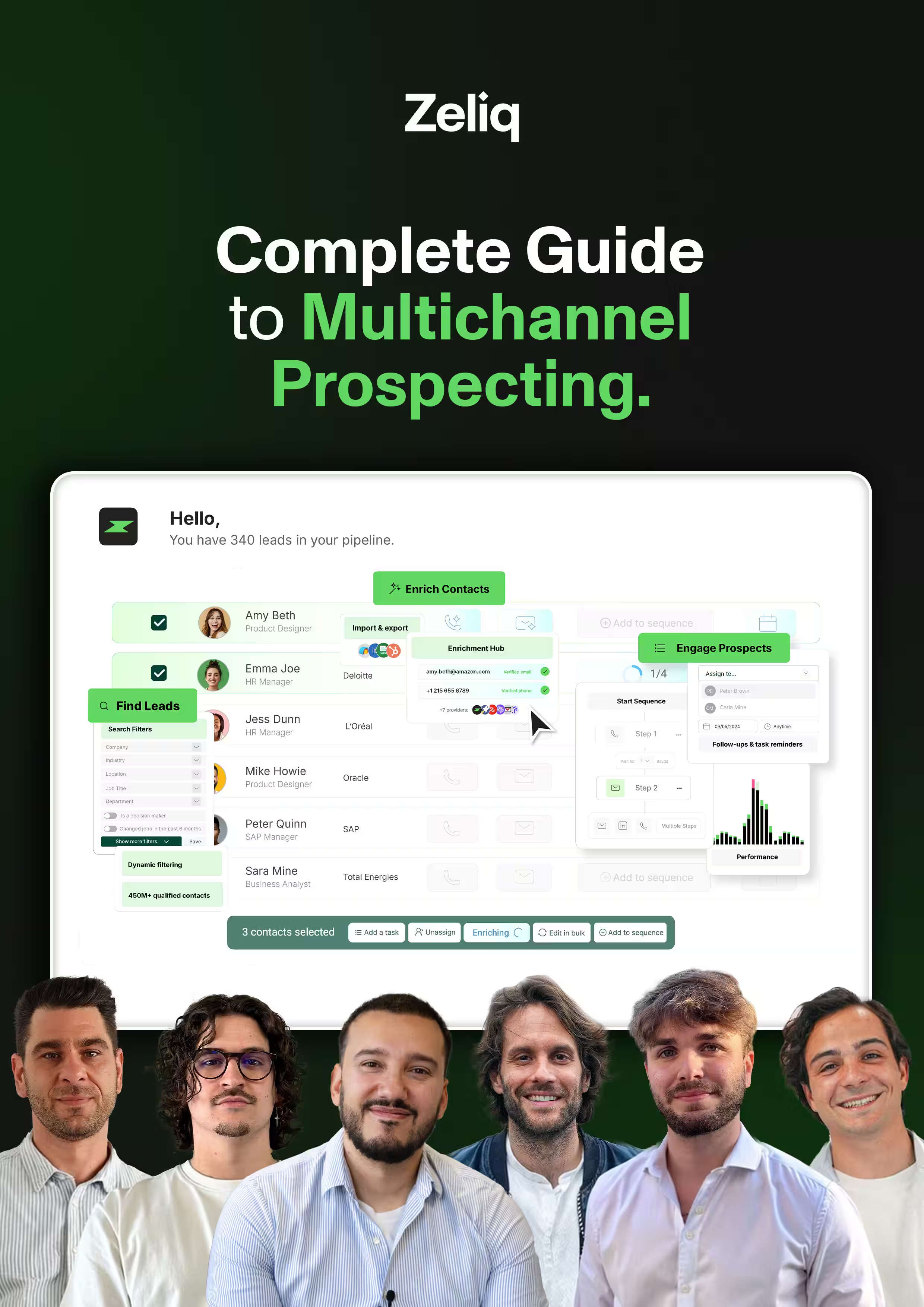
Zeliq combines a 450 million B2B contact database, waterfall enrichment with integrated email verification, API-first architecture, and multichannel sequences in one interface. Powers agentic AI workflows (Artisan Ava, 11x Alice, Amplemarket) with verified data at 85-95% match rate. GDPR-native suppression ensures agentic AI respects opt-out across the workflow.
9. Common mistakes
Mistake 1: Deploying Level 4 fully unsupervised at launch. B2B contexts rarely support fully unsupervised; start Level 2-3 with approval boundaries.
Mistake 2: Confusing assistive AI with agentic AI. Marketing blur. Test against 4 academic criteria.
Mistake 3: Agentic AI on bad data. Agentic amplifies garbage faster than assistive. Clean + verified data first.
Mistake 4: No approval boundaries. Agentic without guardrails = compliance risk + reputation risk.
Mistake 5: Agentic AI replacing all humans before validation. Pipeline collapse during tuning. Hybrid during 3-6 month transition.
10. Frequently asked questions
What distinguishes “agentic AI” from “AI assistant” for sales?
Agentic AI takes actions autonomously (sends emails, books meetings, updates CRM, chooses next steps) toward a goal; AI assistants produce insights and recommendations (scores, forecasts, suggestions) that humans then act on, the distinction is action vs recommendation per aggregated SERP commentary verified September 2026. Test: can the AI complete a sales workflow (prospect to booked meeting) without human intervention between steps? If yes = agentic. If every step requires human approval = assistive. Academic rigor: agentic system meets 4 criteria per aggregated arxiv commentary: (1) receives goal specification (book 50 meetings this quarter) not task specification (send this email at 9am), (2) selects + invokes tools on its own (databases, APIs, email, LinkedIn), (3) maintains state across multi-step sequences, (4) produces completed work product. Marketing claims aside, verify these 4 criteria during vendor demo. Current state 2026: most “agentic AI” products operate at Level 2-3 autonomy (human approves sequence template, AI executes individual touches; or human reviews flagged exceptions) rather than Level 4 fully unsupervised. Fully unsupervised agentic AI remains rare in B2B because: (a) single bad campaign damages sender reputation + brand, (b) compliance risk (GDPR + AI Act), (c) complex multi-stakeholder deals require human judgment per touch. Rule of thumb: assistive AI augments human throughput 1.5-2×; agentic AI scales throughput 3-5× on stable templatable workflows. Match tool category to motion complexity.
How should I deploy agentic AI for sales?
Deploy at Level 2-3 autonomy (approval-per-sequence or approval-per-exception) initially, pilot on 20-30% of top-of-funnel volume for 3 months, measure baseline vs agentic AI output, expand gradually with clear guardrails + exception triggers + audit logs, avoid Level 4 fully unsupervised at launch given compliance + reputation risks. Staged deployment framework: (1) Month 1: pick one workflow stage (prospecting + enrichment typically highest signal), define goal + approval boundaries + exception triggers + compliance guardrails. Audit data quality (agentic amplifies noise). (2) Month 2-3: pilot agentic AI on 20-30% of top-of-funnel. Humans review every meeting booked by AI before taking the call. Humans review AI-generated emails before send (Level 2) or review only flagged exceptions (Level 3). Measure baseline SDR output vs AI output on comparable segments. (3) Month 4-6: expand to 50-70% of volume if ROI > 1.5× human cost-per-meeting. Add second workflow stage (reply handling, meeting booking). Humans transition to higher-value conversations (demos, negotiations, strategic accounts). (4) Month 7-12: scale to full volume with feedback loops (conversation outcomes train AI). Humans oversee aggregate performance + exception review. Rarely graduate to Level 4 fully unsupervised; most mature deployments stay Level 3 permanently. Governance requirements: (a) approval boundaries documented, (b) exception triggers defined (what flags for human review), (c) audit logs retained, (d) compliance review on each quarter’s output. Avoid common failure: fully replacing humans before validation = pipeline collapse during AI tuning + reputation damage from unmonitored output.
What are the risks of agentic AI for sales?
Three main risks: compliance exposure from unmonitored decisions (GDPR + CAN-SPAM + EU AI Act), reputation damage from bad campaigns at scale (sender domain reputation + brand perception), and over-reliance that erodes human sales skills + ICP intuition, all manageable with Level 2-3 autonomy + approval boundaries + audit logs. Specific risk categories: (1) Compliance exposure: agentic AI making decisions about individuals (lead scoring, routing, outreach send) without human review may violate GDPR automated decision-making requirements. CNIL 2025 sanctions hit €486M total; CAN-SPAM violations $500-$1,500 each. EU AI Act may classify consequential sales AI as high-risk requiring human oversight. Mitigate: approval boundaries + compliance checks + audit logs. (2) Reputation damage: single bad campaign at scale (AI generating 10,000 spammy emails from compromised context) can wreck sender domain reputation for 4-8 weeks + damage brand perception. Mitigate: deliverability guardrails (warmup, rotation, spam complaint monitoring), send rate limits, exception triggers for unusual patterns. (3) Human skill erosion: SDRs who approve AI output rather than writing their own touches may lose craft over 12-24 months. Managers lose coaching material + pattern recognition. Mitigate: periodic manual rotation (SDRs write original touches monthly), feedback loops where humans teach AI (not just approve), hire profiles emphasizing strategic judgment + AI collaboration over tactical execution. (4) Vendor lock-in: agentic AI tightly coupled to specific vendor workflows; switching vendors mid-contract painful. Mitigate: multi-year contract reviews + API portability + data export rights documented. Rule of thumb: agentic AI benefits worth the risks when Level 2-3 autonomy with proper governance; Level 4 unsupervised rarely worth the risk in B2B.
11. Conclusion: 3 actions to run
Test prospective tools against 4 agentic criteria within 7 days. Goal spec + autonomous tool selection + multi-step state + completed work product.
Pilot Level 2-3 autonomy within 15 days. 20-30% top-of-funnel. Approval boundaries + exception triggers + audit logs defined.
Measure baseline vs agentic AI within 30 days of pilot. ROI > 1.5× human cost-per-meeting = expand; below = diagnose data vs guardrails vs tool.
Verified data layer powering agentic AI workflows with built-in GDPR suppression
Zeliq combines 450 million B2B contacts, waterfall enrichment with integrated verification, API-first architecture, and multichannel sequences in one interface. GDPR-native suppression ensures agentic AI respects opt-out across the workflow.
Try for freeAnd if you want verified data powering agentic AI workflows with built-in GDPR suppression, try Zeliq for free: sourcing, waterfall enrichment, verification, and multichannel sequences in one interface, no credit card required.