
Ringover vs Aircall: Which Business Phone System Is Right for Your Sales Team?
Choosing a business phone system is one of those decisions that can quietly make or break your sales team’s daily productivity. The wrong tool means dropped calls, frustrated reps, and lost pipeline. The right one means higher connect rates, better coaching, and a smoother path from first dial to closed deal.
Ringover and Aircall are two of the most widely adopted cloud-based VoIP platforms in the market today. Both let sales and support teams make calls from anywhere, integrate with popular CRMs, and track call activity. But they take meaningfully different approaches, and the better fit depends on your team’s size, geography, and workflow.
This article breaks down Ringover vs Aircall across every dimension that matters: core telephony features, call quality and reliability, AI and conversation analytics, CRM integrations, pricing, and which tool wins in specific use cases. We also explain where Zeliq fits as your contact data and multichannel sequencing layer so your reps reach the right people before they ever pick up the phone.
What Is Ringover?
Ringover is a European-born cloud telephony platform founded in France in 2018. Its pitch is an all-in-one communication suite that combines VoIP calling, SMS, video conferencing, and built-in coaching tools under one roof. Ringover targets SMBs and mid-market sales teams that want to avoid stitching together multiple vendors.
Key facts about Ringover:
- Headquarters: Paris, France
- Coverage: Strong in Europe, particularly France, the UK, Spain, and Germany
- Core differentiator: Native call coaching features (listen, whisper, barge-in) included in mid-tier plans
- Built-in contact management, call logs, and pipeline views included with each subscription
- GDPR-native data residency options for European customers
Ringover’s European roots matter in practice. Local network Points of Presence reduce latency for EU-based callers, and GDPR data residency is built in rather than bolted on. For teams prospecting into French, German, or Spanish markets, the combination of local call routing and regulatory compliance is a meaningful advantage over tools architected primarily for the US market.
What Is Aircall?
Aircall is a cloud-based call center software founded in Paris in 2014 but strongly positioned for US and global markets. It has built its reputation on an extensive integration ecosystem and a fast, easy setup that lets teams go live in minutes. Aircall targets sales and support teams ranging from startups to enterprise.
Key facts about Aircall:
- Headquarters: New York, USA (with Paris origins)
- Coverage: Strong global reach, with particular depth in North America
- Core differentiator: 160+ native integrations covering CRMs, helpdesks, and sales engagement platforms
- A rich AppConnect marketplace that extends the platform’s functionality with third-party apps
- Minimalist interface designed for fast onboarding with no hardware required
Aircall’s integration ecosystem is genuinely one of the broadest in the VoIP category. If your team already runs Salesforce, HubSpot, Pipedrive, or a sales engagement platform like Outreach or Salesloft, Aircall likely has a native connector that handles bidirectional data sync without custom development work.
Core Telephony Features: Side by Side
Both platforms cover the fundamentals well, but there are notable differences in what comes standard versus what requires an upgrade.
| Feature | Ringover | Aircall |
|---|---|---|
| Unlimited calling (within plan limits) | Yes, on most plans | Yes, on most plans |
| Call recording | Yes, all plans | Yes, all plans |
| IVR / call routing | Advanced, visual editor | Yes, straightforward setup |
| Voicemail drop | Yes | Yes |
| International numbers | 100+ countries | 100+ countries |
| SMS / text messaging | Built-in | Built-in |
| Call whispering | Yes, included mid-tier | Yes, add-on or higher tier |
| Call barging | Yes, included | Yes, higher tier |
| Video conferencing | Built-in | Not native (via integrations) |
| Power dialer | Yes | Yes |
| Parallel calls | Yes | Yes |
Ringover gives teams more out of the box in terms of coaching and communication features. Aircall keeps the interface intentionally lean and relies on integrations to extend functionality. Neither approach is wrong. The right one depends on whether you want a single consolidated tool or a best-of-breed integration hub that connects to your existing stack.
Call Quality and Reliability
Call quality is non-negotiable for sales teams. A dropped call during a critical demo or a choppy connection on a cold call costs real revenue. Both Ringover and Aircall publish a 99.99% uptime SLA and operate globally distributed cloud infrastructure.
Ringover routes calls through its own global network of data centers, with Points of Presence across Europe and North America. European customers benefit from local routing that reduces latency. The platform includes real-time network quality monitoring within the dashboard so teams can identify issues proactively and resolve them before calls are affected.
Aircall operates a cloud-native, globally distributed infrastructure purpose-built for business calling. It has a strong track record with high-volume call center environments and provides diagnostic tools to identify local network issues before they affect live calls.
In practice, both platforms deliver reliable, high-definition audio for the vast majority of teams. Network quality on the customer’s side matters more than the tool itself: teams with poor internet connectivity will experience issues on either platform. Both vendors provide pre-call network diagnostics to help teams identify and address local infrastructure gaps.
Customer support is often the real differentiator in day-to-day operations. Ringover offers 24/7 phone support on higher-tier plans. Aircall provides email and chat support across plans, with dedicated account management for enterprise customers.
AI and Conversation Analytics
This is where the two platforms are investing heavily in 2025 and 2026, and where their approaches diverge most sharply.
Ringover AI Features
- Automatic call transcription in multiple languages, including French, English, Spanish, and German
- AI-powered call summaries that generate structured notes immediately after each call
- Sentiment analysis that scores calls by customer mood and engagement level
- Call coaching scores that grade rep performance against defined criteria and rubrics
- Keyword tracking to flag calls where specific topics or competitor names come up
Aircall AI Features
- AI transcription via native tooling and integrations (notably with Gong, Chorus, and Salesloft)
- AI call summaries pushed to connected CRMs automatically after each call ends
- Keyword spotting and topic detection within call recordings
- Coaching workflows built around call recordings, tags, and rep scorecards
- Deep native integration with leading conversation intelligence platforms
The key difference: Ringover bakes AI features into the platform at a lower price point, while Aircall leans on its integration ecosystem to deliver conversation intelligence through partners like Gong and Salesloft. If you already use those tools, Aircall’s approach may deliver richer AI insights. If you want one fewer vendor to manage, Ringover’s native AI is the more economical and streamlined choice.
CRM Integrations
This is Aircall’s strongest competitive advantage. Its AppConnect marketplace offers 160+ integrations, including:
- Salesforce (bidirectional sync, click-to-call, automatic activity logging)
- HubSpot (native integration, deal pipeline sync, contact creation on call)
- Pipedrive (call logging and contact sync)
- Salesloft and Outreach (cadence-aware calling with sequence step completion tracking)
- Zendesk, Intercom, and Freshdesk (support-side integrations for customer success teams)
- Slack and Microsoft Teams (notification and alert workflow integrations)
Ringover offers a strong but smaller integration library, covering all the major players:
- Salesforce, HubSpot, and Pipedrive
- Zoho CRM and Microsoft Dynamics
- Salesloft and Outreach
- Freshsales and Monday.com
For teams deeply embedded in a Salesforce or HubSpot workflow, both tools integrate well. For teams using niche or specialized tools, Aircall’s larger marketplace gives it a clear edge. Ringover compensates with its built-in contact management, which reduces reliance on a separate CRM for smaller or earlier-stage teams that have not yet committed to a full CRM stack.
Pricing Comparison
Pricing for both platforms is per user per month, billed annually, with minimum seat requirements that affect smaller teams.
| Plan | Ringover | Aircall |
|---|---|---|
| Entry plan | From ~$21/user/month (Smart) | From ~$30/user/month (Essentials) |
| Mid-tier | From ~$44/user/month (Business) | From ~$50/user/month (Professional) |
| Enterprise | Custom pricing | Custom pricing |
| Minimum seats | 1 (no hard minimum) | 3 users minimum |
| Free trial | Yes, 7 days | Yes, 7 days |
Ringover is generally more affordable at the entry level, especially for small teams or startups that do not yet need Aircall’s full integration depth. Aircall’s pricing reflects its broader ecosystem and proven reliability at scale for high-volume teams. Pricing changes frequently, so always verify on the vendor’s official pricing page before making a final decision.
Which Tool Should You Choose? A Decision Framework
| Use Case | Better Fit | Why |
|---|---|---|
| European team, GDPR priority | Ringover | European data residency, French support, local network PoPs |
| US-based sales team | Aircall | Strong North America coverage, familiar US integrations |
| Deep Salesforce integration | Aircall (slight edge) | More mature AppExchange presence and bidirectional sync |
| Built-in AI coaching, no extra tools | Ringover | Native transcription and coaching included at lower price |
| Lean budget, small team | Ringover | Lower entry price, no seat minimum enforced |
| Already using Gong or Salesloft | Aircall | Best-in-class native integrations with those platforms |
| Need video conferencing too | Ringover | Built-in video capability, fewer vendors to manage |
| Fast setup, minimal configuration | Aircall | Minimalist UX designed for quick go-live |
| High-volume contact center | Aircall | Proven at scale, rich analytics for large teams |
| International expansion | Either | Both cover 100+ countries with local number availability |
There is no universal winner. Ringover is the better default for European-first teams that want coaching tools and video built in without additional vendor contracts. Aircall is the better choice for US teams or those already invested in a rich integration ecosystem that they want to extend rather than replace.
Where Zeliq Fits In
Ringover and Aircall solve telephony. What they do not solve is finding the right contacts to call in the first place, enriching those contacts with verified email addresses and direct dial numbers, and running the multichannel sequences that warm prospects before your reps ever pick up the phone.
That is exactly what Zeliq is built for. With Zeliq, your team can:
- Discover ICP-fit contacts using Zeliq’s B2B contact data engine, which surfaces verified emails and direct dials across 450+ million profiles
- Enrich existing lists with waterfall enrichment via Zeliq’s B2B data enrichment, pulling from 40+ data providers to maximize coverage rates
- Run multichannel sequences combining email, LinkedIn, and call steps via Zeliq’s multichannel prospecting, so your reps reach prospects on their preferred channel
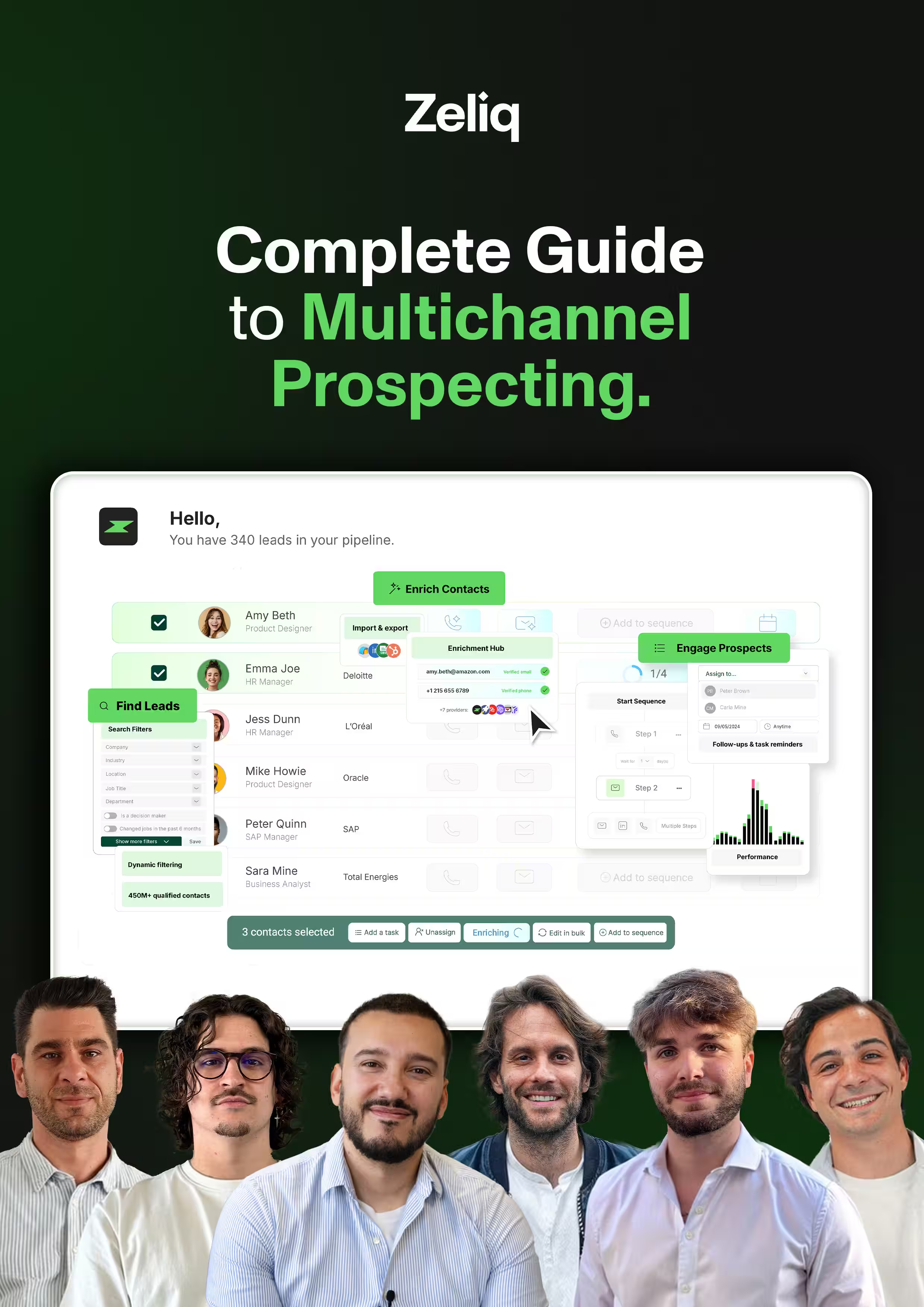
- Prospect on the fly using the Zeliq browser extension to enrich LinkedIn profiles and add contacts to sequences without leaving the page
The workflow becomes simple: Zeliq fills your pipeline with verified, enriched contacts and warms them through multichannel sequences. Ringover or Aircall handles the actual voice conversation. Used together, the two layers cover the full outbound motion from data to dial.
Your reps spend more time having real conversations and less time hunting for contact data or toggling between disconnected tools. Whether your team runs 50 dials a day or 500, pairing a strong telephony platform with a smart prospecting layer makes every single dial count more.
Final Verdict
Ringover wins if you are a European team, you want AI coaching and video built in without additional vendors, or you need to minimize costs and seat minimums for a lean operation.
Aircall wins if you are US-focused, you rely on a deep integration ecosystem, or you run a high-volume contact center that benefits from Aircall’s proven scale and marketplace breadth.
Either way, the tool that dials is only as good as the data behind the dial. Make sure your team is working from verified, enriched contact records before picking up the phone.
Ready to fill your pipeline with verified contacts and run multichannel sequences alongside your phone tool?
Try Zeliq for free