
Prospecting Definition: What Is Sales Prospecting in 2026
Ask five sales reps what prospecting means and you get five answers. Some call it cold calling. Some call it qualifying inbound leads. Some call it any activity that ends with a meeting on the calendar. Everyone is partly right, and that is exactly the problem: a fuzzy definition leads to fuzzy pipelines.
This guide gives prospecting a clean definition, separates it from lead generation and demand generation, walks through the modern types and steps, lists the channels and tools that actually work in 2026, and ends with the KPIs and mistakes that decide whether your pipeline grows or stalls. It is written for SDRs running daily activity, sales leaders sizing the engine, and founders trying to figure out where to start.
What you will get out of this article:
- A working definition of prospecting that stops the internal debate.
- A clear separation between prospecting, lead generation, and demand gen.
- The five modern types of prospecting and when to use each.
- A six-step process and a 2026 channel mix you can apply this week.
- A KPI dashboard that distinguishes activity from outcome.
Prospecting definition
Sales prospecting is the structured set of activities a revenue team uses to identify, research, and contact people who fit the ideal customer profile, with the goal of starting a qualified sales conversation.
Three things sit inside that sentence and they all matter.
It is owned by sales, not marketing. A marketing campaign that drives traffic is lead generation. A rep deciding which 50 accounts to work this week, building a contact list, and sending the first touch is prospecting. The handoff is real.
The goal is a qualified conversation, not a click. Prospecting ends when a meeting is booked, a discovery call is held, or an opportunity is created in the CRM. Anything before that is activity. Anything after that is selling.
It is targeted on purpose. A rep running cold outreach against a random list is not prospecting, they are spamming. Prospecting starts with an ICP and a reason to believe a specific person could buy.
Where the word comes from
The verb comes from the Latin prospectare, which means to look ahead, to scan a territory. Nineteenth-century miners prospected for gold. The metaphor stuck because the job has the same shape: you cover ground methodically, you read the signals, and you dig where the data points to a vein. The word survives in sales because it captures something true: most of the work is exploration, not extraction.
Suspect, lead, prospect, opportunity
The vocabulary that surrounds prospecting is loose, which is part of why teams talk past each other. Here is the cleanest way to draw the lines.
- Suspect or contact. A name and an email address that fits a rough persona. No interaction, no signal.
- Lead. Someone who has either raised a hand (downloaded an asset, requested a demo, signed up for a trial) or has been validated as a fit by a rep doing manual research.
- Prospect. A lead that a rep has talked to, who matches the buying criteria (often scored with BANT, MEDDIC, or a custom framework), and who could realistically buy in a defined timeframe.
- Opportunity. A prospect with an active buying project, an identified budget window, and a documented next step in the CRM.
- Customer. Closed-won.
Prospecting is the engine that moves a record from suspect to prospect. It is not responsible for closing, and it is not responsible for awareness. It is responsible for that middle stretch where a name becomes a real conversation.
Prospecting vs lead generation vs demand generation
These three terms get used interchangeably and they should not be. They sit on the same revenue funnel but they do different jobs.
| Dimension | Demand generation | Lead generation | Prospecting |
|---|---|---|---|
| Owned by | Marketing | Marketing | Sales |
| Goal | Create awareness and intent | Capture contact info from interested buyers | Start a qualified sales conversation |
| Output | Branded traffic, content engagement | MQLs in the CRM | Booked meetings, opportunities |
| Posture | Pull (audience comes to you) | Pull (form fill) | Push (rep reaches out) |
| Typical channels | SEO, paid social, podcast, events | Gated content, webinars, ads to landing pages | Cold email, cold call, LinkedIn, multichannel sequences |
| Time to result | 6 to 18 months | 3 to 9 months | 1 to 6 weeks |
| Main KPI | Branded search volume, share of voice | MQLs, cost per lead | Pipeline generated, meetings booked |
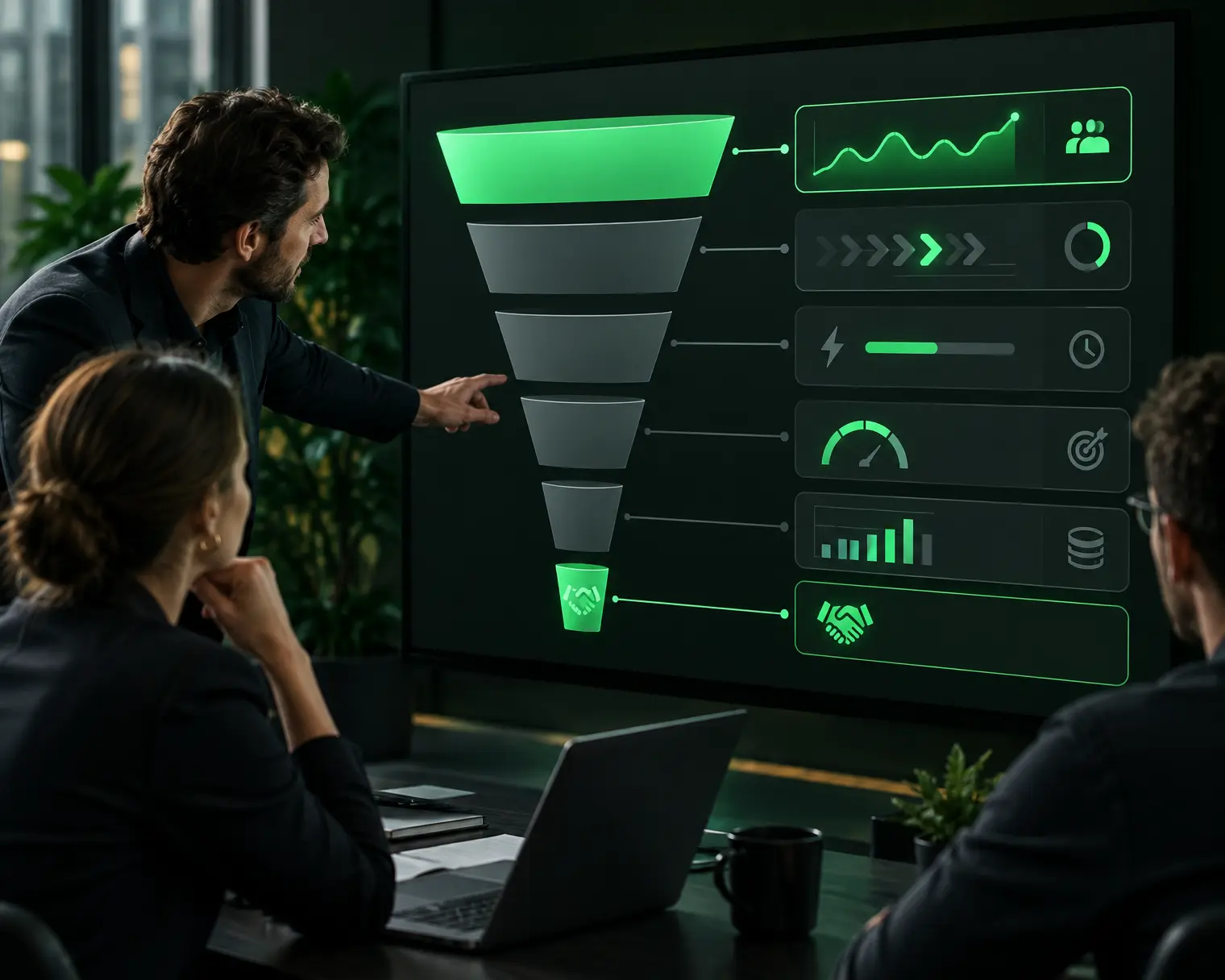
A mature B2B engine runs all three at the same time. Demand gen warms the market so prospecting lands better. Lead gen captures the hand-raisers so SDRs do not waste cold outreach on people already in the funnel. Prospecting goes after the accounts that will not raise their hand on their own.
The mistake we see most often: a founder or sales leader hires SDRs, watches the pipeline come up short, and concludes that prospecting does not work. Nine times out of ten the actual issue is that demand gen is missing, the brand has zero air cover, and every cold email lands in a vacuum.
The five types of prospecting
Modern teams do not pick one mode, they layer several. Knowing the names helps you size the right mix.
1. Outbound prospecting
The classic version. A rep builds a list, picks channels, and reaches out to people who have not asked to be contacted. Cold email, cold call, cold LinkedIn, and direct mail all live here.
Use it when: your ICP is well defined, your TAM is large enough to feed the engine, and your product solves a problem people already have but have not yet started searching for.
2. Inbound prospecting
Also called lead qualification or inbound SDR work. The rep does not source the contact, marketing does. The rep takes hand-raisers, calls them within minutes, qualifies fit, and books a meeting with an account executive.
Use it when: marketing produces enough volume to feed a dedicated rep. Connection rates and book rates are 5 to 10 times higher than cold outbound, but only if the rep is fast (under 5 minutes for the first call) and disciplined on qualification.
3. Allbound prospecting
A hybrid that blends inbound signals with outbound execution. The rep does not wait for the form fill. They watch buying signals (a website visit on the pricing page, a job change at a target account, a funding round, a post engagement on the founder’s LinkedIn) and they reach out within hours.
Use it when: you have access to intent data and the team is set up to act on a signal in real time. Allbound is becoming the default mode for high-performing teams in 2026 because it captures the warm middle that pure outbound and pure inbound both miss.
4. ABM prospecting (Account-Based)
You pick 50 to 500 strategic accounts, you map every relevant decision-maker on each, and you orchestrate a coordinated multi-touch motion across the whole buying committee. The cadence often combines email, LinkedIn, ads aimed at the account, custom landing pages, and physical mailers.
Use it when: deal sizes justify the effort (typically six figures and up), the buying committee is large, and you have alignment between sales and marketing to run the play together.
5. Referral prospecting
You ask happy customers, advisors, and your network to introduce you to specific people. The introduction does the heavy lifting on credibility, so the conversion to meeting is much higher than cold.
Use it when: you have a customer base willing to vouch, and you put real process around the ask. A casual “let me know if you think of anyone” generates almost nothing. A specific request (“can you intro me to Sarah, your head of RevOps?”) works.
The six steps of a prospecting motion
Whatever type you run, the underlying mechanics are the same. Skip a step and the whole thing falls over.
Step 1: Define the ICP
The ideal customer profile is the filter that decides who is worth contacting. A usable ICP describes the company (industry, size, stage, geography, tech stack, growth signal) and the persona inside it (function, seniority, pain, trigger). If the ICP fits on a sticky note, it is too vague.
A founder selling a tool for engineering teams should not write “tech companies.” They should write something like “Series A to C SaaS companies in the US or EU, 50 to 500 engineers, currently scaling the platform team, using Datadog or Grafana.” That second version makes list building possible. The first one does not.
Step 2: Build the list
Once the ICP is locked, the rep pulls a list of accounts and contacts that match. This is where a lead database earns its keep. A well-built list has the right people (decision-makers and influencers, not just whoever was easiest to find), with verified contact info, segmented by trigger.
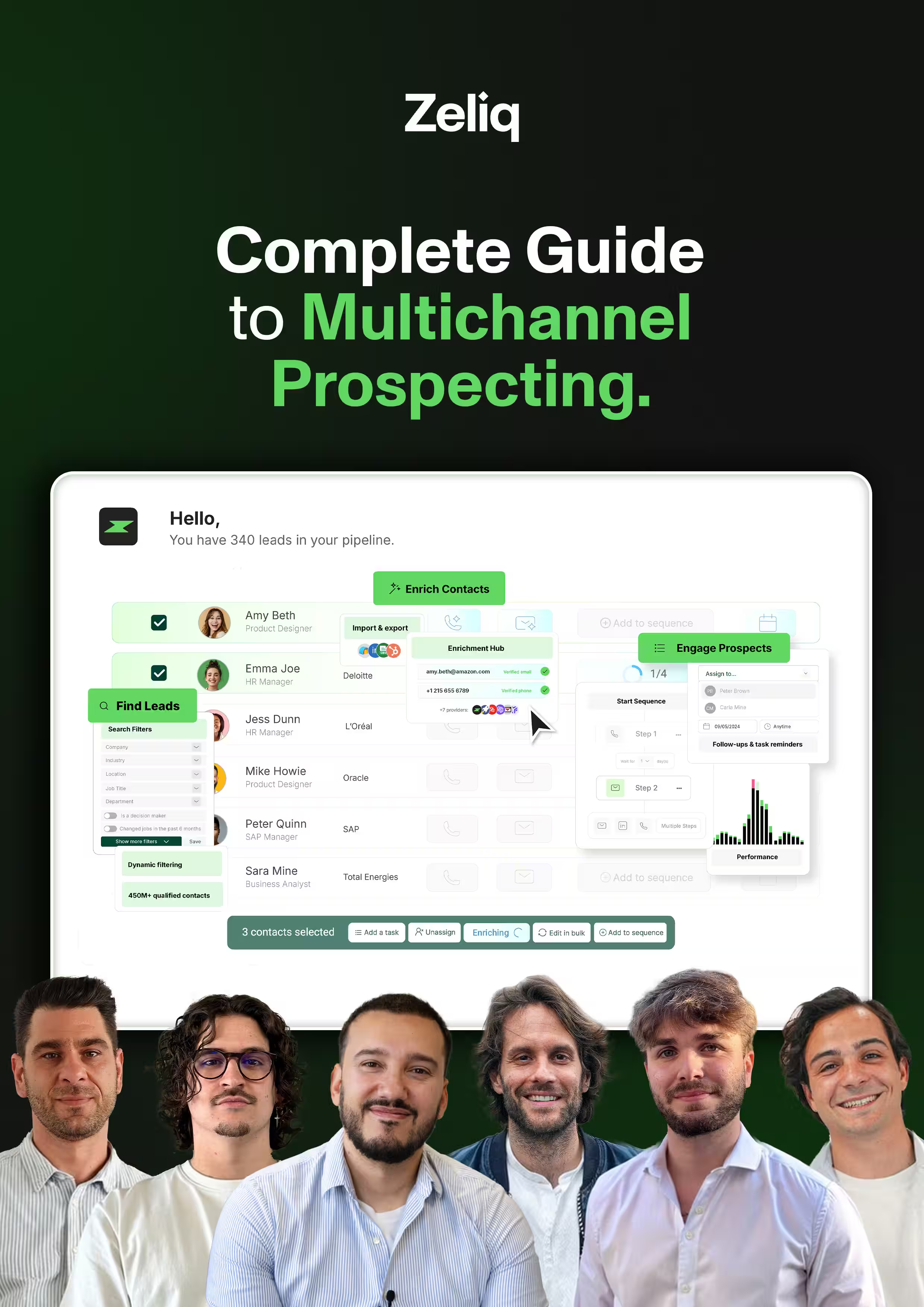
A platform like Zeliq’s lead database gives you 450M+ contacts with industry, size, role, and growth filters, so an SDR can move from ICP to a qualified working list in minutes rather than half a day in a spreadsheet.
Step 3: Enrich and verify
A list with the wrong emails is worse than no list at all because it kills your sender reputation. Before sending anything, run the contacts through enrichment to fill missing fields and verify the emails are valid and active. Modern enrichment uses a waterfall: the system checks one provider, then a second, then a third, until a verified value is returned.
Step 4: Outreach
The rep launches the sequence. In 2026, the mix that works is multichannel: a coordinated series of touches across email, LinkedIn, and phone, spaced over 21 to 30 days, with each channel reinforcing the others. A single-channel sequence (email-only or LinkedIn-only) typically reaches a 1 to 2% reply rate. A clean multichannel sequence on the same list lands between 8 and 15%.
Step 5: Qualify
When a prospect responds, the job switches from outreach to qualification. The rep validates fit (ICP), need (pain), timing (when they would buy), and authority (who else is involved). The output is a meeting with the account executive, or a clean disqualification. “Maybe” is not an outcome, it is a backlog.
Step 6: Hand off and track
A qualified meeting goes to the AE with a one-page brief: who the prospect is, what they said, what they cared about, what the next step is. The opportunity is logged in the CRM with the right source, so the team can later attribute pipeline back to the channel and the campaign that generated it. Without this last step, you cannot tell what is working, and you optimize blind.
How Zeliq helps on steps 2 to 4
Zeliq covers ICP filtering, list building from a 450M+ contact database, waterfall enrichment across 40+ providers (~80% email match rate, ~60% direct phone match), and multichannel sequences that combine email, LinkedIn, and calls in one workflow. So the SDR stops switching tools between every step and runs the whole motion in one place. Try the lead database free →
Modern prospecting channels
Channels are not interchangeable. Each one earns its place for a specific reason.
Cold email
Still the volume backbone of outbound. Done well, it scales: a single SDR can run several hundred personalized emails a day with the right tooling. Done badly, it burns the domain. The rules in 2026: warm up the domain, keep daily volume under reputation thresholds, write short and specific, personalize the first line on a real signal, and leave a clear, easy-to-decline ask.
Cold call
Underused because reps avoid it, and exactly because reps avoid it, the inbox is less crowded on the phone than in email. Connection rates have come back in 2026 thanks to mobile-first dialers and verified caller ID. The bar is to make the first 10 seconds about the prospect, not about you, and to have a real reason to call (a signal, a referral, a relevant insight).
Where a sizable share of buyers actually live, especially in technical and finance roles. Useful in three modes: profile views and connection requests as a soft warm-up, direct messaging once a connection is accepted, and engagement on the prospect’s posts to build familiarity before any pitch. Avoid the long pitch in the first message, it kills response rate.
Video
A 30 to 60 second personal video, embedded in an email or sent on LinkedIn, lifts reply rates because it is harder to dismiss than text. Reserve it for higher-value accounts because it does not scale to thousands a week.
Phone messaging (SMS, WhatsApp)
Increasingly common after a first email or call has at least registered the rep’s name. Used too early, it feels invasive. Used after a connection point exists, it gets opened almost every time.
Multichannel sequences
The point is not to use every channel, the point is to use the right mix in the right order. A typical 21-day sequence might run: email day 1, LinkedIn view + connect day 3, email day 5, LinkedIn message day 8, call day 12, video email day 16, breakup email day 21. Tools like Zeliq’s multichannel sequences automate the orchestration so the rep does not have to manage the calendar by hand.
The 2026 prospecting stack
A modern outbound team typically runs five layers.
| Layer | Job | What to look for |
|---|---|---|
| Lead database | Source contacts that match the ICP | Coverage, freshness, filter depth |
| Enrichment | Verify emails, fill missing fields, add direct dials | Waterfall across multiple providers, hit rate |
| Sales engagement | Run the sequences across channels | Multichannel native, deliverability hygiene, A/B testing |
| Signal and intent | Detect when an account is in-market | Job changes, funding, web visits, content engagement |
| CRM | Track opportunities, attribute pipeline, hand off | Native sync with the engagement tool, custom fields |
The historical pattern was to buy one best-of-breed tool per layer and stitch them together. The cost rises, the data leaks between tools, and the SDR ends up spending more time switching tabs than talking to prospects. The 2026 trend is consolidation: platforms that own database, enrichment, and engagement in one place, with native CRM sync and signal layers either built in or one click away.
Zeliq sits in this consolidated category, alongside a few others. The tradeoff is real: a unified stack saves time and avoids data drift, a best-of-breed stack gives you marginal depth on each layer. For most SDR teams under 30 reps, unified wins.
Prospecting KPIs that matter
A common failure mode is to track activity and call it performance. Touches sent is not pipeline generated. The fix is to measure both, and to read the funnel from end to start.
Activity metrics
These tell you if the engine is running.
- Contacts added per rep per day.
- Touches sent per rep per day (email + LinkedIn + calls).
- Sequence enrollment rate (how many added contacts actually got into a sequence).
Conversion metrics
These tell you if the engine is producing.
- Open rate (cold email): healthy band 40 to 60%, signals deliverability and subject line quality.
- Reply rate: 5 to 8% on multichannel is average, top quartile teams run 12 to 15%.
- Positive reply rate: at least one third of total replies should be positive or neutral, the rest are opt-outs.
- Connect rate (cold call): 5 to 10% on a clean list with verified mobile numbers.
- Meeting booked / positive reply: 40 to 60% if qualification is clean.
- Show rate (meetings actually held): 70 to 80% with good confirmation hygiene.
Outcome metrics
These tell you if the engine matters.
- Meetings booked per rep per month.
- Pipeline generated per rep per month (in dollars).
- Cost per opportunity.
- Percentage of total pipeline sourced by prospecting (vs inbound, partnerships, channel).
A useful diagnostic: if activity metrics are strong but conversion metrics are weak, the problem is the message or the targeting. If conversion metrics are strong but outcome metrics are weak, the problem is qualification, the AE handoff, or the deal team. Knowing which knob to turn saves quarters of wasted effort.
The most common prospecting mistakes
After looking at hundreds of outbound teams, the mistakes cluster.
ICP that is too broad. “Tech companies in Europe” is not a target. The reps end up shooting in every direction and the message is generic by construction. Fix: narrow until the list is uncomfortable to write down. If your ICP is uncomfortably specific, you are probably right.
Generic copy. “Hi {first_name}, I work at X and I would love to show you our solution.” This has not worked since 2019. Fix: every first line ties to a real signal on the prospect or the account. If the line could be sent to anyone, it gets read by no one.
Single channel. Email-only or LinkedIn-only sequences leave most of the audience uncovered. Fix: layer at least two channels into every sequence, three for higher-value accounts.
Giving up at touch two or three. The bulk of replies come on touches four through seven. Reps who stop at three send half the energy and get a quarter of the result. Fix: lock the cadence to at least 6 touches over 21 days.
No measurement. A team that cannot tell you its reply rate or its show rate is a team that cannot improve. Fix: weekly dashboard, end-to-end funnel, by rep and by sequence.
Ignoring deliverability. A burned domain takes weeks to recover. Fix: warm up new domains, set SPF, DKIM, DMARC, monitor bounce rates, slow down at the first sign of trouble.
What signal-based prospecting changes in 2026
The biggest shift in the last 24 months is not AI personalization, it is signal-based timing. The historical motion was to load a list and run the sequence on day one regardless of context. The modern motion is to wait until a signal fires, then move fast.
Signals worth acting on:
- Funding round or acquisition. New money triggers new spending. Reach out within 7 days.
- Leadership hire. A new VP of Sales or Head of RevOps is shopping. Reach out within 14 days.
- Job posting volume. A team scaling roles is preparing infrastructure for those roles. The posting itself is the buying signal.
- Content engagement on your own LinkedIn or blog. A prospect who likes three of your posts in a month is paying attention.
- Pricing page visit. Especially repeated, especially from the same IP. The single highest-intent signal you can get on your own site.
Teams running on signals see reply rates 3 to 5 times higher than teams running on a flat list. The technical infrastructure to detect signals (data providers, intent platforms, web analytics) has gotten cheap enough that there is no reason not to use it.
What AI changes (and what it doesn’t)
Generative AI shows up at three points in the prospecting workflow.
Research. A model can summarize a prospect’s LinkedIn, recent posts, and company news in a few seconds. The SDR walks into the email with context that used to take 15 minutes per contact.
Personalization at scale. AI generates a custom first line per prospect based on a research input. The output ranges from useful to embarrassing. The teams that win review the AI output before sending, especially on tier-one accounts. The teams that lose press send.
Reply handling. When prospects reply, AI drafts a response based on the conversation context. The rep edits and sends. This compresses what used to be the slowest part of the day.
What AI does not do: it does not invent the strategy, it does not pick the ICP, and it does not sit on the demo call. The competitive moat in 2026 outbound is not who has the best AI. It is who has the cleanest data going into the AI, the sharpest ICP, and the human judgment to know when to ignore the model. Garbage in, polite garbage out.
A 30-day starting plan for a new outbound motion
If you are a founder or a new sales leader putting an outbound engine together from scratch, here is a sequence that works.
Week 1. Lock the ICP. Write the value proposition for that ICP in two sentences. Pick the first vertical to test, ignore the rest.
Week 2. Build the first list of 200 accounts and 600 contacts. Verify the emails. Set up the domain warming if you are running cold email.
Week 3. Write the first sequence: 6 touches over 21 days, two channels minimum (email + LinkedIn), one signal-based first line. Launch it on a controlled batch of 50 contacts.
Week 4. Read the metrics. If reply rate is under 2% on the test batch, the message or the list is wrong, do not scale yet. If it is between 2 and 6%, scale to 200 contacts and iterate. Above 6%, push harder.
This is a slower start than most founders want. It is also the only one that works.
Wrapping up
Prospecting is the bridge between a market and a pipeline. It is owned by sales, the goal is a qualified conversation, and the work is structured: define the ICP, build the list, enrich the data, run the sequence, qualify the response, hand off the meeting. The teams that win in 2026 layer outbound, inbound, and signal-based motions, run multichannel sequences as the default, and measure both activity and outcome.
The fastest way to build that engine without stitching four tools together is to run it on a unified platform. Try Zeliq free to source contacts from a 450M+ database, enrich them through the waterfall, and launch multichannel sequences (email + LinkedIn + calls) in a single interface. SDRs stop juggling tabs, sales leaders see the funnel in one view, and founders get to revenue faster. Built for SDRs and sales leaders who want pipeline, not paperwork.