
LinkedIn Content Strategy: The B2B Playbook for Building Pipeline Through Content
LinkedIn content strategy is not about posting every day and hoping something lands. It is not about chasing likes or gaming the algorithm with shallow engagement bait. A real LinkedIn content strategy is a deliberate, repeatable system for putting the right ideas in front of the right people, building trust over time, and creating the conditions for pipeline to flow. For B2B sales professionals, founders, SDRs, and marketers, LinkedIn has become the highest-leverage channel available, and those who treat it strategically are pulling ahead fast.
This guide walks you through every step of building a LinkedIn content strategy that actually moves the needle: from laying the groundwork with a strong profile to measuring what matters. Along the way, you will see how content and prospecting work together to warm up leads before you ever send a cold message.
What a LinkedIn Content Strategy Is (and Is NOT)
Let us be precise. A LinkedIn content strategy is a documented plan that defines:
- Who you are talking to (your target audience and their pain points)
- What you stand for (your positioning and point of view)
- What you publish (your content pillars and formats)
- How often you show up (your publishing cadence)
- How you measure success (your KPIs)
What it is NOT: posting when you feel inspired, sharing company press releases, or reposting articles without a comment. Random activity is not a strategy. Without a clear plan, you will burn hours on content that reaches no one relevant and converts no one into a buyer.
The B2B opportunity on LinkedIn is massive. More than 65 million decision-makers are active on the platform. Organic reach, while harder to earn than it was three years ago, still outperforms almost every other channel for B2B thought leadership. The companies and individuals winning on LinkedIn have a system. This guide gives you that system.
Prerequisites: Build the Foundation Before You Post
Before you publish a single word, two things need to be in place: a strong personal profile and, if relevant, an optimized company page.
Your Personal Profile
Your LinkedIn profile is your content’s landing page. Every post you write sends curious readers to your profile to decide whether to follow you or connect. A weak profile kills conversion.
Optimize these elements:
- Headline: Stop writing your job title. Write what you do for whom and what outcome you create. “Helping B2B SaaS teams book 30 percent more meetings with smarter prospecting” beats “Sales Director at Acme.”
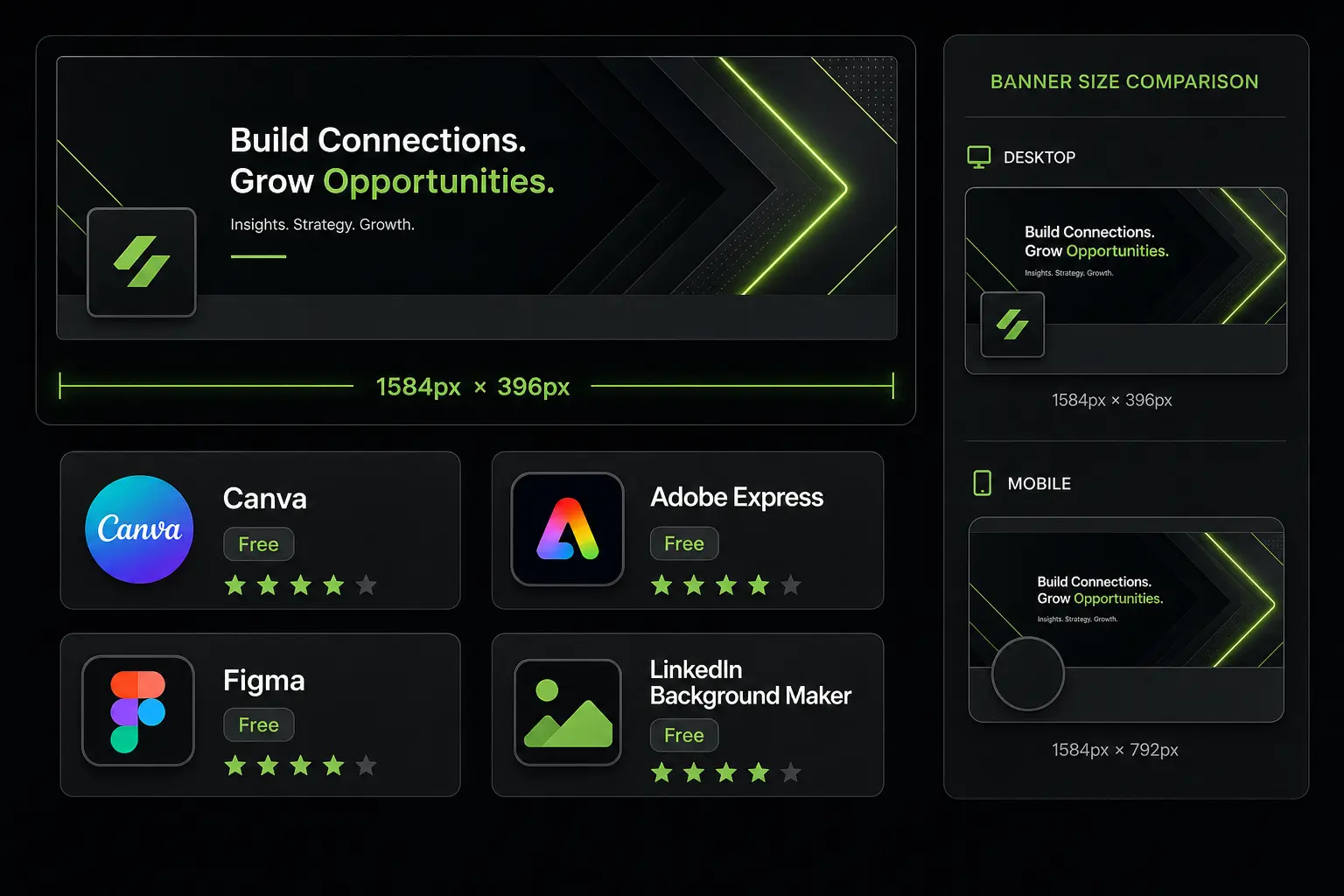
- Banner image: Use it as a billboard. Your tagline, your company, your differentiator.
- About section: Write in first person. Tell a story. Explain who you help, how, and why you do what you do. Include a clear call to action at the end.
- Featured section: Pin your best posts, a lead magnet, or a case study.
- Experience: Write results, not job descriptions.
Your Company Page
If you are building a brand presence alongside personal content, your company page needs the same rigor. Complete the About section, add a compelling tagline, post consistently, and make sure your visual identity is on-brand. A well-maintained company page reinforces the credibility your personal posts build.
Step 1: Define Your Target Audience and Angle
The first real strategic decision is: who are you trying to reach, and why should they follow you?
Start with your ideal customer profile (ICP). What is their job title? What industry are they in? What are their top three professional frustrations? What do they read, watch, and discuss? The sharper your audience definition, the more relevant your content.
Once you know who you are writing for, define your angle: the unique perspective that makes your content worth reading. On LinkedIn, originality is the scarcest resource. Anyone can share industry news. What only you can offer is your interpretation, your experience, your contrarian take, your framework.
Ask yourself:
- What do I believe that most people in my field disagree with?
- What hard lessons have I learned that others are still about to learn?
- What patterns do I see across my customers that no one is talking about?
Your angle is not a gimmick. It is the consistent intellectual identity that makes people come back. When someone sees your name in their feed, they should know immediately what kind of thinking to expect.
Step 2: Build Your Content Pillars
Content pillars are the 3 to 4 recurring themes that anchor everything you publish. They give your strategy coherence and make content creation far less overwhelming, because you are never starting from zero.
For a B2B sales professional or founder, typical pillars might look like:
- Pillar 1: Industry insights (trends, data, market shifts your audience needs to know)
- Pillar 2: Tactical how-tos (step-by-step frameworks your audience can apply immediately)
- Pillar 3: Personal stories and lessons (your wins, failures, and the principles they taught you)
- Pillar 4: Customer success and social proof (case studies, testimonials, real results)
Each pillar should map back to your target audience’s needs. If your ICP is a Head of Sales at a mid-market SaaS company, your industry insights should hit their world: quota pressure, tech stack choices, pipeline quality debates. Your how-tos should solve the problems they face today.
With four pillars and a weekly cadence, you are rotating through your themes in a way that feels varied to your reader but is effortless to plan as the author.
Step 3: Build a 90-Day Editorial Calendar
A 90-day editorial calendar is the operational backbone of your strategy. It takes your pillars and turns them into a concrete schedule.
Here is how to build one:
- Decide your posting frequency. For most B2B content creators, three to five posts per week is the sweet spot. More than that risks burnout. Fewer than three means the algorithm deprioritizes you.
- Assign pillars to days. For example: Monday = industry insight, Wednesday = how-to, Friday = personal story or case study.
- Generate topic ideas for each slot. You do not need to write the posts yet. Just fill in a working title or one-sentence premise for each slot across 90 days.
- Batch your writing. Set aside two to three hours per week to write posts in advance. Use a content calendar tool (Notion, Airtable, or even a spreadsheet) to track status.
The 90-day horizon is important: it forces you past the “inspiration-only” trap and into a systems mindset. After 90 days, review your analytics and adjust which pillars and formats performed best.
Step 4: Content Formats That Perform on LinkedIn
Format matters as much as content. The same idea packaged differently can generate ten times the reach. Here is a breakdown of what works on LinkedIn in 2026:
Text Posts (Personal Narrative)
The most powerful format for personal brands. A strong hook, tight paragraphs, a clear insight or story, and a question at the end. LinkedIn’s algorithm rewards native text. Keep paragraphs to two to three lines. Use white space aggressively. The hook (first one to two lines) determines whether anyone reads past the “see more” cutoff.
Carousels (Document Posts)
Carousels consistently generate the highest engagement rates on LinkedIn. Package a framework, a how-to guide, or a list into a visually clean slide deck. Each slide should carry one idea. Aim for 7 to 12 slides. The last slide should include a call to action (follow, comment, or DM).
Polls
Polls are underrated for audience research and engagement. Ask a question your audience has a genuine opinion on. Use the results as data for a follow-up post. Keep it to four options and a clear question. Polls boost visibility fast because every vote counts as an engagement.
Short Videos (Under 60 Seconds)
Native video gets strong reach boosts from the algorithm. You do not need production quality. A simple talking-head video shot on your phone, with captions (since most users watch without sound), works well. Topics that perform: unpopular opinions, quick tips, behind-the-scenes glimpses.
Newsletter and Long-Form Articles
LinkedIn newsletters are a growing channel. Once a subscriber base is established, every issue goes directly to subscriber inboxes, bypassing the feed algorithm. Use newsletters for your deepest, most substantive content. Long-form articles work less well for organic reach but are valuable as evergreen assets to link back to.
Step 5: Engagement and Community Building
Publishing is only half the job. The other half is showing up in other people’s content.
Comment with Substance
Do not leave “Great post!” as your engagement strategy. Write comments that add value: a counter-example, a related data point, your own experience. A strong comment on a post from an industry influencer or target prospect can generate more profile visits than your own posts.
Send Thoughtful Connection Requests
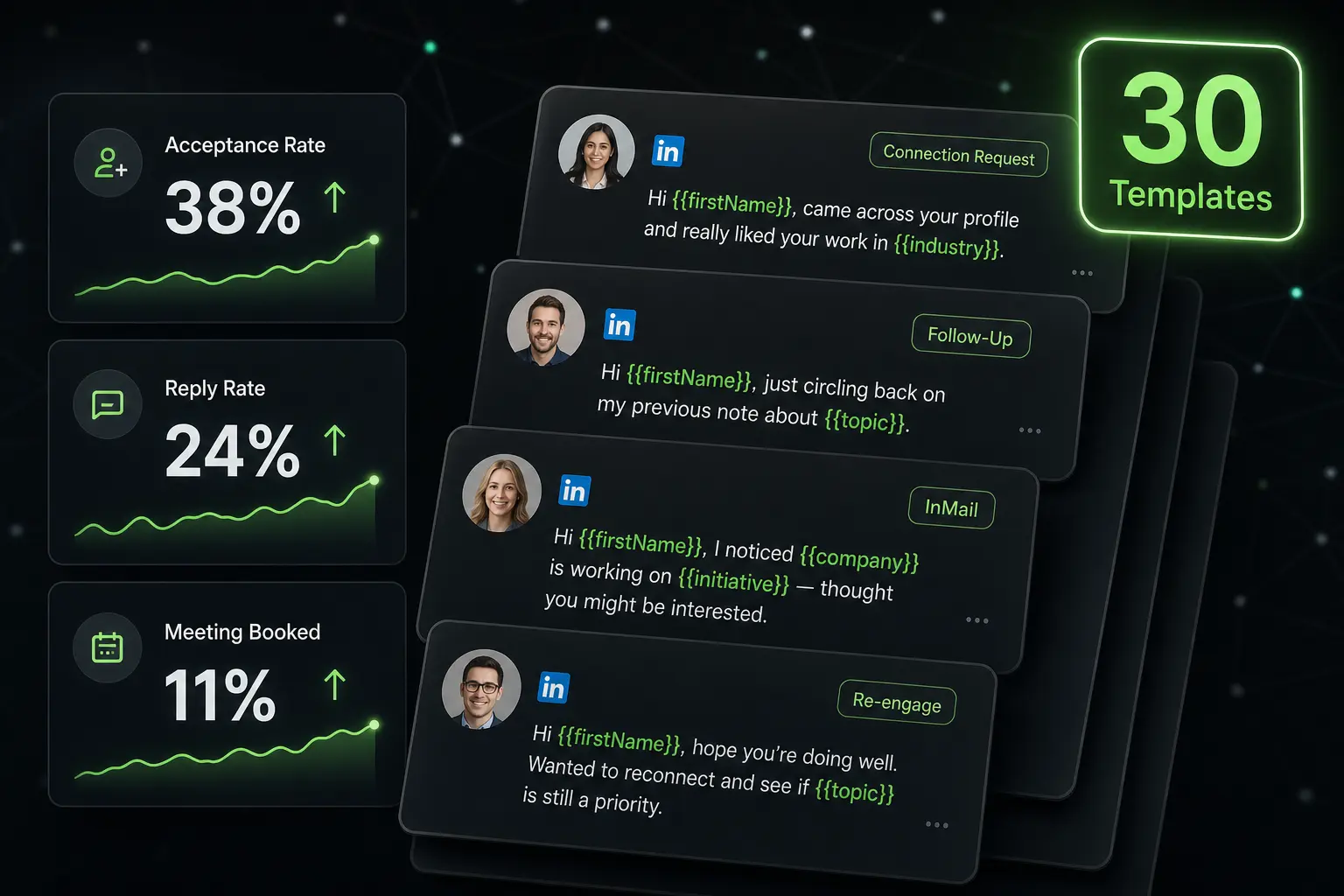
When you connect with someone, skip the default message. Reference something specific: a post they wrote, a mutual connection, a shared perspective. A personalized note dramatically increases acceptance rates.
Use DMs Strategically
When someone engages meaningfully with your content, that is a warm signal. A brief, genuine DM acknowledging the conversation and opening a line of dialogue is far more welcome than a cold pitch. Content creates the context that makes outreach feel natural.
Grow Your Network Intentionally
LinkedIn’s algorithm shows your content primarily to your first and second-degree network. Audit your connections. Connect with target prospects, industry peers, and potential partners who match your ICP. Growing the right network is more valuable than growing a large one.
Step 6: Measuring Performance
You cannot improve what you do not measure. Track these key metrics monthly:
| Metric | What It Tells You |
|---|---|
| Impressions | How many times your posts were seen |
| Engagement rate | Reactions + comments + shares divided by impressions |
| Follower growth | Whether your content is earning new audiences |
| Profile visits | Whether posts are driving curiosity about you |
| Inbound leads | The ultimate metric: DMs, connection requests, or form fills from content |
Engagement rate is more important than raw impressions. A post seen by 500 of your ideal customers is worth more than one seen by 50,000 people who will never buy from you.
Review your top five performing posts each month. What did they have in common? Format, topic, hook style, time of posting? Double down on what works.
Common Mistakes That Kill LinkedIn Content Strategies
Even well-intentioned content creators make these errors:
- Only posting company news: Your audience follows you for insight, not press releases. Company news has its place, but it should never dominate your feed.
- Inconsistency: Posting five times in one week and then disappearing for three weeks resets your algorithmic momentum and trains your audience to ignore you. Consistency beats intensity.
- No clear point of view: Neutral, safe content gets ignored. Take a position. Agree or disagree with a trend. Make a prediction. Share a lesson that includes what went wrong.
- Pitching too early: Content builds trust. Trust enables conversations. Conversations enable sales. Skip the trust-building and the pitch feels like spam.
- Ignoring analytics: Posting blindly without reviewing what works is how strategies stagnate.
How LinkedIn Content Fits Into Your B2B Prospecting Strategy
Here is the connection that transforms a LinkedIn content strategy from a branding exercise into a pipeline engine: content warms up prospects before you reach out.
When a potential customer has seen your content three, five, or ten times before your first outreach, you are not a stranger. You are a familiar voice with a point of view they respect. Response rates on outreach improve dramatically when prospects already know who you are.
The workflow looks like this:
- You publish content that speaks directly to your ICP’s challenges.
- Target prospects see, react to, or comment on your posts.
- You reach out with a personalized, relevant message that references the shared context.
- The conversation starts warmer, moves faster, and converts at higher rates.
To make this work at scale, you need to find and enrich contact data for the people engaging with your content. That is where Zeliq’s browser extension becomes a key part of the workflow: as you browse LinkedIn and identify prospects who are responding to your content, you can surface their verified contact information instantly.
From there, Zeliq’s B2B contact database lets you build targeted lists from the audience you are already attracting through content. And with multichannel prospecting sequences, you can follow up with LinkedIn connection requests, emails, and calls in a coordinated way, so that your content-warmed prospects receive outreach that feels coherent and timely rather than random.
The combination of content and prospecting is not optional for high-performing B2B teams in 2026. It is the standard. Content alone rarely closes deals. Outreach alone feels cold. Together, they create a flywheel.
Building for the Long Game
A LinkedIn content strategy takes time to compound. Most people quit before they hit the inflection point: that moment, usually around month three or four of consistent posting, when follower growth accelerates, inbound conversations start arriving, and prospects mention your posts on sales calls.
The professionals who stay the course share a few traits: they are genuinely curious about their field, they write about things they actually believe, and they treat content as a long-term investment rather than a short-term tactic.
Start with a clear audience. Build your pillars. Write your 90-day calendar. Show up consistently. Measure and iterate. And connect your content activity to your prospecting motion so that every post you publish is actively building the pipeline context you need.
Ready to turn your LinkedIn content into real pipeline? Zeliq helps you find, enrich, and reach out to the prospects already engaging with your content, across every channel.
Try Zeliq for free