
Why the future of sales is human-led and agent-executed
The traditional sales SaaS stack is broken. Here's what we built instead and why we raised €7M to go all the way.
In 2017, I co-founded Hivency thinking brands needed more marketing tools.
By 2023, watching every sales team in every company I knew, I was certain of something else entirely: sales teams don't need another tool. They don't need an "AI worker" that promises to replace them. They need a workspace where humans lead and agents execute: every step, under validation.
That's what Zeliq is. And we just raised €7M to build the full version.
Our first agent suite is already open for Beta
The first agent suite called Zelia lands right now. Agents covering sourcing, qualification, and follow-up: visible, overridable, working under rep approval at every critical step. You can already subscribe to it on Zeliq app!
And after this? Conversation intelligence. Then revenue intelligence. Then a full workspace where sales, marketing, and customer success all read from the same account context. Managed by humans, executed by agents.
What actually changed in 2024
In 2024, I started testing what the new generation of AI models could really do.
Not "write me a cold email." More like: “here's a target account, find the decision-makers, check their LinkedIn activity, pull funding signals, and build a full outreach plan per persona. Channel by channel.”
The first time it worked, without hallucinated contacts or invented company facts, something clicked.
The question stopped being: how do we help reps work faster?
It became: which parts of this work should reps not be doing at all?
How the autonomous AI wave got it wrong
The answer that emerged over 2024 was: automate everything. Remove the human. Build a digital SDR that sends at scale, around the clock, without needing feedback or approval.
The pitches were compelling. Some of those companies raised enormous rounds. For about 18 months, you couldn't open LinkedIn without seeing a demo of an "AI SDR" booking 47 meetings in a week.
Then the results came in. Domain burn. Reply rates collapsing from 4% to under 1%. Buyers receiving near-identical emails from four different tools at competing vendors in the same week. CROs who'd signed 6-month contracts and wanted out by month 3. The category had promised autonomous execution and delivered industrial-scale noise.
The failure wasn't technical. The models were capable enough. The failure was in the premise: that selling is a task to be automated at 100%. It's not.
Selling is a judgment process that contains a lot of repetitive tasks. And those tasks (enriching a contact, drafting a first message, detecting that a VP Sales just posted about scaling her team, scheduling the follow-up) yes, agents can handle all of that. They should.
But who decides what to do with the information? Who knows that this particular buyer responds to emails on Tuesday mornings and ignores LinkedIn completely? Who chooses to pause a sequence when something feels off about the account?
That's the rep. That's always been the rep.
The Agentic Revenue Workspace
What we're building is a workspace where both things coexist.
The agent handles the repetitive work. The rep runs the strategy.
Every action that matters surfaces for human review before it moves. Not as a limitation, that's the design. The rep stays in control not because we constrained the agents, but because we built the entire product around that premise.
The foundation is already live. 15,000 reps across 100 countries use it today for contact enrichment across 450M+ sources, multi-channel sequencing, and prospecting.
Our average customer sees reps go from roughly 6 meetings a week to 14. Same team, same hours. That part works. What the €7M funds is everything on top of it.
Here's what a rep's Monday morning looks like when we're done building.
She drops Amazon into the workspace. Zeliq surfaces six likely buyers, enriches their contact data, pulls three live signals on the account (a recent €42M raise, 12 new SDR job posts, a LinkedIn post from the Head of Sales about scaling her team).
An agent proposes a multi-channel outreach plan per persona. She reviews it. Edits two drafts out of six. Approves.
By Thursday, one of them replies and books. The workspace pauses all other touches on the account automatically.
Friday morning, 30 minutes before the call, she gets a brief: Marc's role, his recent posts, Amazon's current stack, three personalized openers, two likely objections.
That's not a feature set. It's a different way to work entirely. And it's what we're shipping.
Why now
The timing isn't random. Three things converged in 2024 that made this buildable.
The models learned to reason and plan, not just generate text.
The data infrastructure like enrichment APIs, intent signals, real-time company and contact data, became reliable enough to delegate to.
And the market shifted: burned CROs from the first autonomous wave are actively looking for an alternative model, one where AI helps the team rather than promises to replace it.
That window is open. It won't stay open forever.
What the €7M is actually for
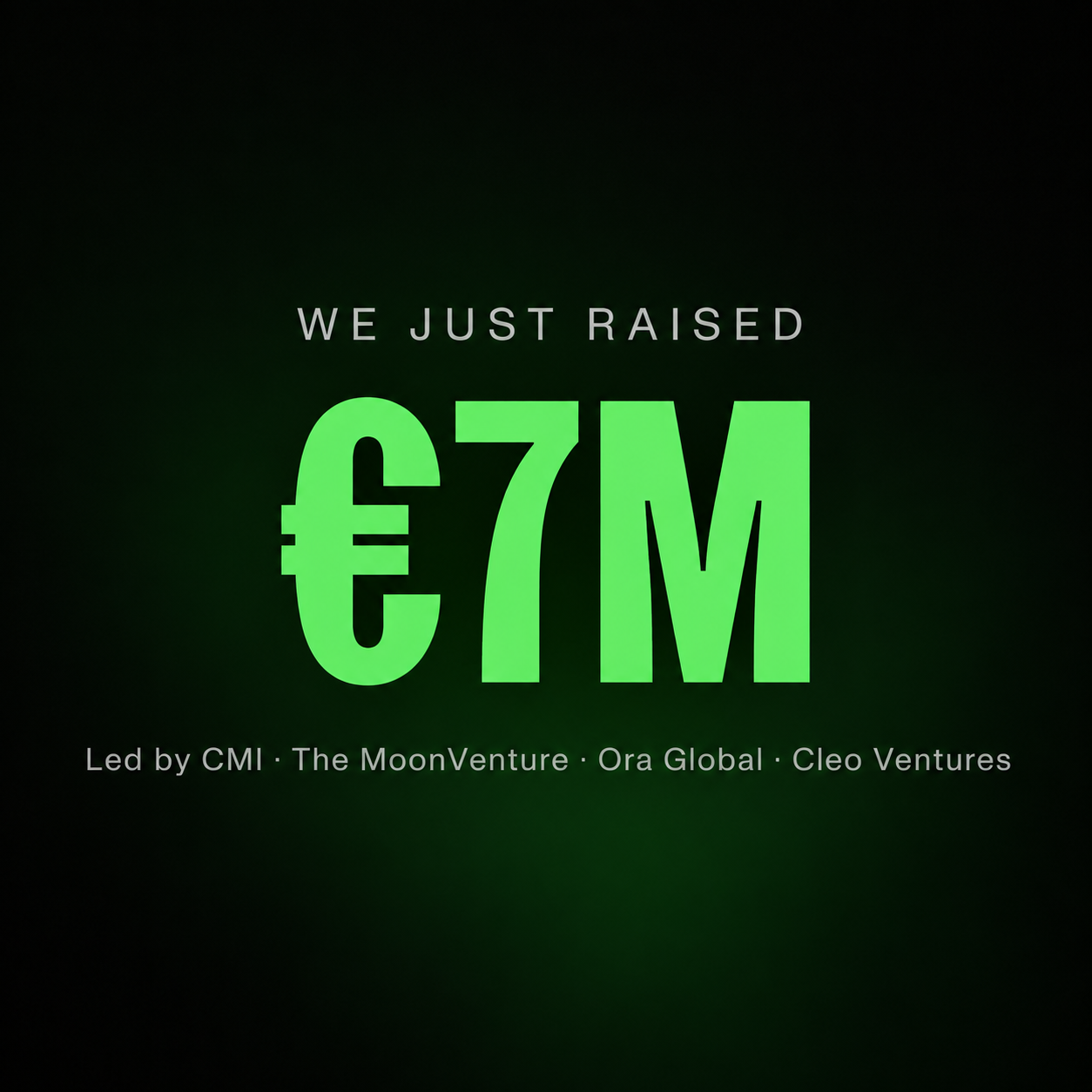
We raised €7M: led by CMI, with The MoonVenture, Ora Global, and Resonance, to use that window properly.
The priorities are straightforward: ship Zelia our agent suite, double the product and AI engineering headcount over the next 12 months, and push harder into Europe, where account-based selling has deep cultural roots and where the spray-and-pray playbook failed the most visibly.
For the 20,000 people already in the workspace
Nothing migrates.
Nothing breaks.
The product you use today to enrich, sequence, and prospect is the foundation everything else builds on.
The agents arrive on top of it.
I've watched too many companies raise a round and quietly change what their early customers had loved about the tool. We won't do that. What works keeps working. It gets more powerful.
That's what the €7M is for.
Try the workspace for free today: zeliq.com
We're hiring across product, engineering, and AI: zeliq.com/careers
Want to talk? Partnership, integration, or just the thesis: dorianc@zeliq.com
The sales stack is over. Here's what comes next.
Today we're announcing a €7M round, led by CMI, The Moon Venture, bringing Zeliq's total funding to €21M. This is not a post about the money. It's about the bet behind it.
I've spent ten years building software for people whose job is to convince other people. Six years at Hivency, which I co-founded in 2017, then Zeliq since 2023. In that time I've watched sales teams buy tool after tool: one for data, one for email, one for LinkedIn, one for calls, one to glue the others together. Every tool made a task faster. None of them made the job simpler. A rep in 2026 spends more time switching between tabs than a rep in 2016 spent on the phone.
That's the first thing I'm certain of: the SaaS stack model for sales has hit its ceiling. You cannot fix it by adding one more layer.
The autonomous wave got the premise wrong
The first answer the market gave was: remove the human. Build an "AI SDR" that prospects, writes and sends 24/7. Some of those companies raised huge rounds. Eighteen months later, the results are in, and they're not the ones in the demos. Burned domains, buyers receiving the same generated email from three vendors in one week, pipelines full of noise.
The failure wasn't technical. The models were good enough. The failure was in the premise: that selling is a task, so it can be automated end to end.
Selling is a chain of decisions wrapped in a lot of repetitive work. Finding the right accounts, enriching a contact, spotting that a VP Sales just posted about hiring, drafting a first message, scheduling the follow-up: that's execution, and agents already do it better than we do. But deciding which account matters this quarter, knowing that this buyer answers on Tuesday mornings and never on LinkedIn, pausing a sequence because something feels off: that's judgment. It stays with the rep.
Humans lead, agents execute. At Zeliq, that's not a tagline. It's the architecture.
What an Agentic Revenue Workspace actually is
Here is the category we're building, in one paragraph.
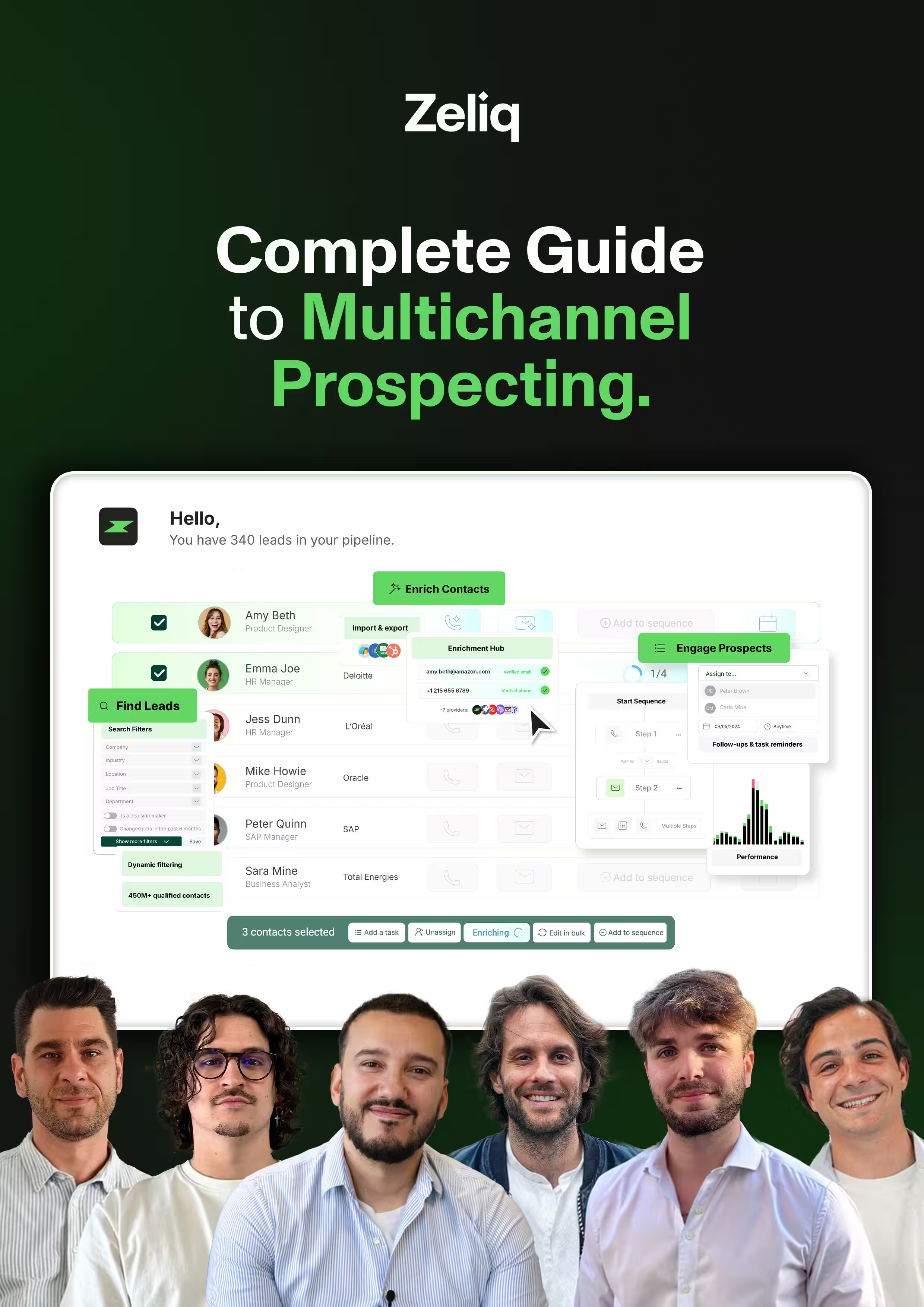
An Agentic Revenue Workspace has three layers. A context layer: one place where the data about your accounts lives and refreshes in real time. For us, that's 450 million contact and company records plus live buying signals scanned from the web. An execution layer: the multichannel outreach engine that 20,000 sellers already use every day. And on top, an agent layer: AI agents that plan and run the repetitive work inside that context, and that surface every decision that matters to a human before it moves.
The order matters. Most AI-native entrants are building the agent layer first and the data and execution layers later. We spent three years building the first two, with real usage, before we let agents loose on them. Agents without context hallucinate. Agents without an execution engine are chatbots.
And we're building it for a segment the well-funded players ignore: mid-market teams of 5 to 50 reps, running complex cycles with limited resources. That's where the fragmented stack hurts the most, and where "replace your SDRs" was never a serious option.
The proof is in the usage
We didn't raise on a deck. In 18 months, Zeliq went from 2,000 to 20,000 users across 147 countries. Our ARR tripled in the last 12 months. People try the product, it works, they bring their team. That's the product-led model, and it's the reason a mid-market company can afford us.
Zelia: beta opens today
Zelia is our first suite of agents, live in beta today after more than a year of development and tens of thousands of user tests. Zelia sources, enriches and contacts prospects on the rep's behalf, scans the web for buying signals so you call when it's relevant, and advises on the day-to-day. Every action is visible. Nothing important goes out without a human saying yes.
Through an MCP connector, Zelia also works inside the LLMs and tools your team already uses. We're not adding a tab to your stack. We're removing several.
What the €7M is for
The round is led by CMI, The Moon Venture, with Julien Jean (JJCapinvest) and Sylvestre Blavet (Freelance.com), and the continued support of our existing investors Ora Global and Cleo Ventures, alongside business angels and family offices.
Three priorities:
- Ship the full agent suite. Zelia first, then conversation and revenue intelligence on the same context.
- Double the product and tech team over the next twelve months, across Paris, Barcelona and Milan.
- Go deeper in Europe and deepen partnerships with the leading CRMs, so Zeliq sits in the workflow, not next to it.
To the 20,000 people already in the workspace
Nothing migrates. Nothing breaks. The product you use today to enrich, sequence and prospect is the foundation the agents run on. I've seen too many companies raise and quietly change what their first customers loved. We won't. What works keeps working, and it gets a lot more powerful.
Go try Zelia in beta!
Table of contents
Placeholder Title
Table of contents
Placeholder Title
Placeholder Title