The 2-Week Outreach Sequence for High-Value B2B Prospects

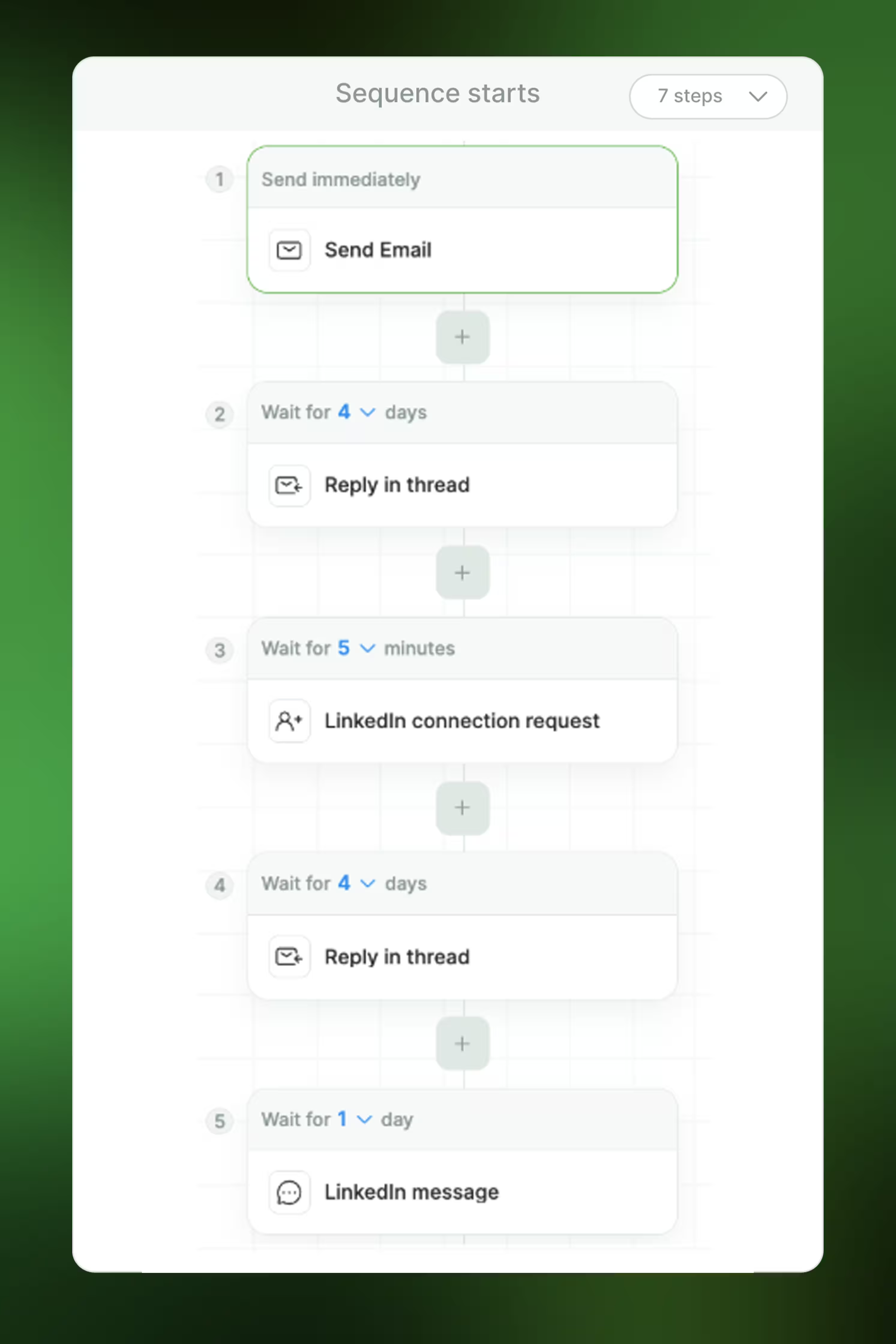
The 2-Week Sequence for Prospects You Can't Afford to Burn
Valentin Lévi, Account Executive at Zeliq, doesn't rush high-value prospects. When a deal could be worth $50K ARR, you don't send three emails in three days and give up. You spread 5 touchpoints over 14 days and let each one do its job.
Most reps fear slow sequences. They think spacing out messages means losing momentum. Valentin thinks the opposite: when you're selling to a VP of Sales at a 200-person company, patience signals confidence. Desperation signals... well, desperation.
Here's how he structures it.
Touchpoint 1: The opening email
Day 1. You send this:
"Hi {{firstName}},
We're at the best possible moment to challenge [YOUR KIND OF SERVICE].
I've noted you already use services like [YOUR COMPETITOR], and we'd suggest challenging what's in place. Our competitive advantage is [SPECIFIC EDGE].
Why not have a look at this topic together?"
Short. Confident. No desperation, no discount, no "just checking in." You're positioning as an equal who's done their homework.
Then you wait.
What happens next depends on whether they open it.
This is where most sequences fail: they assume all prospects are the same. Valentin splits them immediately.
If someone opens the email within 48 hours, they move to a different track — a call. Valentin phones them between Day 2 and Day 4. If he gets them on the line, they're out of the automated sequence entirely. The conversation continues human-to-human.
If they don't open? The sequence continues. No panic, no pile-on. Just patience.
Touchpoint 2: Email follow-up, Day 5
Four days after the first email, a second one lands. This isn't a "bumping this up in your inbox" message. It's new information — a case study, a specific metric, a POV on their industry.
Example structure:
"{{FirstName}}, quick follow-up — I mentioned challenging [SERVICE TYPE]. Here's what that looks like in practice: [CLIENT X] reduced [METRIC] by 40% in Q1 after switching. Happy to walk you through how."
Still no ask for a meeting. You're building credibility, not begging for time.
Touchpoint 3: LinkedIn connection request, 4 minutes later
Right after that second email sends, a LinkedIn request arrives. The timing isn't random. They just saw your name in their inbox. Now you're showing up on LinkedIn. You're becoming familiar — not intrusive, just present.
The connection note is minimal: "Sent you a note about [TOPIC] — thought it'd make sense to connect here too."
Touchpoint 4: Reply in the same email thread, Day 9
Here's where the psychology shifts. You're not starting a new thread. You're replying to the original conversation — as if it's ongoing, which in your mind, it is.
"{{FirstName}}, circling back — have you had a chance to look at [TOPIC] with your team? Open to a 15-min chat this week or next."
Now you're asking for time. But you've earned it. Three touches over 9 days. You're not a stranger.
Touchpoint 5: LinkedIn message, Day 10
If they've accepted your connection (which 60-70% do by this point), you send a short LinkedIn DM the next day:
"Hey {{FirstName}}, just following up on my email about [TOPIC]. Would 15 min work for a quick call?"
The ask is identical to the email, but the channel is different. Some people live in LinkedIn DMs and never check their inbox. You're covering both.
Why this works for high-value prospects
Over 14 days, you've made contact 5 times across 2 channels. But you never repeated yourself. Every message added something — information, a case study, a question. You demonstrated patience, confidence, and respect for their time.
And because you filtered out email openers early for calls, you maximized efficiency. The ones still in the sequence by Day 10? They're either genuinely busy or not interested — but you've done everything right. No burned bridges, no desperation.
Valentin uses this sequence when the deal size justifies the time investment. If you're selling a $3K product, a 3-day sequence makes sense. If you're going after a $50K account? You play the long game.
How to build this in Zeliq
Create a new sequence. Name it "Slow Burn — High Value" or something that signals the strategy.
Add the 5 steps with these delays:
- Email: Day 1
- Email: Wait 4 days
- LinkedIn connection request: Wait 4 minutes (auto-triggered after email)
- Email reply in thread: Wait 4 days
- LinkedIn message: Wait 1 day
Enable the "pause if on vacation" setting. Enable "pause if replied." Enable "pause if opened + add to call task" — this is the key filter that routes engaged prospects to manual calls.
Launch it on 50 prospects at a time. Within 2 weeks, you'll see which cohort is engaging and where. Refine the copy, adjust delays if needed, repeat.
💡 Pro tip: Use the Sequence Dashboard to filter by "Email opened but no reply" on Day 3-4. Call those leads manually before the second email sends. That's your warmest batch.