
Avez-vous déjà envoyé un e-mail qui vous semblait parfait : un objet fort, un contenu clair, une offre intéressante, tout en voyant un taux d'ouverture décevant ? Le timing explique souvent pourquoi.
Les meilleures campagnes par e-mail échouent lorsqu'elles arrivent au mauvais moment. Envoyez-le lorsque votre public est occupé, et il sera enterré. Envoyez-le lorsque l'attention est plus forte et que l'engagement augmente.
Chaque boîte de réception suit un rythme. Le lundi, il y a du retard, on se sent plus concentré en milieu de semaine et le vendredi, les gens se déconnectent. Les week-ends donnent rarement des résultats pour le B2B. Le jour et l'heure que vous choisissez influent directement sur les taux d'ouverture des e-mails, l'engagement et les revenus par destinataire.
Les marketeurs qui considèrent le timing comme un élément essentiel de leur stratégie constatent de meilleures performances en matière d'e-mails. L'heure d'envoi optimale tombe souvent le matin, lorsque les boîtes de réception sont vérifiées le plus activement, mais la bonne fenêtre dépend de votre public et de votre secteur d'activité.
Cet article explore les meilleurs jours pour les taux d'ouverture des e-mails, les plages horaires qui méritent d'être testées et les facteurs qui influencent l'engagement. Grâce à des benchmarks clairs et à des informations basées sur les rôles, vous saurez exactement quand envoyer votre prochaine campagne d'e-mails afin d'optimiser les performances.
Quels sont les jours où l'engagement par e-mail est le plus élevé ?
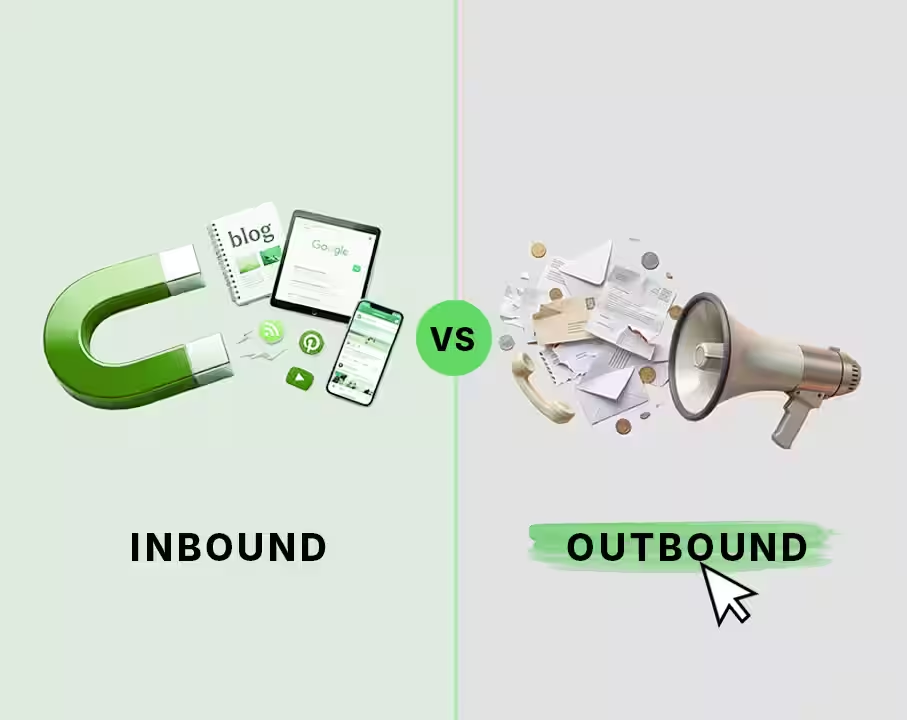
Engagement à froid ou engagement marketing
Le cold outreach suit un rythme très différent de celui des e-mails marketing. Une newsletter est attendue et souvent ouverte à un moment opportun car le destinataire s'y est déjà inscrit. Un e-mail froid arrive sans avertissement et passe par des filtres plus stricts avant d'atterrir dans une boîte de réception. Les décideurs le trient ensuite en quelques secondes tout en gérant des dizaines d'autres messages.
C'est pourquoi les statistiques des blogs marketing sur le taux d'ouverture moyen peuvent être trompeuses. Dans le domaine de la sensibilisation à froid, le succès se mesure en fonction du taux de réponse et des réunions réservées.
Schémas typiques des jours de semaine à tester en premier
Le milieu de semaine surpasse régulièrement le reste de la semaine. Les lundis matins sont dominés par l'arriéré, tandis que les vendredis après-midi passent en mode week-end. Le meilleur point de départ est du mardi au jeudi, non pas comme règle, mais comme blocs de test fiables :
- Mardi 10 h 30
- Mercredi 8 h 45
- Jeudi 15:10
Ces horaires correspondent aux vérifications naturelles des boîtes de réception et créent de meilleures conditions d'engagement.
Nuances de l'industrie
Le contexte façonne l'engagement, et chaque secteur suit son propre rythme :
- Le SaaS et les agences obtiennent souvent les meilleurs résultats en milieu de semaine, tandis que les lundis sont surchargés par les retards et les vendredis sont remplis de produits à livrer aux clients.
- Le secteur de la fabrication et de la logistique affiche des taux d'ouverture plus élevés tôt le matin, car les e-mails envoyés avant les changements d'équipe ont plus de chances d'être remarqués.
- Le commerce de détail et le commerce électronique dépendent fortement des pics saisonniers, mais les week-ends sont généralement moins performants, car de nombreux dirigeants sont déconnectés de leur boîte de réception professionnelle.
Rôle × jour × heure
Quel est l'impact du timing sur les performances des e-mails ?
Influences de délivrabilité
Le timing influe non seulement sur l'engagement, mais également sur la délivrabilité des e-mails. Lorsqu'un trop grand nombre de campagnes sont envoyées en même temps, des fournisseurs tels que Microsoft et Google réduisent le volume et suppriment le placement dans la boîte de réception. Cela réduit le taux d'ouverture moyen et réduit les performances globales des e-mails.
La meilleure pratique consiste à éviter les envois de masse en début d'heure. Prévoyez plutôt des décalages aléatoires tels que 10 h 37 ou 11 h 13 et répartissez la livraison sur une période de 60 à 120 minutes.
Ce rythme permet à votre plateforme de messagerie d'être alignée sur les seuils des fournisseurs et augmente les chances que les e-mails atteignent la boîte de réception au lieu d'être filtrés.
Facteurs de disponibilité humaine
Le bon moment pour envoyer un e-mail est lié au comportement humain. Les modèles d'engagement suivent des routines prévisibles :
- Le triage quotidien des boîtes de réception a généralement lieu lors de la première vérification matinale, juste après les réunions debout ou juste après le déjeuner.
- Les horaires chargés en réunions, en particulier le mercredi, bloquent souvent la disponibilité. Le fait de tester des fenêtres plus tôt ou plus tard peut améliorer l'engagement.
- Les modèles de congés réduisent les taux d'ouverture des e-mails le vendredi après-midi et pendant les semaines de vacances, ce qui rend ces fenêtres moins efficaces pour les campagnes d'e-mail professionnelles.
Synchronisation de la cadence sur une séquence
Les performances dépendent également de la façon dont les campagnes par e-mail sont séquencées. L'envoi répété au même jour et à la même heure crée un aveuglement au même endroit et réduit l'engagement.
Pour obtenir de bons résultats, variez le jour et l'heure entre les touches.
Par exemple, une cadence en quatre étapes pourrait ressembler à ceci :
Mardi 10h30 → Jeudi 15h10 → Lundi 8h40 → Mercredi 11h20.
Cette variante augmente la visibilité et améliore le timing des e-mails. Cela permet d'optimiser le taux de conversion sur l'ensemble de la séquence.
Quelles sont les meilleures pratiques en matière de campagnes par e-mail ?
Contrôlez le volume du domaine et de l'adresse IP
Une bonne délivrabilité provient d'un envoi discipliné. Deux règles simples contribuent à protéger la réputation de votre expéditeur :
- Sous-domaine dédié : séparez toujours la diffusion à froid par un sous-domaine tel que bonjour.company.com.
- Plafonds quotidiens et croissance régulière : limitez chaque boîte aux lettres à un volume sûr et augmentez lentement au lieu de pics soudains.
Localiser l'heure d'envoi
Détectez et enregistrez toujours le fuseau horaire du destinataire. Les e-mails ne doivent jamais être envoyés en dehors de 7h30 à 18h00, heure locale, sauf s'il existe une raison claire basée sur le rôle.
Le respect des heures d'ouverture augmente les chances que vos campagnes par e-mail apparaissent alors que les décideurs consultent activement leur boîte de réception.
Synergie entre le sujet et l'aperçu
La ligne d'objet ouvre la porte et l'aperçu décide si le lecteur entre. Pour maintenir un taux d'engagement élevé :
- 6 à 10 mots conviennent le mieux à un sujet.
- Le texte d'aperçu doit renforcer la promesse et non en détourner l'attention.
- Les premières touches devraient éviter les mots qui déclenchent le spam et les contenus riches en liens.
Un CTA clair
Le traitement à froid donne de meilleurs résultats avec un seul appel à l'action à faible friction. Les exemples incluent « Ouvert à un rapide coup d'œil ? » ou « Ça vaut le coup de discuter pendant 10 minutes cette semaine ? » L'ajout d'une simple ligne de désinscription réduit également le nombre de plaintes et permet de maintenir un placement sain dans la boîte de réception.
espacement des cadences
L'espace est espacé de deux à quatre jours ouvrables et varie selon l'heure de la journée pour chaque envoi. Cette structure évite la fatigue et stimule l'engagement. Cela permet également à vos campagnes par e-mail de modifier les modèles de boîte de réception avec un meilleur timing.
Quels sont les facteurs qui influent sur les taux d'ouverture des e-mails ?
Ajustement du public et qualité de la liste
La qualité de votre liste d'e-mails est le premier facteur de performance. Un ICP bien défini vaut toujours mieux que de petits ajustements de synchronisation. Les adresses vérifiées et une segmentation précise garantissent la délivrabilité et augmentent les taux d'ouverture.
La suppression des e-mails basés sur les rôles ou « sans réponse » garantit à chaque destinataire de réelles chances de s'engager. Un ciblage efficace permet de créer des e-mails qui semblent basés sur l'audience plutôt que génériques.
Pile de délivrabilité
Votre configuration de délivrabilité doit être hermétique. Sans cela, le meilleur moment ou le meilleur contenu ne peuvent pas vous sauver.
- Alignez SPF, DKIM et DMARC et utilisez un domaine de suivi personnalisé.
- Ajoutez le BIMI si disponible et créez progressivement de nouveaux domaines.
- Maintenez le taux de plaintes à un faible niveau pour éviter des dommages à long terme.
Pertinence du sujet
Les lignes d'objet doivent établir un lien entre le rôle et le résultat. Les références à des événements déclencheurs tels que le financement, les nouvelles recrues ou les changements technologiques créent de la pertinence. Des questions claires donnent de meilleurs résultats que des phrases vagues, et un préen-tête solide doit toujours répondre à la question « Pourquoi moi ? ».
Une pertinence claire augmente les taux de réponse et suscite un réel engagement.
Mécanique de l'heure d'envoi
Le timing est un autre facteur essentiel, qui dépend à la fois du comportement des destinataires et des connaissances du secteur :
- Respectez le fuseau horaire et évitez de faire exploser le même créneau sur tous les contacts.
- Testez les périodes de semaine, comme le mardi et le mercredi matin ou le jeudi et le vendredi après-midi.
- Étalez l'heure d'envoi sur une séquence pour éviter les chevauchements.
- Le meilleur moment de la journée se situe souvent entre 9 h et 11 h, mais les tests effectués l'après-midi ou le soir révèlent des préférences basées sur les rôles.
Facteurs macroéconomiques
Le contexte externe influe sur les taux d'ouverture. Les vacances réduisent l'attention parce que les décideurs sont loin de leur boîte de réception. Les échéances de fin de trimestre et les grandes conférences du secteur modifient également les comportements et réduisent l'engagement.
Pour que les résultats restent exacts, interrompez les tests pendant ces semaines et redémarrez-les lorsque les tendances redeviennent normales.
Note d'inflation relative à la confidentialité
Les indicateurs nécessitent également de la prudence. Apple MPP et les fonctionnalités de confidentialité similaires augmentent les taux d'ouverture en marquant les e-mails comme lus même lorsque le destinataire ne s'est jamais engagé. C'est pourquoi les ouvertures ne doivent être considérées que comme directionnelles.
Les indicateurs fiables de la performance des e-mails sont les réponses, les conversations positives et les rendez-vous réservés avec de vrais prospects.
Comment améliorer les taux d'ouverture des e-mails ?
Commencez par la réputation de l'expéditeur
Toute amélioration commence par la réputation. La diffusion à froid doit être exécutée sur un sous-domaine dédié afin de protéger la marque principale. Des plafonds quotidiens constants et une vitesse d'envoi constante garantissent une délivrabilité saine. Pour un guide détaillé, étape par étape, sur les sujets, la délivrabilité et les points de référence, consultez notre manuel complet sur améliorer les taux d'ouverture des e-mails.
Les modèles de spam doivent être retirés et chaque e-mail doit inclure une ligne de désinscription claire. Sans cette base, les e-mails envoyés auront du mal à atteindre la boîte de réception, quelle que soit la qualité du contenu.
Segmenter par rôle et par déclencheur
La pertinence l'emporte toujours sur le volume. Créez des segments plus petits liés à un déclencheur spécifique, tel qu'une activité de recrutement, l'adoption de nouvelles technologies ou des modifications réglementaires.
Une courte ligne comme « {déclencheur} remarqué ; idée rapide pour {rôle} » montre au destinataire que la sensibilisation est ciblée et crédible. Ainsi, vos campagnes par e-mail sont basées sur l'audience plutôt que génériques.
Cadres thématiques à tester
Tester les lignes d'objet par rapport à de vraies indicateurs de performance aide à identifier ce qui compte pour chaque personnage. Les exemples incluent :
- Rôle + résultat: « Raccourcir la rampe pour les nouveaux EA ? »
- Gâchette: « Félicitations pour l'augmentation de la capacité SDR de la série B ? »
- Preuve sociale: « Comment {PeerCo} a réduit les absences de 27 % »
- Question directe: « Le propriétaire idéal pour les opérations partenaires de {Company} ? »
- Curiosité: « Une idée de 47 secondes pour une couverture pilote ? »
Tests multi-fenêtres
Les tests doivent être chronométrés avec précision. L'objectif est d'isoler le calendrier comme seule variable afin que vous puissiez voir comment les différentes heures influencent les taux d'ouverture. Maintenez la copie corporelle constante d'un envoi à l'autre et ajustez uniquement l'heure.
De cette façon, les données indiquent clairement si votre public préfère les fenêtres tôt le matin, tard le matin ou en début d'après-midi. Par exemple :
- Matin à 8 h 15 fonctionne bien avant le début des réunions.
- À midi, 10 h 45 capte l'attention pendant les heures de bureau concentrées.
- Après-midi 14:10 atteint les destinataires après des arrêts, alors que les vérifications de la boîte de réception reprennent souvent.
Étalage des séquences
Une séquence forte permet d'éviter les répétitions. L'envoi au même jour et à la même heure crée une « cécité au même endroit », c'est-à-dire que vos e-mails se fondent dans la routine et sont ignorés. Variez le jour et l'heure en fonction des touches pour que chaque message soit replacé dans un nouveau contexte. Par exemple :
- Mardi 10 h 30 atteint les prospects en milieu de matinée lorsque les boîtes de réception sont vides.
- Jeudi 15:05 cible l'accalmie de l'après-midi avant les réunions.
- Lundi 8 h 40 arrive tôt, avant la charge de travail de la semaine.
- Mercredi 11:20 visites pendant les heures de bureau.
- Vendredi 9:05 peut toujours travailler pour les postes qui consultent leurs e-mails avant le quart de fin de semaine.
Utilisez ZELIQ pour opérationnaliser
ZELIQ transforme les meilleures pratiques en systèmes reproductibles. Grâce aux outils de planification et à l'automatisation du marketing, vous pouvez envoyer des e-mails marketing au bon moment pour chaque public.
La plateforme gère les envois tenant compte du fuseau horaire avec une limitation au niveau du fournisseur, afin que la délivrabilité reste élevée. Il effectue également des tests A/B par sujet et promeut automatiquement le gagnant une fois que les résultats sont clairs.
Chaque campagne est entièrement mesurable grâce à des analyses qui suivent les ouvertures, les réponses, les réponses positives, les plaintes et même le taux de clics moyen, offrant ainsi une visibilité complète sur les indicateurs de performance.
À quelle heure dois-je envoyer mes e-mails ?
Hypothèses Daypart à tester
Le timing détermine si votre e-mail est remarqué ou ignoré. L'analyse du comportement des boîtes de réception montre des tendances claires qui méritent d'être testées :
- Réception anticipée (8h00 — 9h30) capte l'attention avant que les réunions ne prennent le dessus.
- Après le stand up (10 h 30 — 11 h 45) est souvent le meilleur moment de la journée pour envoyer un e-mail froid, car l'attention revient aux tâches individuelles.
- Début d'après-midi (13 h 30 — 15 h 30) fonctionne bien une fois que les calendriers s'ouvrent à nouveau.
Il vaut mieux éviter la zone morte du déjeuner, surtout si votre public organise généralement des réunions consécutives par la suite. Le test de ces fenêtres permet de déterminer le bon jour pour livrer et le meilleur jour pour envoyer des e-mails pour chaque poste.
Fenêtres personnelles
Différents personnages présentent des préférences différentes.
Les cadres supérieurs ouvrent généralement leurs e-mails entre 7 h 45 et 9 h 15 ou plus tard dans la journée entre 16 h 30 et 18 h.
Les vice-présidents et les directeurs participent davantage en fin de matinée de 10 h 15 à 11 h 45 et parfois en milieu d'après-midi de 14 h à 15 h 30.
Les rôles des opérations, des finances et de l'informatique répondent entre 13 h 30 et 15 h 30, avec une activité occasionnelle entre 8 h 30 et 9 h 30.
Comprendre ces tendances permet de cibler les envois d'e-mails avec précision.
Évitez les créneaux bondés
Certaines machines à sous sont régulièrement sous-performantes et doivent être évitées :
- Lundi 9 h est l'heure de rattrapage classique.
- Vendredi après le déjeuner entraîne souvent un faible engagement à l'approche du week-end.
- Fêtes nationales et le lendemain, réduisez votre attention, car le courrier électronique n'est pas prioritaire.
Ce qu'il faut montrer
Aucune instance ne s'applique à tous les secteurs d'activité. Chaque entreprise doit mesurer ses résultats et valider les tendances à l'aide de ses propres données. Par exemple, les performances des marques de loisirs peuvent être différentes de celles des fournisseurs de services B2B. L'essentiel est de suivre les performances et de déterminer quel timing convient à votre public.
Quels sont les meilleurs jours pour connaître les taux d'ouverture des e-mails ?
Point de départ
Les données montrent que le mardi au jeudi donne souvent les meilleurs résultats en matière d'exposition au froid. Ces jours de milieu de semaine donnent à vos e-mails de meilleures chances d'atteindre le public lorsque les boîtes de réception sont moins chaotiques.
Pourtant, il n'y a pas de gagnant universel. Chaque clientèle réagit différemment, c'est pourquoi les tests sur différents fuseaux horaires et segments restent essentiels. Une stratégie marketing intelligente utilise cette base de référence comme point de départ tout en laissant les données des utilisateurs réels déterminer le meilleur jour pour envoyer des e-mails.
Exceptions à explorer
Bien que le mardi et le jeudi soient fiables, des exceptions peuvent améliorer les performances pour certains rôles ou certaines régions :
- Lundi tôt le matin peut travailler pour les dirigeants qui vident leur boîte de réception avant les réunions.
- Les vendredis matins sont souvent efficaces pour les rôles opérationnels, puisqu'ils finalisent les tâches hebdomadaires.
- Les dimanches soirs peut entraîner des ouvertures sur certains marchés internationaux, bien que les normes culturelles et les réglementations relatives au courrier électronique à froid doivent être prises en compte avec soin.
Calendriers régionaux
Le meilleur jour pour envoyer des e-mails dépend également de la géographie. Les vacances aux États-Unis, les vacances scolaires en Europe ou les événements industriels de la région APAC modifient tous le comportement des utilisateurs. Un système de planification qui intègre un calendrier régional garantit que les e-mails ne sont pas envoyés lorsque les abonnés sont hors ligne. Cela évite les envois inutiles et fournit des données de performance plus précises.
Répéter tous les trimestres
Les fournisseurs de messagerie mettent constamment à jour leurs défenses, ce qui a un impact sur le placement des boîtes de réception. Un test qui fonctionne maintenant pourrait être moins performant dans trois mois. C'est pourquoi il est important de recommencer les expériences de chronométrage chaque trimestre. Des tests réguliers garantissent que les campagnes promotionnelles restent alimentées par des données actuelles, quel que soit le type de secteur ou le segment d'audience.
Points de repère pour définir les attentes (e-mails à froid uniquement)
- Bandes à débit ouvert: La moyenne des e-mails non sollicités est inférieure à celle des newsletters. Les spécialistes du marketing devraient s'attendre à environ 20 % à 35 % d'ouvertures uniques, en fonction de la qualité de la liste, du type d'audience et de l'inflation de la confidentialité grâce à des outils tels qu'Apple MPP. Des tests réguliers des délais d'envoi des e-mails et des ajustements de calendrier permettent d'affiner ces chiffres.
- KPI complémentaires: Les ouvertures ne représentent qu'une seule métrique. Le taux de réponse, le taux de réponse positif, le taux fixe de rendez-vous, le taux de plaintes et le taux de rebond sont tous importants. Une tendance à un nombre élevé d'ouvertures mais à un faible taux de réponses signifie généralement que l'objet et l'aperçu ne correspondent pas au contenu de l'e-mail. Dans ce cas, l'envoi d'un e-mail au bon moment n'a pas donné lieu à une action.
- Interprétation des anomalies: Les pics soudains d'ouvertures avec des réponses plates indiquent souvent une prélecture des pixels ou des robots d'exploration automatisés au lieu d'un véritable engagement des utilisateurs. Pour éviter des résultats faussés, les spécialistes du marketing doivent utiliser des outils qui filtrent les anomalies et suivent les indicateurs de performance avec précision. Zeliq aide à identifier les véritables tendances, de sorte que l'envoi d'e-mails le lendemain soit basé sur des données reflétant le comportement des clients.
Comment exécuter des expériences de chronométrage (étape par étape)
Conception de l'expérience
Une étude appropriée contrôle une variable à la fois, soit le jour, soit l'heure. Lorsque vous envoyez des e-mails, conservez la même personnalité, la même taille de segment et la même combinaison de fournisseurs. Vous pouvez ainsi identifier avec précision l'impact du choix de planification.
Durée et cycles de course
Un test en semaine n'est jamais suffisant. Les expériences devraient durer au moins deux semaines ouvrables complètes. Cela facilite les événements ponctuels et permet de déterminer le moment idéal pour vos abonnés.
Normalisation des prestataires
Les performances des e-mails varient souvent d'un fournisseur à l'autre. Segmentez les résultats par Microsoft et Google pour détecter les biais de placement. Si les taux d'ouverture changent, l'action requise peut être technique plutôt que liée au contenu du courrier électronique.
Critères de réussite
Les bons indicateurs définissent le succès. Recherchez une augmentation ouverte qui correspond à la levée des réponses, maintenez les taux de plaintes en dessous des points de référence et assurez-vous que les taux de rebond restent faibles. Cela prouve que l'envoi d'un e-mail à un moment donné se traduit par un véritable engagement.
Documenter les apprentissages
Tenez un journal de test simple pour suivre chaque expérience :
- Énoncez l'hypothèse.
- Notez l'exemple et le segment d'abonnés.
- Enregistrez le résultat.
- Décidez d'adopter ou de suspendre le changement.
Stratégie de fuseau horaire et de calendrier à grande échelle
Détection automatique et stockage de TZ
La sensibilisation au froid à grande échelle dépend d'un calendrier précis. Le système devrait détecter automatiquement le fuseau horaire à partir des données relatives aux prospects et le stocker pour une utilisation future. Si des données au niveau des contacts sont manquantes, mettez-les en cache au niveau du compte. Cela garantit que chaque e-mail commence à la bonne heure locale pour le public cible.
- Dans la mesure du possible, déterminez le fuseau horaire directement à partir des données sur les prospects.
- Le niveau du compte cache est défini par défaut s'il n'existe aucune donnée de contact.
Fenêtres roulantes
Les campagnes mondiales ont besoin de fenêtres mobiles. Une approche axée sur le suivi du soleil permet d'envoyer des e-mails d'une région à l'autre sans avoir à accéder aux boîtes de réception à minuit. Par exemple, les séquences des jours de semaine doivent toujours respecter les heures locales plutôt que d'appliquer une heure d'envoi fixe. Cela améliore la délivrabilité et crée un engagement plus cohérent.
Diversité des séquences
Les abonnés n'ouvrent pas les e-mails au même moment chaque jour. Chaque contact d'une séquence doit atterrir dans une fenêtre locale différente, de sorte que vous puissiez capturer plusieurs moments de triage. Certains utilisateurs répondront le matin, d'autres l'après-midi et certains même le dimanche soir. La variation des créneaux permet d'éviter la fatigue et d'augmenter le taux de commande moyen des campagnes par e-mail.
Dates d'interdiction
Le timing signifie également savoir quand ne pas envoyer. Tenez un calendrier des jours fériés, des événements de l'industrie et des pics saisonniers. Interrompre les activités de sensibilisation au cours de ces semaines permet d'éviter les efforts inutiles et garantit que les données reflètent un comportement normal. Cette discipline s'applique autant au cold outreach qu'aux newsletters, car la réponse à une meilleure performance passe souvent par le respect du planning du client.
Sujets qui fonctionnent avec le timing (mini-bibliothèque)
La bonne ligne d'objet associée au bon moment crée un engagement plus important. Les décideurs trient leur boîte de réception différemment le matin, en fin de matinée ou en fin d'après-midi. L'alignement de votre objet sur ces modèles augmente les taux d'ouverture et rend chaque envoi plus pertinent pour le public cible.
Avant le lever (7 h 45 à 9 h 15)
- « Une question rapide avant 9 h 30 ? »
- « Réduire le temps de mise en service des nouveaux DTS ? »
- « Responsable des opérations partenaires chez {Company} ? »
- « Une idée pour {rôle} avant votre premier appel ? »
- « Ça vaut le coup d'y jeter un coup d'œil devant un café ? »
Tard dans la matinée (10 h 30-11 h 45)
- « Séance d'information de 30 secondes sur la réduction des absences »
- « {PeerCo} a réduit le cycle de 12 % »
- « Vous êtes la personne idéale pour votre {équipe} ce trimestre ? »
- « Cela pourrait-il raccourcir votre pipeline ? »
- « Une idée pour accélérer l'intégration »
Début d'après-midi (13h30-15h30)
- « Ça vaut le coup d'y jeter un coup d'œil pendant 10 minutes, {D'abord} ? »
- « L'idée d'une augmentation du recrutement et de la couverture »
- « Piloter en moins de 2 semaines ? »
- « Quel est le meilleur moment pour revoir cela ? »
- « Témoignage client que vous pourriez utiliser aujourd'hui »
Fin d'après-midi (16h00-17h30)
- « Questionnaire récapitulatif sur {initiative} »
- « Une voie rapide vers des transferts plus propres »
- « Un avertissement rapide sur {trigger} »
- « Avant de fermer l'ordinateur portable... »
- « Une solution simple qui permet d'économiser le trimestre prochain »
Liste de contrôle de délivrabilité avant les tests de synchronisation
Authentification et alignement
L'authentification forte est la base de la délivrabilité des e-mails. Assurez-vous que SPF, DKIM et DMARC sont alignés. Utilisez un domaine de liens de marque pour le suivi et ajoutez BIMI si disponible pour renforcer la confiance dans la boîte de réception.
Échauffement et bonnets
Les nouveaux domaines ont besoin d'une montée en puissance progressive. Appliquez des limites d'envoi quotidiennes par boîte aux lettres et augmentez régulièrement au fil du temps. Évitez les pics soudains qui nuisent à votre réputation et répartissez les minutes d'envoi de manière aléatoire pour que le trafic reste naturel.
Lister l'hygiène
La performance commence avec le bon public. Vérifiez toujours les adresses avant d'envoyer des e-mails. Supprimez les comptes basés sur les rôles ou « sans réponse », dédupliquez les enregistrements et ne vous fiez jamais aux listes achetées. Une liste d'e-mails propre améliore l'engagement et protège votre domaine.
Linting de contenu
Le contenu des e-mails à froid doit être compatible avec le texte brut. Faites en sorte que le premier contact soit simple avec un seul lien. Utilisez une petite signature professionnelle et incluez toujours une ligne de désinscription claire. Ces petites actions réduisent le risque de spam et augmentent le placement dans la boîte de réception.
Prévention des plaintes
Donnez à chaque abonné un moyen simple de dire « non merci ». Évitez les sujets trompeurs qui nuisent à la confiance. Respectez les désinscriptions instantanément pour que votre prochaine campagne démarre correctement. Les taux de plaintes constituent un signal essentiel pour les prestataires, et la prévention est plus importante que la réparation.
En utilisant ZELIQ pour le chronométrage, les tests et l'échelle
Envoi et limitation tenant compte du fuseau horaire
Le courrier électronique à froid à grande échelle exige de la précision. ZELIQ configure le rythme par boîte de réception afin qu'aucun compte ne soit surchargé, et des plafonds quotidiens sont définis pour protéger les volumes. Les fenêtres d'envoi sont également associées à chaque rôle : les cadres reçoivent les premiers messages, tandis que les rôles opérationnels les reçoivent pendant les heures de bureau. Cette structure garantit que les e-mails sont envoyés au moment où l'engagement est le plus probable et protège la délivrabilité entre les fournisseurs.
Objet et heure d'envoi A/B
L'optimisation dépend de tests contrôlés. Avec ZELIQ, vous pouvez :
- Créez des tests multivariantes qui comparent les lignes d'objet et les heures d'envoi côte à côte.
- Promouvez automatiquement la variante gagnante une fois que la signification statistique est atteinte.
- Enregistrez tous les résultats afin que les spécialistes du marketing puissent étudier les données et affiner les futures campagnes.
Assistances multicanaux
Si deux touches consécutives indiquent de faibles taux d'ouverture, ZELIQ évite les efforts inutiles en ajoutant une autre chaîne. Au lieu d'envoyer un autre e-mail, le système insère une vue LinkedIn, une demande de connexion ou même une tâche d'appel avant le message suivant. Cette approche multicanale permet de maintenir l'engagement du public et d'éviter la fatigue des abonnés due aux envois d'e-mails répétitifs.
Des analyses qui comptent
Les indicateurs traditionnels ne révèlent qu'une partie de l'histoire. ZELIQ dévoile des données de performance qui sont vraiment importantes pour la sensibilisation au froid :
- Ouvre (filtré pour supprimer les faux signaux des outils de confidentialité)
- Réponses et réponses positives
- Taux de rebond et taux de plaintes
- Répartition des fournisseurs pour Microsoft, Google et d'autres
En suivant ces KPI dans le cadre de revues hebdomadaires du pipeline, les équipes peuvent déterminer le moment idéal pour envoyer des campagnes, étudier le comportement du public en semaine et prendre des mesures en toute confiance à grande échelle.
Le meilleur jour pour envoyer des e-mails ou le moment idéal de la journée ne sera jamais une règle universelle. Ce qui compte, c'est la façon dont vous concevez votre campagne de sensibilisation : une délivrabilité claire, des sujets pertinents, un calendrier basé sur les rôles et des tests continus.
Le cold outreach fonctionne lorsque les campagnes respectent le comportement du public cible et s'adaptent aux tendances du secteur. Avec un calendrier adapté, les marketeurs constatent des taux d'ouverture plus élevés, un meilleur engagement et davantage de réunions réservées.
La solution n'est pas d'envoyer plus de courriels, mais d'en envoyer des plus intelligents. Utilisez les données pour orienter chaque envoi, mesurer les bons indicateurs de performance et ajuster chaque trimestre.
Êtes-vous prêt à étendre votre champ d'action au froid avec précision ? Réservez votre démo avec Zeliq dès aujourd'hui et faites du timing un moteur de croissance.
Enter the future of lead gen
Table of contents
Placeholder Title
Table of contents
Placeholder Title
Placeholder Title