

Le démarchage téléphonique exige aujourd'hui plus de précision.
Pour les conseillers financiers qui cherchent à développer leur portefeuille d'affaires, le téléphone débloque toujours les conversations qu'aucune annonce ni aucun algorithme ne peut. Il ne s'agit pas de présenter des produits dès le premier appel. Il s'agit d'entrer en contact avec un client potentiel, de trouver un partenaire idéal et de l'aider à atteindre de véritables objectifs financiers, de l'assurance-vie à la planification de la retraite.
Bien utilisés, les appels à froid complètent vos stratégies marketing plus larges : marketing par e-mail, réseaux sociaux, marketing événementiel et même Google Ads. Ensemble, ils forment un système de prospection qui transforme l'attention en confiance.
Les meilleurs conseillers utilisent des scripts d'appel clairs, une formation commerciale rigoureuse et des stratégies intelligentes de génération de prospects pour rester cohérents, sans avoir l'air de robots. Et ils savent comment établir des relations, gérer les objections et respecter les règles relatives aux appels non sollicités.
Que vous en soyez à vos débuts ou que vous peaufiniez votre campagne de sensibilisation, ce guide couvre tout : des conseils pour le démarchage téléphonique, des conseils pour la mise en place de campagnes financières, des conseils sur les interactions avec les clients et les indicateurs qui indiquent réellement les progrès réalisés.
Qu'est-ce que le démarchage téléphonique rentable pour les conseillers ?
Le démarchage téléphonique fonctionne toujours, quand c'est fait dans un but précis.
Pour les conseillers financiers, cela signifie s'adresser à des clients potentiels avec une offre claire et spécifique: une discussion rapide sur les reports de retraite, une révision du calendrier de la sécurité sociale ou un bilan de santé de l'assurance-vie.
Vous ne présentez pas de produits : vous ouvrez une conversation.
L'objectif ?
Commencez par la valeur, qualifiez les intérêts, et si cela vous convient, organisez une courte réunion pour voir si vous pouvez nous aider.
Les appels à froid sont plus efficaces lorsqu'ils s'appuient sur la dynamique existante. Peut-être que le prospect a téléchargé votre liste de contrôle pour la retraite la semaine dernière. Ils ont peut-être assisté à un événement local. Lorsque les appels font partie d'une stratégie marketing plus large (e-mail, recommandations, contenu), ils génèrent de meilleures conversions et sont plus naturels.
L'essentiel est de se concentrer sur les résultats qui comptent : les conversations entamées, les réunions planifiées et la confiance gagnée. Suivez le coût par réunion, et pas seulement le nombre de numéros par heure. Priorisez les listes à l'aide de déclencheurs dynamiques et restez en conformité avec le DNC et les règles de divulgation.
Bien fait, le démarchage téléphonique n'est pas seulement rentable : c'est l'un des moyens les plus rapides de transformer l'intérêt en action.
Quel est le taux de réussite moyen du démarchage téléphonique ?
Le démarchage téléphonique ne se définit pas par un seul numéro : il s'agit d'une progression claire entre le premier appel et le nouveau client. Suivez ces étapes pour évaluer votre véritable réussite :
- Taux de connexion (réponse en direct) : Généralement, 8 à 15 % des cadrans dans le secteur des services financiers.
- Taux de conversation (des connexions) : Environ 30 à 55 % se transforment en véritables discussions de 60 à 90 secondes.
- Réunion réservée par téléphone : Habituellement 1 à 3 %. Cela représente environ 3 à 6 % des conversations si le script et l'offre sont précis.
- Tarif des réunions tenues : 60 à 80 % des réunions réservées ont lieu.
- Nouveau tarif client/politique : 10 à 25 % des réunions organisées sont converties, en fonction de l'adéquation et du suivi.
Définissez des points de référence par campagne, segment et type de script, car la qualité de la liste (cold vs COI), la spécificité de l'offre (« rollover review » ou générique) et le timing (du mardi au jeudi, les fins d'après-midi sont souvent gagnantes) sont autant de facteurs qui modifient les résultats.
Surveillez chaque métrique du classement chaque semaine pour trouver les points d'étranglement (qu'il s'agisse du volume de connexions, de la pertinence de l'offre ou de la confirmation de la réunion).
En résumé : les programmes d'appels efficaces se concentrent moins sur le volume et davantage sur des conversations cohérentes et de haute qualité à chaque étape du processus de sensibilisation.
Quels sont les conseils efficaces pour le démarchage téléphonique ?
Préparation
Commencez par un profil client idéal parfaitement clair :
- tranche d'âge,
- revenus,
- profession,
- et des éléments déclencheurs de la vie tels que les changements d'emploi, les enfants ou l'approche de la retraite.
Ces informations aident votre message à être envoyé. Avant de composer le numéro, effectuez une recherche de 90 secondes : recherchez les types de plans des employeurs, les tendances du marché local et tout signal public (changement d'emploi, promotion récente ou liens communautaires).
Votre liste est importante.
Effectuez un nettoyage pour plus de précision : nom complet, ville, fuseau horaire et statut DNC. Des données propres réduisent les coûts par réunion. Ajoutez un indice personnel de pertinence, pas de flatterie.
Ouvrez fort
Clarity gagne :
« Bonjour [Nom], c'est [Vous] de [Firme]. La raison de mon appel est... »
Demandez ensuite à continuer :
« Vous avez 60 secondes pour voir si c'est pertinent ? »
Une simple tâche réduit les défenses.
Ancrez-vous dans leur situation, pas dans votre solution: « Beaucoup de personnes qui changent d'emploi ne savent pas quoi faire de leurs anciens 401 (k) s. »
Restez simple
Tenez-vous en à un seul problème de planification, à une seule offre de consultation et à un seul CTA :
« Est-ce qu'un appel rapide de 15 minutes le mardi ou le jeudi aiderait à explorer cette question ? »
Utilisez des mots tels que clarté, disponibilité, confiance. Oubliez le jargon.
Gérez votre énergie et votre rythme
Ça a l'air humain, pas répété. Levez-vous, souriez, ça se voit dans votre ton. Suivez leur rythme, veillez à ce que vos réponses soient serrées et ne remplissez pas chaque pause.
Garde-fous juridiques et éthiques
Vérifiez et honorez les listes du DNC. Suivez des directives fermes, ne promettez jamais de retours et évitez les conseils dès le premier appel.
Pour tout ce qui est lié aux reports ou aux comptes, respectez les limites Reg BI ou fiduciaires.
Comment créer un script de démarchage téléphonique ?
Structure de base (HERO)
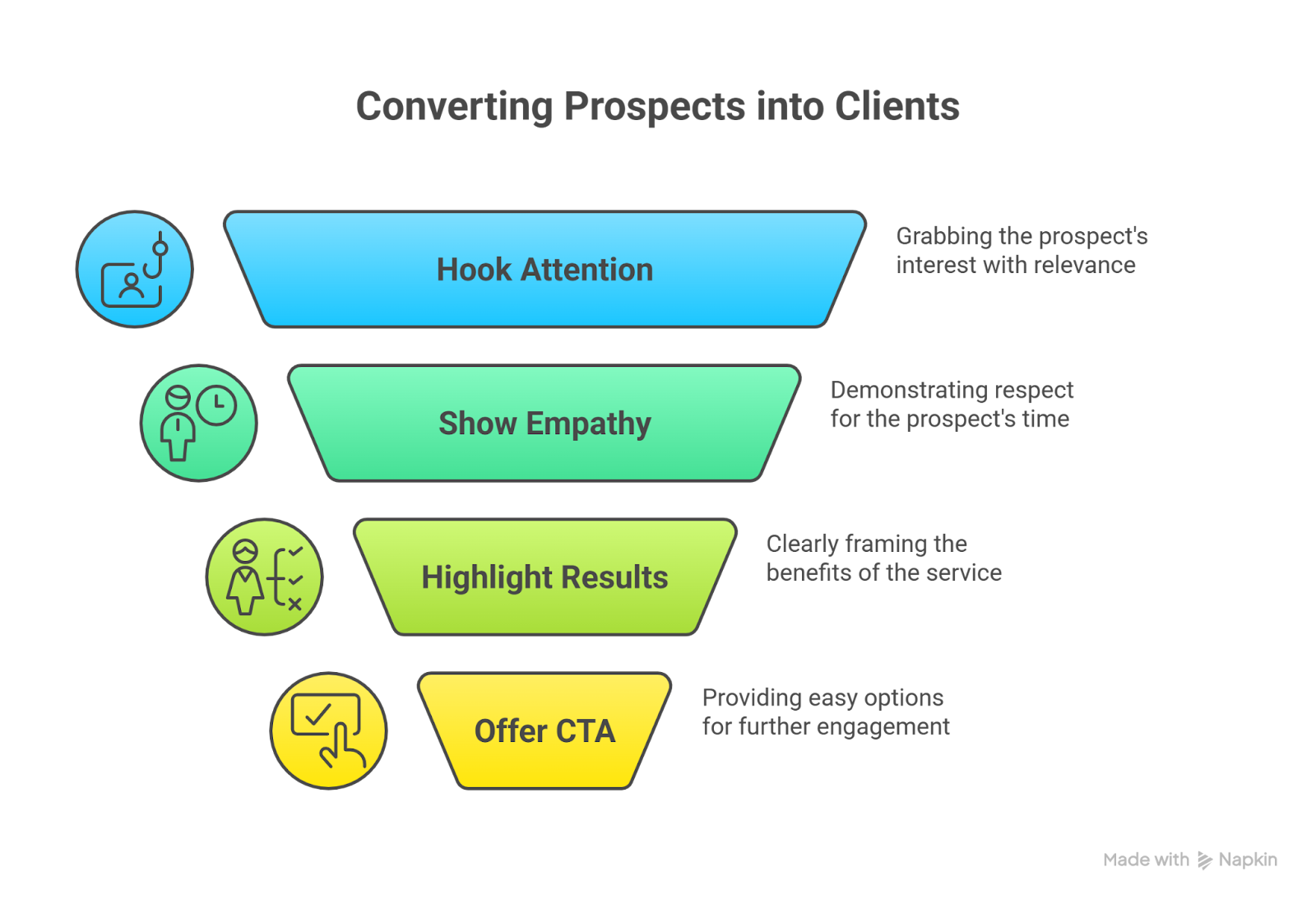
Un script solide pour les conseillers financiers suit la structure HERO :
- Crochet : Commencez par quelque chose d'extrêmement pertinent par rapport à la vie ou à l'étape professionnelle du prospect.
« Bonjour [Nom], j'appelle parce que de nombreux ingénieurs de [Employeur] ne savent pas quoi faire de leurs anciens 401 (k) s après avoir changé d'emploi. » - Empathie : Montrez que vous respectez leur temps.
« Faites en sorte que votre journée soit bien remplie, il ne s'agit que d'un petit test, pas d'un pitch. » - Résultat : Définissez clairement l'avantage.
« Nous aidons les professionnels à réduire leurs impôts et à prendre leur retraite comme ils le souhaitent, avec clarté et confiance. » - Offre/CTA : Donnez deux plages horaires pour réduire la friction.
« Est-ce qu'un appel rapide de 10 à 15 minutes suffirait pour voir si cela s'applique ? Je suis libre le jeudi à 16 h 10 ou le vendredi à 9 h 30. »
Microquestions de qualification
Posez des questions rapides et informelles pour confirmer votre adéquation :
- « Êtes-vous toujours chez [Employeur] ? »
- « Avez-vous examiné votre 401 (k) ou votre IRA au cours de l'année écoulée ? »
- « Espérez-vous prendre votre retraite dans les 5 à 10 prochaines années ? »
Gardez le ton léger et revenez rapidement à la valeur.
Extraits prêts à l'emploi
- « Pas intéressé » : « Tout à fait juste. Est-ce le moment ou avez-vous déjà un conseiller ? »
- « Occupé » : « Pas de problème. Est-ce que ce serait mieux avant 9 heures ou après 17 heures la semaine prochaine ? »
- « Faites appel à un conseiller » : « C'est bon à entendre. Beaucoup obtiennent encore un deuxième avis, ce qui vaut la peine d'être comparé rapidement ? »
- « Envoyer des informations » : « Contente de le faire. Un appel rapide de 10 minutes permet de personnaliser le contenu à envoyer. Comment se passe le mardi ou le jeudi ? »
Fermer et confirmer
Bloquez la réunion :
- « Super. Jeudi à 16 h 10, 15 minutes sur Zoom. »
- « Je vais envoyer une invitation au calendrier avec une liste de préparation rapide. »
Dites-leur à quoi s'attendre :
« Quelques questions simples pour que nous puissions le garder utile et pertinent. »
Comment gérer efficacement les appels téléphoniques ?
Les 30 premières secondes
Les premiers instants d'un appel téléphonique sont décisifs. Commencez par un processus d'ouverture à basse pression, basé sur des autorisations, qui respecte l'heure du prospect :
« Bonjour [Nom], c'est Taylor de ClearPoint. Appel rapide : je serai bref. Disposez-vous de 60 secondes pour le contexte ? »
Partagez immédiatement la raison :
« Je contacte parce que de nombreuses personnes qui ont récemment changé d'emploi ne savent pas comment gérer leur ancien 401 (k) de manière fiscalement avantageuse. »
Utilisez leur nom une fois, gardez un ton naturel (pas robotique ou trop décontracté) et allez droit au but rapidement. La plupart des prospects décident de s'engager en moins de 10 secondes.
Écoute active
Démontrez que vous écoutez, et non pas que vous lancez. Réfléchissez à ce qu'ils ont dit :
« Il semblerait que vous retardiez le report à cause de questions fiscales. Est-ce que j'ai bien compris ? »
Posez une seule question claire à la fois. Évitez les interrogatoires. Adaptez leur rythme et leur style de communication. Analytique ? Sois précis. Occupé ? Sois bref.
L'objectif est de comprendre leur contexte et non d'expliquer les produits. Concentrez-vous sur leurs besoins et poursuivez la conversation.
Prochaine étape sans friction
Si cela vous intéresse, simplifiez le chemin vers une réunion :
« Est-ce qu'un appel de planification rapide fonctionnerait mieux le mardi à 16 h 15 ou le jeudi à 9 h 20 ? »
Confirmez le numéro ou l'e-mail de votre choix et envoyez immédiatement une invitation au calendrier pendant que tu es encore en ligne. Mentionnez la durée (par exemple, 15 minutes), le sujet (par exemple, un aperçu de la retraite) et si quelque chose est nécessaire à l'avance.
Discipline après appel
Terminez en enregistrant tout dans votre CRM :
- Résultat (par exemple, intéressé, différé, non adapté)
- Remarques principales (points faibles, ton, objections)
- Prochaine action et date
S'ils ont réservé, envoyer un bref e-mail récapitulatif avec les détails de la réunion et un article de préparation simple. Si ce n'est pas le cas, définissez une tâche de suivi personnalisée (par exemple, « revenir en arrière après la saison des bonus »).
Et tous les jours ? Passez en revue vos 5 derniers appels. Choisissez un domaine à affiner (votre introduction, votre rythme ou votre réponse à une objection) et appliquez-le immédiatement. Les petites modifications s'aggravent au fil du temps.
Quelles sont les stratégies de génération de prospects pour les conseillers financiers ?
Générer des prospects de qualité en tant que conseiller financier, c'est cibler les bonnes personnes, au bon moment et dans le bon contexte.
Créez de meilleures listes
Tous les prospects ne sont pas créés de la même manière.
La prospection intelligente commence par la création de listes réfléchies, en ciblant des groupes très pertinents plutôt que de dynamiser des contacts génériques.
Concentrez-vous sur les cohortes d'employeurs (par exemple, les entreprises qui subissent des licenciements ou des modifications de leurs avantages sociaux), les annuaires des petites entreprises et les groupes d'affinité tels que les réseaux d'anciens élèves ou les associations civiques. En cas de conformité, considérez les listes d'assurance-vie périmées ou les annuaires des membres des associations (infirmières, ingénieurs, enseignants).
Pour établir des priorités de manière efficace, ajoutez des données démographiques et firmographiques : âge, rôle, ancienneté, lieu et stade de vie. Identifiez les prospects pour les événements clés (nouvel emploi, vente d'une maison, approche de la retraite) afin d'adapter votre message à leurs besoins en matière de calendrier et de planification.
Réchauffez le froid
Avant de décrocher le téléphone, augmentez la réceptivité par de légères touches.
Un court e-mail partageant une information spécifique, telle que « 3 pièges fiscaux pour les reports 401 (k) de {Employeur} », peut sensibiliser. Interagissez subtilement sur LinkedIn ou envoyez une page par la poste (par exemple, une liste de contrôle Roth contre Traditional).
Les webinaires et les déjeuners d'information sur des sujets spécifiques (revenus de retraite, rémunération des cadres, financement des universités) sont des mines d'or. Appelez les participants dans les 24 à 48 heures (pendant qu'ils s'en souviennent encore) et mentionnez l'événement dans votre message d'ouverture.
Utilisez le formulaire d'inscription pour poser 2 à 3 questions de pré-qualification et rationaliser votre suivi.
Volant de référence
Faites des recommandations une habitude, et non une question secondaire.
Après une réunion fructueuse, posez les questions suivantes :
« Si vous êtes à l'aise, y a-t-il un collègue qui pourrait également prendre des décisions similaires en matière de retraite ? »
Suivez les sources de recommandation dans votre CRM pour identifier vos meilleurs défenseurs.
Envoyez un message de remerciement (note, ressource ou geste approuvé par l'entreprise) et entretenez la relation.
Établissez des liens réciproques avec les centres d'influence (experts-comptables certifiés, avocats spécialisés en droit immobilier et professionnels des avantages sociaux) en proposant du contenu co-brandé ou des micro-événements partagés.
Au fil du temps, cela transforme votre jeu d'appels à froid en un entonnoir composé basé sur la confiance.
Quels sont les conseils marketing à l'intention des conseillers financiers ?
Un marketing efficace pour les conseillers financiers repose sur la clarté, l'empathie et la création d'une valeur réelle dès le départ.
Conception de l'offre
Évitez le vague « appel d'introduction ». Au lieu de cela, mener avec un livrable de planification clair cela résout un problème.
Les offres intéressantes incluent un écran de préparation à la retraite de 15 minutes, un examen du calendrier de la sécurité sociale ou un audit rapide des frais. Ces offres semblent réalisables et peu risquées.
Concevez-les comme des diagnostics : quelque chose qui donne des informations au prospect, et non qui le pousse vers un produit.
Définissez clairement les résultats : « Vous repartirez avec trois points à retenir en matière de planification et une prochaine étape recommandée. » Cette clarté augmente à la fois la conversion et la confiance.
Les piliers de la messagerie
Construisez votre message autour de la sécurité, de la clarté et de la simplicité.
Les décisions financières sont chargées d'émotions. Votre langage devrait donc réduire l'anxiété (et non ajouter de la complexité).
Dans la mesure du possible, mettez en évidence votre obligation fiduciaire et votre approche axée sur le conseil.
Évitez de commencer par des noms de produits ou un jargon industriel. Parlez plutôt en termes de résultats : « un plan simple pour protéger vos revenus » ou « des précisions quant à ce à quoi ressembleront réellement vos revenus de retraite ».
Mixage de chaînes
La prise en charge par simple contact ne suffit pas. Utilisez une séquence de 10 à 14 jours combinant téléphone, e-mail, LinkedIn et une valeur ajoutée (comme une liste de contrôle ou une invitation à un événement).
Une bonne séquence de démarrage consiste à démarrer à la lumière (par exemple un e-mail contenant un micro-aperçu ou un commentaire LinkedIn sur leur publication) avant d'ajouter un message vocal ou une invitation à un webinaire, selon le segment.
Visez un ratio valeur-demande de 2:1. Donnez deux fois des informations utiles avant de demander un rendez-vous.
Mesure
Suivez le coût par réunion réservée et le coût par nouveau client, et pas seulement le nombre d'activités. Répartissez par campagne, chaîne et segment d'audience pour identifier ce qui fonctionne.
Tous les mois, revoyez votre échelle de conversion pour voir où se produisent les baisses. Les conseillers les plus performants redoublent d'efforts uniquement lorsqu'ils dépassent leur indice de référence en matière de coût par prospect et abandonnent ceux qui ne font pas avancer les choses.
Comment établir des relations avec les clients lors d'appels à froid ?
Lors des appels à froid, les relations sont établies avec pertinence, ton et confiance dès les 30 premières secondes.
Indices de confiance
La confiance commence dans les 10 à 30 premières secondes.
Faites référence à quelque chose de familier (comme un quartier partagé ou un employeur local) pour établir rapidement une pertinence.
Un ton ferme et confiant est un signe de professionnalisme, encore plus que vos paroles. Soyez clair et respectueux :
« Voici pourquoi j'ai appelé. Si ce n'est pas utile, faites-le moi savoir. »
Cette transparence apporte du confort.
Pertinence personnelle
Adaptez votre message à l'étape de leur vie.
- Les clients en début de carrière veulent des produits de base
- Les personnes âgées de 40 à 50 ans se soucient des impôts et des objectifs de financement
- Les préretraités se concentrent sur les revenus et le calendrier.
- Les retraités s'inquiètent de la durabilité.
Concevez votre offre en fonction de ces véritables priorités.
Langage de l'empathie
Reconnaissez les préoccupations courantes: « Beaucoup craignent de vivre plus longtemps que leurs économies, vous n'êtes pas seul. »
Adoucissez votre ton et parlez avec curiosité, sans pression.
Micro-engagements
Utilisez de petites tâches à faible enjeu :
« Est-ce qu'un appel de 10 minutes vous aiderait à décider s'il vaut la peine d'examiner votre situation de manière plus approfondie ? ».
Ceux-ci créent un mouvement vers l'avant sans pression.
Quelles sont les stratégies efficaces de génération de prospects par téléphone ?
La prospection téléphonique reste l'un des moyens les plus rapides de générer des prospects de haute qualité... si vous adaptez votre timing, votre ton et vos tactiques.
Stratégie de messagerie vocale
Conservez les messages vocaux en moins de 22 secondes. *
Diriger avec un avantage (comme les économies d'impôts ou la clarté du roulement) et terminez par une action légère : « Je vais envoyer un bref récapitulatif. N'hésitez pas à répondre si cela est utile. »
L'objectif n'est pas de vous rappeler, mais de vous familiariser et de préparer votre prochain point de contact.
Fenêtres d'appel
- Les fins d'après-midi (16 h à 18 h 30) sont souvent plus performants pour les professionnels qui travaillent.
- Essayez tôt le matin (8 h à 9 h 15) pour les cadres.
Testez par segment : les retraités ou les travailleurs postés peuvent mieux réagir les autres jours ou heures.
Battez et concentrez-vous
Travaillez en sprints d'appels de 45 à 60 minutes.
Éliminez les distractions, réglez chaque appel immédiatement et regroupez des prospects similaires (par exemple, les préretraités) pour rester à jour et efficace.
Comment créer des listes d'appels conformes et de haute qualité ?
Hygiène des données
Commencez avec des informations de contact propres et vérifiées: noms orthographiés correctement, identification des téléphones mobiles par rapport aux téléphones fixes et confirmation des fuseaux horaires.
Signalez les références et les pistes chaudes séparément des pistes froides. Nettoyez tous les enregistrements en fonction des listes DNC nationales/étatiques et des restrictions spécifiques à l'entreprise.
Consignez toujours les désinscriptions et les niveaux de consentement pour rester prêt à l'audit et en conformité.
Segmentation
Segmenter par pertinence :
- industrie,
- employeur,
- événements récents de la vie (changement d'emploi, héritage),
- niveau d'actif,
- et géographie.
Utilisez les données historiques (taux de réunions, conversion) pour établir des priorités qui est appelé en premier. Créez des micro-listes à partir des participants à l'événement ou des recommandations pour associer volume et intention.
Rotation et actualisation
Limitez les tentatives de sensibilisation (par exemple, 4 à 6 sur 10 à 14 jours).
Faites une pause et ne recyclez qu'après une période de refroidissement de 6 à 12 semaines avec un nouvel angle. Supprimez régulièrement les contacts de mauvaise qualité ou qui ne répondent pas pour protéger votre représentant et améliorer les résultats.
Dix meilleures pratiques d'appel spécifiques aux conseillers
Dix bonnes pratiques en matière d'appels
Traitez votre script comme un guide: adaptez le libellé pour qu'il reste naturel et axé sur le client.
- Personnalisez tôt (prononcez le nom complet une fois) puis demandez la permission de continuer.
- Concentrez-vous sur un avantage lié à l'étape de leur vie, évitez de parler du produit et écoutez plus que vous ne parlez.
- Confirmez l'étape suivante à l'aide de deux options horaires claires, envoyez l'invitation rapidement et enregistrez les notes CRM pendant que l'appel est en cours.
Chaque suivi doit apporter une touche de valeur, pas seulement de la pression.
État d'esprit et cohérence
Bloquez le temps d'appel tous les jours et considérez-le comme une réunion. Si vous hésitez, revoyez votre script (n'évitez pas le cadran).
Célébrez les petites victoires, comme des connexions de qualité ou des ratios améliorés. Le démarchage téléphonique est une question de progrès, pas de perfection.
Comment créer des scripts qui convertissent ?
Script de préparation à la retraite (report 401 (k))
« Bonjour {Nom}, {Votre nom} avec {Firm}. Motif de l'appel : de nombreux employés de {Company} demandent comment gérer les anciens 401 (k) s et les impôts. J'aide les professionnels à créer un aperçu de la retraite en 15 minutes pour identifier les lacunes. Disposez-vous de 60 secondes pour voir si c'est utile ? »
Si c'est le cas :
→ « Toujours chez {Company}, ou vous avez récemment déménagé ? »
→ « Je peux faire le mardi 4 h 10 ou le jeudi 9 h 30 : qu'est-ce qui fonctionne le mieux ? »
Script d'efficacité fiscale pour les propriétaires d'entreprise
« Bonjour {Nom}, {Votre nom} ici. J'aide les propriétaires d'entreprise à réduire les impôts inutiles grâce à de brefs audits, sans préparation préalable. La plupart des gens identifient 2 ou 3 domaines potentiels pour améliorer leur efficacité fiscale. Est-ce que ce serait mieux avant 9 heures ou après 17 heures cette semaine ? »
Script de révision de l'assurance-vie
« Bonjour {Nom}, {Votre nom} avec {Firm}. Nous proposons une révision de la politique sans pression pour nous assurer qu'elle répond toujours à vos besoins et que vos prix restent compétitifs. Ça vaut le coup d'y jeter un coup d'œil cette semaine ? »
Suivi (après messagerie vocale/e-mail)
« Bonjour {Name}, revenons à la révision rapide du plan que j'ai mentionnée. J'ai le mardi 8 h 40 ou le mercredi 17 h 10 : vous travaillez pour un appel de courte durée ? »
Comment gérer les objections les plus courantes ?
Les objections sont des signaux. Le bon cadrage et le bon suivi peuvent transformer l'hésitation en curiosité, et éventuellement en rencontre.
« J'ai déjà un conseiller. »
« C'est super de savoir que vous avez du soutien. De nombreux clients ayant recours à des conseillers planifient toujours un deuxième avis annuel rapide pour évaluer les frais, les risques et l'efficacité fiscale. Cela vaut-il la peine de vérifier 10 minutes pour vous assurer que vous êtes totalement optimisé ? »
« Ce n'est pas le bon moment. »
« Compris, j'apprécie votre emploi du temps. Est-ce que tôt le matin ou tôt le soir est généralement mieux pour vous ? Je peux avoir deux options la semaine prochaine et tu pourras choisir celle qui te convient. »
« Ça ne m'intéresse pas. »
« C'est juste. Avant que je ne vous laisse partir : diriez-vous que c'est parce que vous êtes déjà entièrement couvert, ou est-ce que ce n'est tout simplement pas le bon moment ? Je vais en prendre note et rester respectueuse de votre temps. »
« Envoyez-moi des informations. »
« Je suis heureuse de partager quelque chose, même si c'est beaucoup plus utile une fois que j'ai compris votre situation. Un appel rapide de 5 minutes permet d'adapter le contenu à envoyer pour qu'il soit réellement pertinent. Est-ce que le mardi 4 h 20 ou le jeudi 9 h 40 fonctionneraient pour un bref contrôle d'ajustement ? »
Quels sont les meilleurs jours et heures pour appeler ?
Pour la plupart des conseillers, les taux de réponse et de connexion sont généralement les plus élevés du mardi au jeudi.
La fin d'après-midi (16 h à 18 h 30) ou le début de soirée conviennent bien aux professionnels en activité, tandis que les premières matinées conviennent aux cadres.
Des segments tels que les médecins, les propriétaires de petites entreprises ou les travailleurs postés peuvent avoir besoin de fenêtres alternatives.
La clé : enregistrez les taux de réponse par jour, heure et segment dans votre CRM pour identifier les modèles (et ajuster votre plan d'appels en conséquence).
Comment mesurer les résultats et améliorer les performances ?
L'amélioration commence par la mesure.
Le suivi des bons KPI vous aide à identifier ce qui fonctionne et ce qui ne fonctionne pas, et sur quoi concentrer votre prochaine série de sensibilisation ou de coaching.
- Principaux KPI : Suivez chaque étape : taux de connexion, taux de conversation, rendez-vous organisés, taux d'affichage, conversion en client, coût par réunion et coût par client.
- Indicateurs de qualité : Surveillez le nombre de prospects qui correspondent à votre profil de client idéal, les taux de recommandation et les notes sur la qualité ou la satisfaction des réunions.
- Analyse de la cadence : Testez les scripts A/B et analysez les performances en fonction de la source de la liste, de l'offre et de la durée des appels.
- Boucle de coaching : Passez en revue les appels hebdomadaires, signalez la langue gagnante et éliminez progressivement ceux qui ne donnent pas lieu à des conversions.
Comment intégrer le téléphone au courrier électronique et aux réseaux sociaux ?
Cadence multicanaux légère (10 à 14 jours)
Utilisez un rythme court et séquencé :
- Jour 1 : Appel + messagerie vocale → Récapitulatif des e-mails
- Jour 3 : Appel → Jour 4 : Afficher ou se connecter à LinkedIn
- Jour 6 : Appel → Jour 7 : E-mail avec une valeur à deux puces
- Jour 10 : Dernier appel + invitation à la réunion → Jour 14 : e-mail « Close-the-loop »
Contenu des e-mails
- Utilisez des e-mails courts (60 à 90 mots) et concentrez-vous sur un seul CTA.
- Incluez toujours une signature conforme et les informations requises.
Touches sociales
- Consultez d'abord leur profil.
- Interagissez légèrement avec les publications pertinentes (pas de likes, spam).
- Évitez toute langue utilisée dans le produit.
Comment gérer efficacement les appels à froid pour différentes offres ?
Adaptez votre approche d'appel téléphonique à la nature du service : ce qui renforce la confiance dans la planification de la retraite ne sera pas la même chose que ce qui rapporte des intérêts pour l'assurance ou la gestion de patrimoine.
- Planification de la retraite : Dirigez avec clarté en ce qui concerne le calendrier : optimisation de la sécurité sociale, retraits fiscalement avantageux, distributions minimales requises. Concentrez-vous sur l'éducation.
- Assurance : Concevez-le comme un simple examen des lacunes. Rassurez-vous : pas de présentation du produit, juste une vérification de l'adéquation et de la valeur.
- Gestion de patrimoine : Privilégiez la transparence. Mettez l'accent sur une approche axée sur la planification, la clarté des frais et une communication cohérente (et non sur les allégations de performance).
Quels sont les conseils marketing qui facilitent les appels ?
Un marketing efficace ne se contente pas d'attirer : il amplifie vos appels. Le contenu intelligent, les événements et la preuve sociale peuvent sensibiliser les prospects avant même que vous ne les appeliez et donner un impact durable à votre communication une fois que vous avez raccroché.
- Marketing événementiel : Envisagez d'organiser des sessions de formation périodiques (comme un atelier de listes de contrôle pour les préretraités ou une évaluation des flux de trésorerie des petites entreprises) et effectuez un suivi auprès des personnes inscrites dans les 24 heures. Les événements renforcent la confiance et suscitent souvent des recommandations de clients.
- Avis et réputation : Encouragez les témoignages de clients et les évaluations en ligne conformes. Ils renforcent la crédibilité, augmentent la visibilité et soutiennent votre portefeuille d'affaires en montrant à vos clients potentiels que vous êtes fiable et efficace.
- Le contenu aide à : Préparez 2 à 3 courtes pages pédagogiques approuvées par l'entreprise (comme une « feuille de route de reconduction » ou un aperçu des « mesures fiscales de fin d'année »). Partagez-les après l'appel pour apporter une valeur éducative générale et renforcer la conversation.
Comment configurer votre environnement d'appel et votre pile d'outils ?
Votre environnement d'appel façonne vos résultats. Avec les bons outils, le bon flux de travail et l'hygiène des données, vous pouvez améliorer votre efficacité, rester en conformité et maintenir votre dynamique.
- Outils : Utilisez un numéroteur approuvé par la conformité, un CRM avec dispositions, un outil de planification du calendrier et un casque de qualité. Si l'enregistrement des appels est autorisé par les lois de votre entreprise et de votre État, utilisez-le à des fins de formation et d'assurance qualité.
- Flux de travail : Bloquez un sprint quotidien de 90 minutes pour les appels : préchargez votre liste, désactivez les distractions, enregistrez immédiatement les résultats et planifiez des suivis lorsque l'élan est au rendez-vous.
- Entretien des données : Actualisez vos listes tous les mois : supprimez les numéros non valides, identifiez les références et les prospects séparément, et conservez des données propres pour améliorer les taux de connexion et l'intégrité de la conformité.
Quelles sont les erreurs courantes à éviter ?
Évitez ces 7 erreurs :
- leader en matière de produits,
- appeler sans raison précise,
- donner des conseils avant de comprendre leur situation,
- dominant la conversation,
- en utilisant des CTA vagues,
- ignorer les normes de conformité,
- ou en effectuant un suivi incohérent.
Deux exemples de flux d'appels (prêts à être copiés)
Flux de 60 secondes
Structure :
Introduction → raison → autorisation de continuer → une question qualificative → énoncé de valeur → deux options horaires → confirmer le meilleur chiffre → envoyer une invitation au calendrier.
Exemple :
« Bonjour Sarah, c'est Alex de NorthBridge Wealth. Raison de mon appel : de nombreux ingénieurs de {Employeur} ne savent pas quoi faire des anciens 401 (k) s après avoir changé d'emploi. Disposez-vous de 60 secondes pour voir si c'est pertinent ? »
→ « Êtes-vous toujours chez {Employeur} ? »
→ « Nous proposons un aperçu de la retraite en 15 minutes pour repérer les lacunes et éviter des erreurs coûteuses. »
→ « Est-ce que le mardi à 16 h 15 ou le jeudi à 9 h 40 fonctionneraient le mieux ? »
→ « Super, est-ce le meilleur numéro pour vous joindre ? Je vais envoyer une invitation au calendrier avec une courte liste de préparation. »
Débit en 3 minutes
Structure :
Intro → raison → autorisation → qualificatif #1 → qualificatif #2 (chronologie ou conseiller existant) → récapitulatif des avantages → proposer deux heures précises → engagement de réunion garanti.
Exemple :
« Bonjour David, c'est Lisa d'OakBridge Advisory. Raison de mon appel : de nombreux propriétaires d'entreprise ne savent pas s'ils paient trop d'impôts ou s'ils ratent des opportunités de planification. Tu as une minute ? »
→ « Dirigez-vous toujours {Nom de l'entreprise} à plein temps ? »
→ « Travaillez-vous actuellement avec un conseiller ou gérez-vous une planification ad hoc ? »
→ « Nous proposons un bilan de 15 minutes pour signaler 2 à 3 mesures potentielles d'économie d'impôts. Aucune préparation n'est nécessaire. »
→ « Est-ce que ce serait mieux tôt le matin ou tard dans l'après-midi : disons, le mercredi à 8 h 10 ou le vendredi à 16 h 45 ? »
→ « Parfait. Je vais envoyer une invitation et un agenda rapide pour en tirer le meilleur parti. »
Le cold calling reste un puissant levier pour les conseillers financiers, lorsqu'il est effectué avec le bon script, les bons outils et le bon timing.
Grâce à une approche structurée et à une exécution cohérente, vous pouvez transformer les contacts à froid en réunions qualifiées et en relations durables avec vos clients.
Êtes-vous prêt à rationaliser votre prospection, à automatiser les flux de travail et à améliorer vos résultats ?
Réservez une démo gratuite de ZELIQ dès aujourd'hui et découvrez comment les conseillers les plus performants modernisent leurs activités sortantes tout en restant totalement conformes.
Enter the future of lead gen
Table of contents
Placeholder Title
Table of contents
Placeholder Title
Placeholder Title