
Le taux d'ouverture des e-mails est toujours important en B2B, même après que la protection de la confidentialité des e-mails d'Apple ait déformé le suivi basé sur les pixels. L'erreur est de ne pas utiliser le taux d'ouverture. L'erreur est le traiter comme un signal de vérité plutôt que comme un signal directionnel.
Un message ouvert ne signifie pas que quelqu'un a lu votre e-mail. Cela signifie que votre message a attiré suffisamment d'attention (par le biais de l'identité de l'expéditeur, de la ligne d'objet et du calendrier) pour déclencher une interaction au niveau de la boîte de réception. Cela rend le taux d'ouverture utile pour comparaison d'angles, de segments et de campagnes, mais peu fiable en tant que mesure de performance autonome.
Les équipes les plus performantes considèrent le taux d'ouverture comme en haut d'une pile de mesures, pas la ligne d'arrivée. Ils le lisent toujours à côté du volume envoyé, du taux de clics pour ouvrir (CTOR), du taux de réponse, des réunions pour 100 e-mails envoyés et du pipeline pour 1 000 e-mails envoyés. Cette pile complète montre si les campagnes de marketing par e-mail font réellement avancer les conversations.
Utilisé correctement, le taux d'ouverture répond à une question simple : Ce message a-t-il attiré l'attention par rapport au dernier envoyé au même public ?
Utilisée de manière incorrecte, elle devient une métrique personnalisée déconnectée des recettes.
Dans les rapports hebdomadaires, les équipes matures suivent également le taux de désabonnement, le taux de rebond et le taux de plaintes. Ces signaux mettent rapidement en lumière les risques liés à la délivrabilité et protègent la réputation de l'expéditeur avant que les fournisseurs de boîtes aux lettres n'interviennent.
À quoi ressemble le terme « bonne » par type de campagne
Les attentes en matière de taux d'ouverture des e-mails varient considérablement en fonction du type de campagne et de la maturité de l'audience. La comparaison entre catégories sans contexte conduit à de mauvaises décisions.
Pour inscrivez-vous à des newsletters B2B, les taux d'ouverture basés sur les livraisons se situent généralement entre 20 % et 30 %. La cohérence compte plus que les pointes. Des délais d'envoi prévisibles et un cadrage clair des sujets permettent de stabiliser l'engagement au fil du temps.
Mises à jour des produits et versions de fonctionnalités obtiennent souvent de meilleurs résultats, en particulier lorsque le sujet cite un avantage tangible et que le texte de l'aperçu ajoute du contexte au lieu de répéter le titre. Les ouvertures basées sur les livraisons des années 20 à 40 sont courantes lorsque la pertinence est claire.
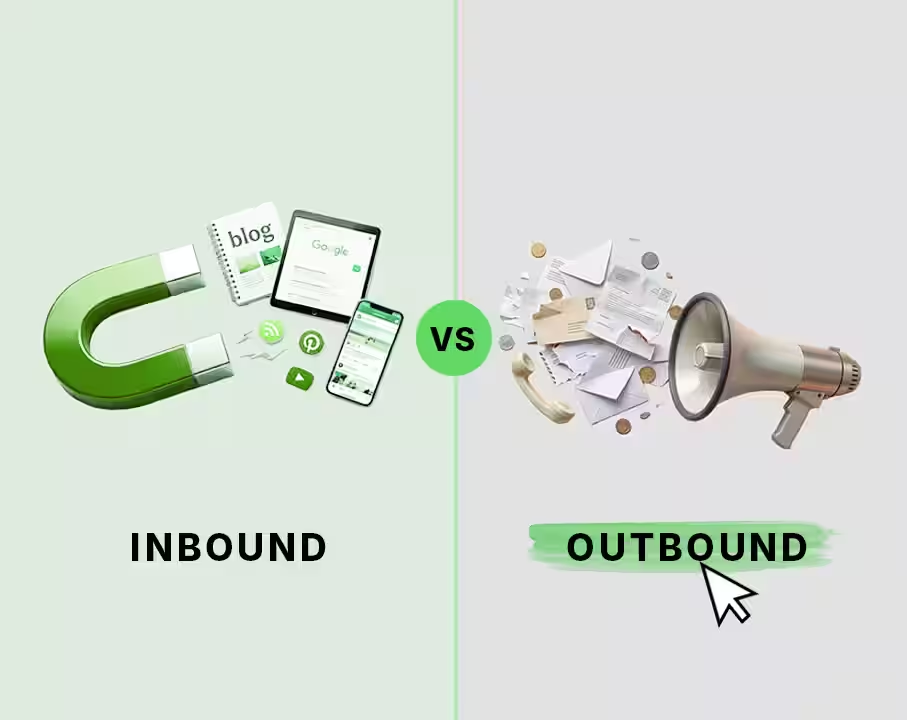
Pour courrier électronique à froid sortant, le taux d'ouverture est fortement faussé par les limites de suivi. Pour évaluer le succès, il faut utiliser différents indicateurs : le taux de réponse, la répartition des réponses positives, le nombre de réunions pour 100 e-mails envoyés et le chiffre d'affaires pour 1 000 e-mails envoyés. Les ouvertures à elles seules ne vous disent presque rien.
Invitations et rappels à des événements ont tendance à obtenir des postes plus ouverts lorsque le sujet combine un avantage spécifique au rôle avec une date précise. Les liens vers le calendrier et de courts textes adaptés aux mobiles augmentent considérablement l'engagement.
Qu'est-ce qui influe réellement sur les taux d'ouverture des e-mails
Réputation et authentification de l'expéditeur
Les fournisseurs de boîtes aux lettres récompensent les expéditeurs fiables et prévisibles. La délivrabilité se gagne bien avant la rédaction de la ligne d'objet.
Les équipes doivent au minimum configurer SPF, DKIM et DMARC sur des domaines alignés, utiliser un domaine de suivi personnalisé et conserver un nom « De » cohérent tel que « Alex at Company ». Lorsqu'il est pris en charge, le BIMI renforce la reconnaissance de la marque directement dans la boîte de réception.
Il est important de faire appel à un fournisseur de services de messagerie fiable. Des pools d'adresses IP partagées médiocres et des modes d'envoi agressifs peuvent ralentir le placement des boîtes de réception dans Gmail et Outlook, même lorsque la qualité de la copie est bonne.
Une règle simple s'applique : une solide réputation d'expéditeur améliore la délivrabilité, une infrastructure faible annule un contenu de qualité.
Qualité et segmentation des listes
Le taux d'ouverture s'améliore lorsque les listes reflètent le contexte d'achat réel plutôt que le volume brut. Cela implique une segmentation par source d'inscription et par date, des données firmographiques telles que le secteur et la taille de l'entreprise, le rôle et l'ancienneté, et, le cas échéant, des données sur les intentions ou le cycle de vie.
Les rebonds physiques, les doublons et les adresses de rôle qui ne s'engagent jamais doivent être supprimés de manière agressive. Ces adresses envoient des signaux négatifs aux fournisseurs de boîtes aux lettres et faussent les mesures de performance.
L'erreur de segmentation la plus courante est la surindexation en fonction de la taille de l'entreprise. Les équipes les plus performantes segmentées par pourquoi quelqu'un s'en soucierait en ce moment, et non par le nombre d'employés de leur entreprise.
Objet et préen-tête
L'ouverture est gagnée (ou perdue) dans l'objet et dans la ligne d'aperçu. Des lignes d'objet efficaces indiquent soit le public cible, soit le résultat, chargez d'abord les mots critiques pour les troncature mobiles et évitez les vagues exagérations.
Le préen-tête doit compléter le sujet, pas le répéter. Traitée correctement, elle devient une deuxième accroche qui apporte de la clarté ou de l'importance au message.
Nom de l'expéditeur et expéditeur reconnaissable
Les utilisateurs ouvrent les e-mails provenant d'expéditeurs qu'ils connaissent. Un nom humain associé à une marque surpasse systématiquement les expéditeurs anonymes ou « sans réponse ». La cohérence est plus importante que la créativité. La familiarité renforce la confiance au niveau de la boîte de réception.
Heure et fréquence d'envoi
Le calendrier d'envoi doit refléter la façon dont les destinataires travaillent, et non la façon dont les marketeurs planifient. Les tests effectués par secteur d'activité et par région sont importants, tout comme le respect des heures de silence locales et des jours fériés.
Les limites de fréquence sont essentielles. Même les e-mails pertinents perdent des ouvertures lorsque le volume dépasse l'attention. La fatigue est cumulative et difficile à inverser une fois que les fournisseurs de boîtes aux lettres réduisent leur niveau d'engagement.
Alignement du contenu et des attentes
Le taux d'ouverture baisse lorsque le sujet fait des promesses excessives et que le corps ne tient pas ses promesses. Les e-mails les plus performants annoncent leur valeur à un stade précoce, utilisent de courts paragraphes, limitent les images et donnent la priorité à la lisibilité mobile.
Les fournisseurs de boîtes mail mesurent de plus en plus l'engagement en aval. Les e-mails ouverts mais abandonnés érodent rapidement le placement futur de la boîte de réception.
Comment créer des campagnes par e-mail ciblées
Créez des segments qui correspondent au contexte d'achat
Une segmentation efficace reflète la façon dont les acheteurs prennent leurs décisions. Cela implique généralement de combiner le secteur, le rôle et le niveau de compte avec l'étape du cycle de vie, la région et les signaux d'engagement récents.
Voici un exemple pratique : rôle équivaut à « Opérations », secteur équivaut à « SaaS », plan équivaut à « Professionnel » et dernière activité au cours des 30 derniers jours. Ce type de ciblage permet d'envoyer des messages spécifiques sans alourdir la taille de la liste.
Les données dont vous avez besoin et leur provenance
Un ciblage de haute qualité repose sur plusieurs couches de données : données de première partie relatives à l'utilisation des produits et au comportement des sites Web, préférences zéro partie collectées via les centres d'abonnés, données d'intention tierces conformes et enrichissement firmographique.
ZELIQ prend en charge l'enrichissement firmographique à grande échelle, permettant aux équipes d'adapter les messages à l'audience qui les reçoit.
Règles de personnalisation à grande échelle
La personnalisation va bien au-delà de « Bonjour {{FirstName}} ». Les équipes efficaces font référence à des indicateurs de performance clés spécifiques à un rôle, au contexte régional des événements, aux interactions récentes avec le contenu ou à des jalons de produits pertinents.
Les blocs de contenu conditionnels garantissent que chaque destinataire ne voit que ce qui s'applique à lui, réduisant ainsi le bruit tout en préservant l'échelle.
Trajets, déclencheurs et commandes de fréquence
Les déclencheurs basés sur le comportement sont plus performants que les envois par lots. Les réservations pour les démonstrations, la participation à des webinaires, les étapes d'essai et les fenêtres d'inactivité sont autant de signes d'intention ou de risque.
Les limites de fréquence, les règles de pause après les signaux négatifs et la suppression automatique des clients et les rebonds matériels protègent la réputation de l'expéditeur tout en améliorant la qualité de l'engagement.
Quel est le taux d'ouverture moyen des e-mails ?
Les indices de référence permettent d'orienter la stratégie, et non de juger les performances. Pour les newsletters B2B optionnelles, les taux d'ouverture moyens des e-mails se situent souvent entre le milieu des années 20 et les années 30 en fonction du niveau de diffusion. La sensibilisation à de nouveaux contacts varie considérablement en fonction du ciblage, de la réputation et de la pertinence.
Les équipes de direction devraient se concentrer moins sur les ouvertures brutes et davantage sur les principaux indicateurs : CTOR, taux de réponse, réunions pour 100 e-mails envoyés et pipeline pour 1 000 e-mails envoyés. Ces indicateurs relient l'attention au chiffre d'affaires.
Comment améliorer la délivrabilité des e-mails
La délivrabilité est un système, pas un commutateur.
Les bases solides comprennent des domaines authentifiés, des identités d'expéditeur stables, des domaines de suivi personnalisés et une sélection rigoureuse des adresses IP. La gestion de la réputation nécessite un échauffement progressif, des seuils de rebond et de réclamation stricts, ainsi qu'un suivi des performances au niveau des fournisseurs.
Dressez la liste des questions d'hygiène autant que des infrastructures. La vérification de la syntaxe, la suppression des rebonds, le traitement immédiat des désinscriptions et l'évitement strict des listes achetées ne sont pas négociables.
Le contenu et la mise en page jouent également un rôle. Les e-mails en texte brut sont les plus efficaces pour la diffusion à froid. Les images lourdes, les pièces jointes et les raccourcisseurs d'URL augmentent le risque de spam. Des modèles d'envoi cohérents sont plus importants que des rafales occasionnelles.
ZELIQ aide les équipes à appliquer les limites d'envoi par domaine, à suivre les calendriers d'échauffement et à utiliser des e-mails vérifiés avec une protection contre les rebonds. Ces garde-fous protègent l'intégrité du domaine pendant que les équipes se concentrent sur l'amélioration de la messagerie.
Conseils efficaces pour augmenter les taux d'ouverture des e-mails
Les cadres thématiques qui fonctionnent régulièrement comprennent des énoncés des problèmes et des résultats, des questions directes, des promesses numérotées et des lignes opérationnelles simples telles que les ordres du jour des réunions. Le fait de conserver des sujets compris entre 35 et 45 caractères améliore la visibilité sur mobile.
Les préen-têtes doivent ajouter un avantage secondaire ou un risque évité, ne jamais dupliquer le sujet et fonctionner comme une deuxième invite à prendre une décision.
Des lignes reconnaissables, une valeur ajoutée explicite et des rappels d'autorisation clairs renforcent la confiance et l'engagement à long terme.
Comment augmenter les taux d'ouverture des e-mails sur 90 jours
Au cours des 30 premiers jours, les équipes doivent corriger l'authentification, nettoyer les listes et actualiser le sujet et la copie d'aperçu.
D'ici 60 jours, une segmentation par rôle et par cycle de vie, un contenu conditionnel et des tests structurés de pré-en-tête devraient être en place.
Au bout de 90 jours, le réglage de la fréquence, les heures calmes et l'alignement de la phase d'achat permettent aux équipes d'associer directement les statistiques des e-mails aux réunions et aux opportunités.
Parmi les solutions rapides, citons l'identité reconnaissable de l'expéditeur et la planification des fuseaux horaires. Les gains cumulatifs proviennent d'un meilleur enrichissement, de flux déclenchés et de programmes multi-touch basés sur des preuves.
Tests, analyses et contrôle des risques
Des tests efficaces isolent une variable à la fois, respectent la taille minimale des échantillons et utilisent des règles stop-loss lorsque les performances chutent. Les rapports doivent ventiler les informations livrées, ouvertes, CTOR, réponses, réunions et désinscriptions par campagne, secteur et fournisseur de boîtes aux lettres.
La conformité n'est pas facultative. Les exigences CAN-SPAM, CCPA et CPRA doivent être prises en compte dans l'identification, la gestion des désinscriptions et l'enregistrement des consentements. Des rappels d'autorisation clairs et des liens vers les politiques réduisent les risques juridiques et de délivrabilité.
Une mesure qui intéresse les dirigeants
Les cadres ne gèrent pas les postes ouverts. Ils gèrent les résultats.
Le chemin est linéaire : les ouvertures mènent à des clics, les clics mènent à des réponses, les réponses mènent à des réunions et les réunions créent un pipeline. La mesure du pipeline et du chiffre d'affaires pour 1 000 e-mails envoyés permet d'aligner les indicateurs de marketing par e-mail sur l'impact commercial.
Les tableaux de bord doivent présenter les tendances par segment, le comportement des cohortes pour les nouveaux abonnés et une vue unique du volume diffusé, du taux d'ouverture, des rebonds, des désinscriptions et des mouvements de réponses.
Mise en œuvre de ce manuel avec ZELIQ
ZELIQ permet une segmentation avancée et un contenu dynamique grâce à un enrichissement firmographique et à des filtres flexibles. Les équipes peuvent contrôler les jours et les fenêtres horaires d'envoi au niveau de la séquence, appliquer des limites d'envoi par domaine et répartir le volume en toute sécurité entre les domaines.
Les contrôles de délivrabilité intégrés, la vérification des e-mails et la protection contre les rebonds réduisent les risques avant la mise en ligne des campagnes. Les informations sur les performances relatives aux ouvertures, aux clics et aux réponses contribuent à une amélioration continue, tandis que les séquences multicanaux coordonnent les e-mails et la diffusion sur LinkedIn sans trop toucher les prospects.
Enter the future of lead gen
Table of contents
Placeholder Title
Table of contents
Placeholder Title
Placeholder Title