

Reaching out to a CEO cold isn’t easy, but when done right, it works.
The wrong approach?
Sending cold emails that sound like templates, filled with jargon, or pushing for a 30-min meeting right away. The perfect cold email to a CEO does the opposite: it shows you’ve done your homework, keeps things clear and easy to understand, and makes one simple ask ; like a quick chat.
This article breaks down what actually gets replies today. You’ll learn how to write a cold email that feels personalized without wasting time, how to improve your chances of landing in the inbox (hello, email deliverability), and how to avoid the common mistakes that make people hit “delete”.
We’ll go through subject lines that stand out, real examples of what makes people book a meeting, and a cold email outreach strategy that respects how executives work.
If you want to refine your overall approach before reaching out to executives, this pairs well with our guide to cold contact email strategies in 2025, which breaks down what’s working across roles and industries.
Because yes, CEOs are busy. But they still read smart messages from people who get their world.
If you're looking for a better way to email people who actually reply, you’re in the right place.
How to reach busy executives with cold emails?
Understand CEO context
CEOs receive 200–300+ emails per day, most of which never reach their eyes. Gatekeepers, spam filters, and AI-prioritized inboxes act as shields. Your message is fighting for attention in a zero-sum environment where every second matters.
To break through, speak the executive’s language: business outcomes. They skim for concrete value:
- revenue impact,
- time savings,
- risk reduction,
- margin expansion…
If your subject or first line doesn’t scream relevance, you’re archived.
Also, keep this in mind: most execs triage email on mobile. That means you’ve got a few seconds to make your case. No formatting tricks, just clarity.
Target the right company size
Targeting a startup CEO is not the same as emailing a Fortune 500 executive.
- SMBs (10–200 employees): Founders and CEOs here still touch the problem. If your email connects to a clear ROI or fast win, they’ll engage. They care about velocity and burn rate. Show them how you help with either.
- Enterprise (200+ employees): The CEO likely delegates. Find the P&L owner (VP Sales, Head of Ops, Division GM). Then use the CEO email as a vector: ask for a referral in your CTA, which shows respect and understanding of corporate structure.
Pro tip: LinkedIn company size often lies. Use ZELIQ to enrich with accurate org data, funding stage, and real headcount before hitting send.
Research fast and precisely
The fastest way to stand out? Show them you did the work… but do it in three lines:
- Trigger: A recent event (funding, hiring spike, product launch, exec hire).
- Role-specific pain: Tie the trigger to a likely challenge. E.g. “Your new SDR team might face onboarding bottlenecks.”
- Value hypothesis: A clear “why now”: “We helped X cut SDR ramp time by 30%.”
Use tools like ZELIQ, SalesNav, and LinkedIn signals to get real-time context fast. Skip generic personalization: quote their podcast, comment on their hiring, or reference a metric from their blog.
Precision beats decoration.
Build a “why you, why now” value hypothesis
The most effective emails don’t pitch features: they pitch outcomes.
Replace fluff like “optimize workflows” with concrete business impact:
- “Reduced onboarding time by 28% in 60 days.”
- “Increased NRR by 12pts over 2 quarters.”
Whenever possible, use peer proof: “We helped [Competitor] achieve [X].”
Avoid diluted buzzwords (“synergies”, “scalable solution”). Spam filters downgrade them, and so do CEOs’ brains.
Keep it short
Stick to 50-90 words. That’s it.
- No attachments
- No logos
- One link max
- One clear idea per message
Your goal isn’t to close.
Your goal is to get the reply.
Respectful CTAs CEOs actually answer
No CEO wants to be asked for a 30 minute demo on first contact. Better:
- “Worth a 10 min intro next week?”
- “Wrong person? Who on your team owns this?”
- “Open to a quick chat if this is relevant?”
Keep it mobile-friendly.
Make replying feel like less effort than ignoring you.
Timing & sending windows
Send when they scroll, not when they snooze.
- Best: Tuesday–Thursday, 7:30–9:30am or 4:30–6:00pm local time.
- Avoid: Monday morning floods and Friday EOD mental checkouts.
Smart senders use tools (like ZELIQ) that optimize send-time by time zone and persona.
Deliverability basics
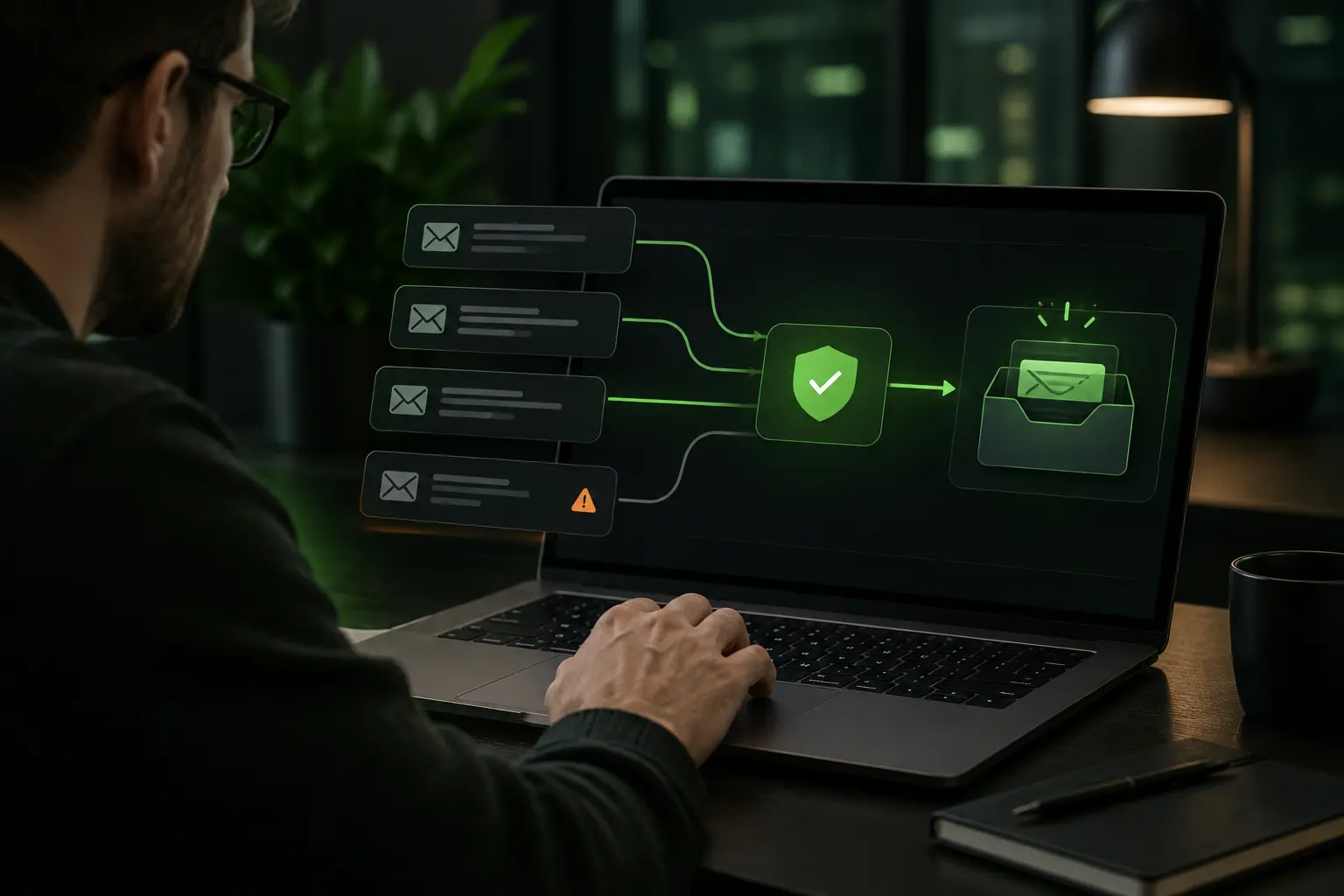
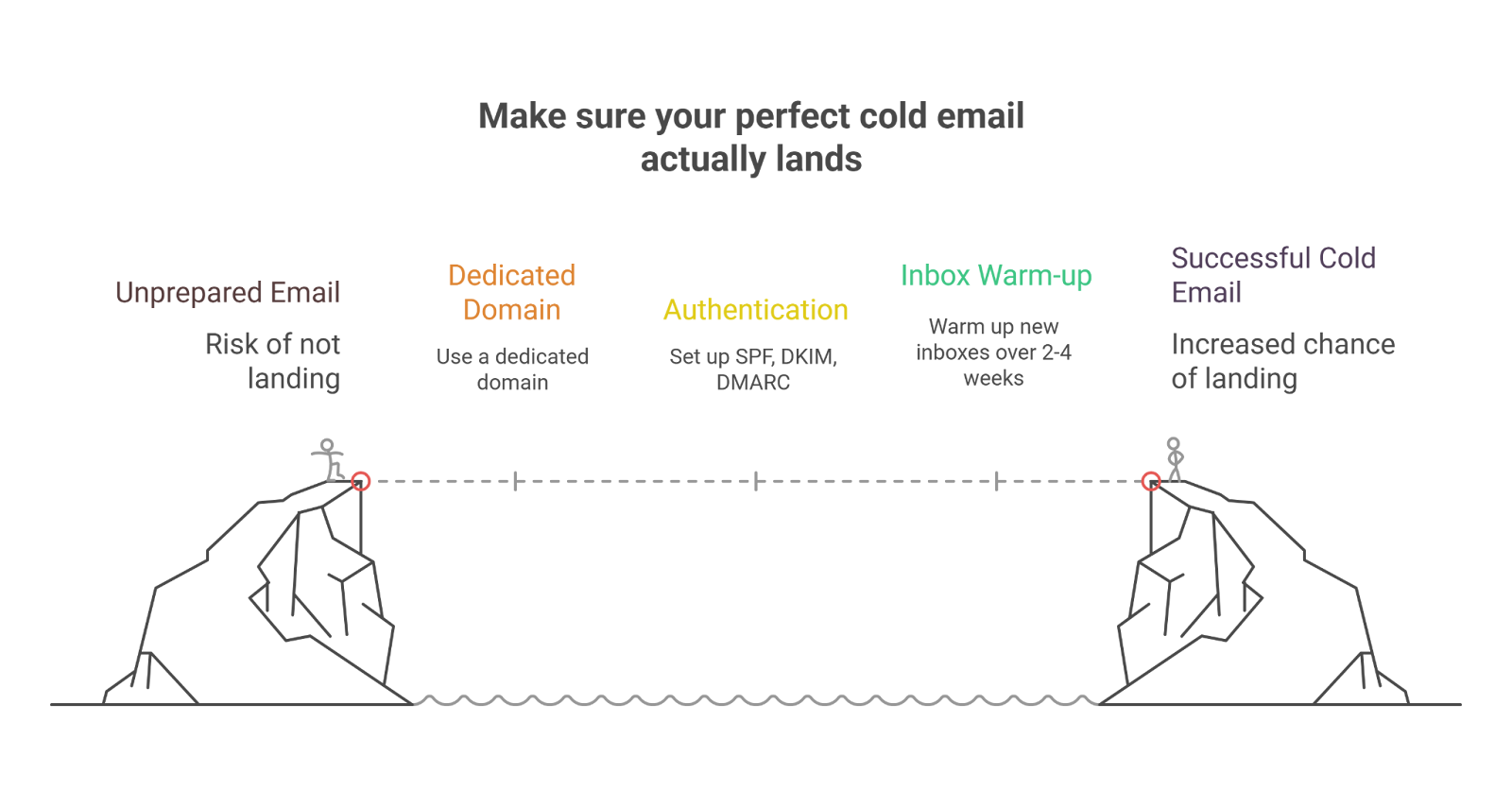
Before writing the perfect cold email, make sure it actually lands:
- Use a dedicated domain (not your main company one).
- Set up SPF, DKIM, DMARC.
- Warm up new inboxes over 2-4 weeks.
- Send 30-50 emails/day/inbox max.
- Use clean, verified lists: no bounces, no damage.
- Limit to 1 link max, no images.
Even with the perfect cold setup, your email address won’t matter if your message misses the mark.
The difference between the perfect and worse cold emails often comes down to how well you understand executives, and what triggers a real response. Founders and C-levels don’t check inboxes for fun, they check for signals that respect their time.
How to write a cold email to CEOs?
6-part framework (Subject → Opener → Value → Proof → CTA → Opt-out)
Subject
Your subject line is the make-or-break moment. Keep it under 6–8 words, and make it about them, not you. Examples:
- “Quick question on churn post-Series B”
- “Saw your update: brief ops idea”
Opener
Start strong with a personalized trigger. Skip the “Hi, I’m X” intro. Instead, use something like: “Saw your Q3 note on margin focus, helped [peer] add 6pts in 90 days.”
Value
In one line, tie your message to a clear business result. Not features, not process: outcomes:
- “Enable 10 min onboarding for your new AE hires”
- “Cut hiring churn by 28% in growth-stage SaaS teams”
Proof
Without proof, it’s just another pitch. Add credibility fast:
- “Used by Segment, Brex, Deel”
- “Recent work with [Peer CEO] boosted NRR 12pts in 3 months”
CTA
One, low-friction ask. No Calendly yet. No “30 min demo”. Try:
- “Open to a quick intro next week?”
- “Would a short summary be helpful?”
Opt-out
Respect earns replies.
Close with: “If not a fit, let me know: I’ll close the loop.”
This 6-part structure works because it’s simple, scannable, and CEO-calibrated.
Openers that pass the 3 second skim
You don’t have 10 seconds. You have three. Your first line must immediately show relevance and signal you did your homework.
Example: “Saw your LinkedIn post on ops scaling: I helped [Peer CEO] grow headcount 40% without ramp bottlenecks.”
Why it works:
- It references a public insight or trigger
- It delivers business value up front
- It avoids fake flattery or fluff
Pro tip: Make the preview line work just as hard as your subject. Mention a specific outcome, company, or keyword that pulls them in.
Proof that feels credible
Executives respond to what’s familiar and proven. Generic claims are filtered noise. You need:
- Quantified outcomes: “Cut churn by 18% in B2B SaaS over 500 FTE”
- Named customers: “Work with Series B fintech CEOs like [X, Y]”
- Peer context: “Helped [CEO] boost margin 20% post-hiring ramp”
Even just one named logo, a clear metric, or a shared investor/founder tie-in lifts your credibility 10x.
Tone & style
Drop the fluff.
- No “Hope you’re well”
- No “Just reaching out”
- No corporate-speak
Write like you’d talk to a founder at an offsite lunch. Direct. Respectful. No pitch energy. Just value.
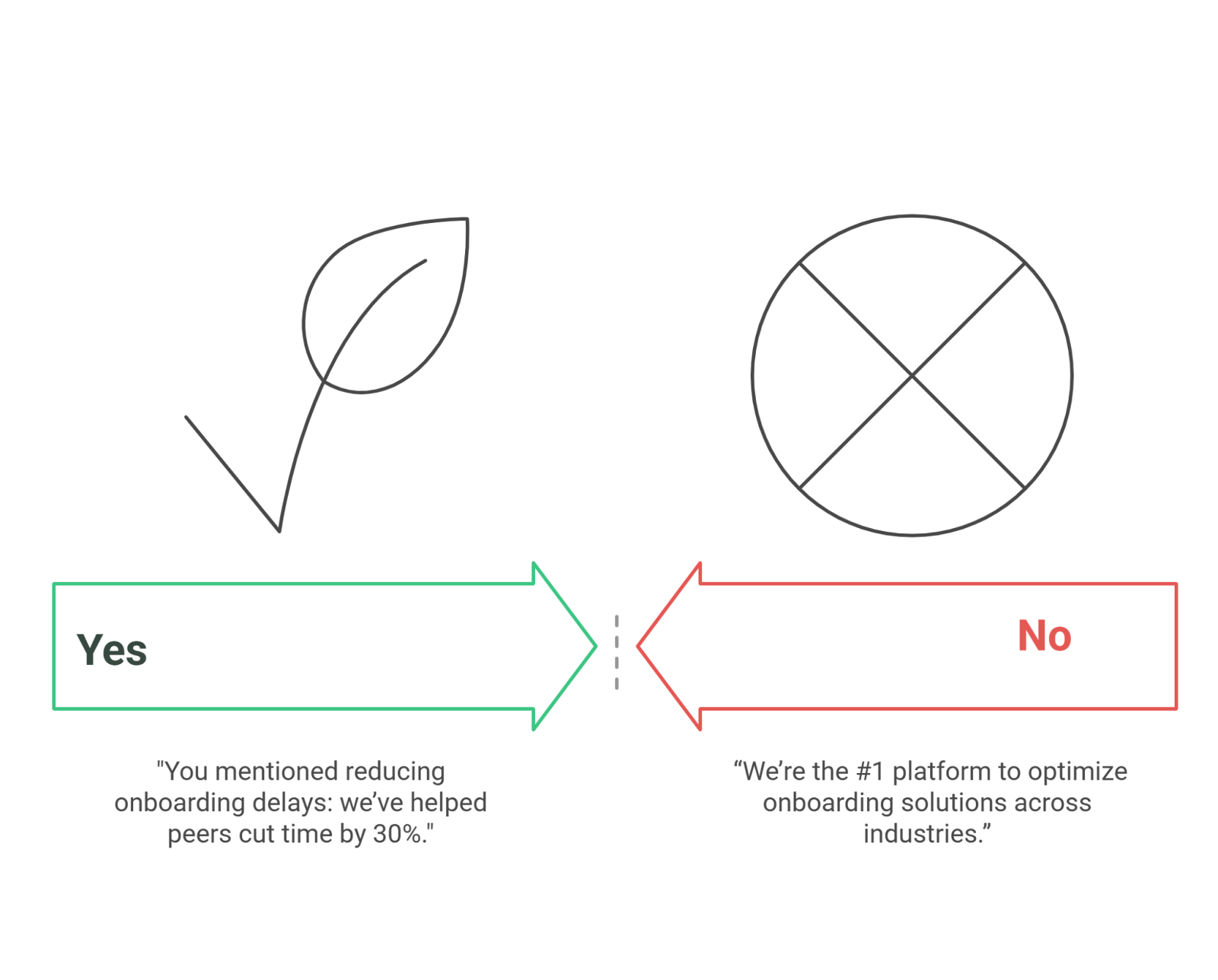
Use “you” twice as much as “we”: this flips the focus toward the reader, where it belongs.
Yes = “You mentioned reducing onboarding delays: we’ve helped peers cut time by 30%.”
No = “We’re the #1 platform to optimize onboarding solutions across industries.”
Compliance & etiquette
A clean email builds long-term trust, even if they don’t reply today.
- Include a plain opt-out line: “Not relevant? Let me know, happy to close the loop.”
- Don’t overstep: Never mention scraped or sensitive info.
- Stay real: Match your sender details with your company’s actual site, team, and domain.
If someone says no, log it and respect it. Every CEO knows when a sender ignores that, and it kills your future chance.
What are the best subject lines for cold emails?
Categories & examples:
Trigger-based:
- "Hiring 10 AEs: ramp faster?"
- "Series B raised: ops idea?"
Outcome-led:
- "Cut churn 18% at [peer]"
- "3 wins for onboarding at [company]"
Referral:
- "[Mutual] suggested we connect"
- "Via [Board member]: quick idea"
Question-based:
- "Quick question on billing?"
- "Open to 10 mins on retention?"
Numbered:
- "3 ideas to cut onboarding time"
- "5 ways to boost NRR"
Role-specific:
- "[CEO] risk in renewals"
- "[Company] scaling: ops friction?"
Subject line rules:
- No emojis, No ALL CAPS, nor spam words
- Max 45 characters (mobile first)
- Add light personalization when relevant
Would you open it if you were the CEO? If not: rewrite.
Copy-ready shortlist:
- "Cut cloud cost 12% at {peer}"
- "10-min intro on involuntary churn?"
- "{Company} x {YourCo}: pilot idea"
How to personalize cold emails effectively?
Personalization layers
Great personalization starts by mapping the right signals to what actually matters for a founder or executive:
- Company-level: Funding, hiring, product launch, tech stack
- Role-level: CEOs care about margin, GTM, risk, burn
- Event-level: LinkedIn posts, press, interviews
Dynamic fields
Use smart tokens, like : {company}, {role}, {metric}, {peer-logo}, {trigger}.
Limit to 1–2 lines.
Then scale with clean messaging.
Relevance > Trivia
- Yes = “Hiring 15 SDRs? Helped [peer] cut ramp 30%”
- No= “Saw your marathon post: here’s our AI tool”
Great personalization bridges into value, not vanity.
What mistakes to avoid in cold emailing?
Common pitfalls
- Too long; multiple CTAs
- Attachments or calendar links in email #1
- Zero proof or unclear value
- Generic intros; vague "who owns X?"
- Asking for immediate calls
Deliverability mistakes
- Blasting cold from new domain
- Mixed warm/cold audiences
- Too many links or images
Legal/manners
- Misleading subjects kill trust
- Always include an opt-out
- Respect opt-outs instantly
How to improve cold email reply rates?
Reply rates don’t improve by chance: they do when you test, track, and write like someone who understands how executives make decisions.
A/B testing plan
- Test one variable per week: whether it’s the subject line, the opener, the CTA, or the proof, so you know exactly what’s driving results.
- Use a sample size of 100 to 200 contacts to gather statistically useful feedback without wasting time.
- Track every stage: Open → Reply → Positive → Meeting
Follow-up sequencing for CEO (4–6 emails over 10–14 days)
Example:
- Day 0: Trigger + CTA
- Day 2: One-line nudge + metric
- Day 5: Case mini-story + new CTA
- Day 8: Objection-preempt ("no tool change")
- Day 12: Break-up (“Should I park this?”)
For more follow-up angles, subject lines, and reply-boosting cadences, you can dig into our dedicated guide on cold email follow-up strategies and templates.
Formatting for skimmability
- Use short paragraphs (one or two sentences max) to keep reading effortless,
- Incorporate bullet points to make key ideas pop and reduce cognitive load,
- Leave plenty of white space so the message doesn’t feel like a wall of text.
Social proof + micro-yes CTAs
- Mention proof that builds trust fast, like “Backed by [VC], helped [peer] cut churn 18%.”
- Then use a light-touch call-to-action, such as “Open to a 10-min intro next week?”. Easy to say yes to, hard to ignore.
What tools can help with cold emailing?
Great execution needs great tooling: especially when your audience includes time-starved executives who don’t tolerate lazy outreach.
ZELIQ for end-to-end B2B outbound
ZELIQ is a full-stack outbound platform built to streamline every step of your cold email workflow, from lead sourcing to pipeline reporting.
It handles sourcing by identifying the right titles, tech stack, and intent signals, then enriches your data with verified emails and phone numbers.
You can build and automate multichannel sequences (email + LinkedIn), classify replies by type (positive, objection, neutral), and track key analytics like open, reply, and meeting rates.
On top of that, ZELIQ provides critical infrastructure for scale and deliverability:
- Native CRM sync for tools like Salesforce, HubSpot, and other
- Personalization at scale
- Deliverability guardrails
- Performance visibility
Complementary stack
- ContactOut, Apollo: for data enrichment
- LinkedIn & newsrooms: to find triggers
- Light CRMs: for deal tracking
ZELIQ remains the central engine; others are “supporting players”.
Want to write cold emails that actually get read and replied to? Try ZELIQ, your outbound engine from lead to meeting.
Executives are busy, and bad cold outreach (generic, bloated, or hard to understand) is the fastest way to lose credibility. The perfect cold email is built around clarity, brevity, and one relevant business lever.
It’s not about tricks, it’s about showing respect for their time and priorities.
A personalized approach is the only way to increase chances of landing replies. Set up a quick, relevant hook tied to measurable outcomes.
Use a cold email tool to write an email that reflects their context, not just your pitch. Successful cold outreach avoids common mistakes like weak CTAs, vague intros, or asking for 30 minutes right off the bat. CEOs need signal.
Cold email CEO templates (short list to copy/paste)
These templates follow the same structure used in top-performing outbound—each one is short, business-focused, and built to trigger a fast, low-friction response.
Template 1: Trigger + outcome
Subject: Hiring AEs: ramp faster?
Body:
Hi {First},
saw {company} is scaling GTM. We helped {peer} ramp new AEs 2× faster by giving managers real-time call insights and battlecards.
If reducing time-to-productivity by ~30% would help hit {quarter} targets, open to a 10-min intro next week?
{Name}, {Title}, {Company}
P.S. If someone else owns onboarding, happy to reach out to them.
Template 2: Peer proof
Subject: {Peer CEO} cut churn 18%
Body:
{First},
quick note: {Peer CEO} used us to flag at-risk accounts earlier and shrink churn 18% in a quarter. If revenue resiliency is on your 2025 list, worth a 10-min chat?
If not you, who’s best on your team for retention?
Template 3: Cost takeout
Subject: Cloud spend line item
Body:
Noticed {company} expanding AI workloads.
We reduce compute bills ~8-15% without dev effort (observability + auto-rightsizing).
10 min to see if the math clears?
Template 4: Referral / wrong person
Subject: Who owns {X} at {company}?
Body:
{First}, I may have the wrong contact.
Who owns {billing ops/RevOps/security} at {company}? We helped {peer} recover ~$420k/yr in leakage.
Happy to follow your lead.
Template 5: Enterprise deflection
Subject: [LOB] margin target
Body:
For {LOB}, we typically move gross margin +2–4 pts via {specific lever}.
Is {Name, Title} the right owner, or someone on ops wants a brief walkthrough?
How to create urgency without being pushy
- Tie to real triggers: hiring class, board prep, renewals
- Offer pilot slots or quarterly planning time
- Use "cost of waiting" math
Examples:
- “Q4 pilot slots filling: quick chat?”
- “Board prep next month: share benchmarks?”
Social proof that matters to CEOs
Here’s what actually resonates with CEOs scanning for credibility:
- Same-size logos = peer relevance
- Named metrics = credibility
- Founder quotes = quick trust
- Certs (SOC2, ISO, GDPR) = safety net
Measurement plan & reply quality
To scale what works, you need to measure beyond opens:
- Open rate: 45–60%
- Reply rate: 5–10%
- Positive: 2–4%
- Track: Time to first reply, reply type
What are tips for engaging cold emails?
Here’s your quick checklist to make every cold email easier to read :
- Skimmable format
- One CTA, one link
- No attachments/images in email #1
- Plain language (8th grade)
- Active voice
What mistakes to avoid? (Checklist)
… and another checklist: these common traps kill reply rates and credibility fast :
- 30-min demo ask in email #1
- “Hope this finds you well”
- HTML-heavy formatting
- Generic intros
- No opt-out
- Cold sends from main domain
- Dense paragraphs
What time should I send my emails?
Here’s when your email is most likely to get opened, not buried :
- Tue–Thu, 7:30–9:30am or 4:30–6pm (local time)
- Avoid top-of-hour drops (try :07, :12)
- Avoid Mondays, Fridays, holidays
FAQ
How long should a cold email to a CEO be?
Stick to 50–90 words max. Focus on one clear idea, one measurable outcome, and one simple CTA. Clarity always beats volume.
What’s a good reply rate?
A healthy reply rate is 5-10%, with 2-4% being positive (interested or referral). If you're above that, your targeting and message are working.
Is it okay to ask for a referral if I reached the wrong person?
Absolutely. Just do it respectfully. Try: “If not you, who’s best to speak with on this?”
Should I include a calendar link in the first email?
No. It feels pushy. First earn the reply, then you can offer a calendar link or suggest slots.
How many follow-ups should I send?
Plan for 4-6 emails over 10-14 business days. If there’s no reply, pause and revisit later with new context or timing.
This optimized cold email playbook is built for CEO outreach in 2025: fast, focused, and measurable.
Use it to build scalable outbound that earns replies, not ignores.
Ready to go further? Book a ZELIQ demo and see how top teams streamline their cold outreach from day one.
Table of contents
Placeholder Title
Table of contents
Placeholder Title
Placeholder Title