
Everyone asks when to send cold emails. It is the wrong first question, but it is worth answering precisely so you can stop worrying about it and focus on the variables that actually move the needle.
The short answer: Tuesday through Thursday, between 8am and 11am in the recipient’s local timezone, with early afternoon (1pm to 3pm) as a secondary window. That is the answer most data sources converge on, and it is a reasonable starting point.
The longer answer is that ****timing explains maybe 3 to 5 percentage points** of variation in open rate. Deliverability, list quality, subject line relevance, and personalization** each explain far more. Optimizing send time before fixing those variables is like adjusting the background music in a restaurant where the food is bad.
This guide gives you the data on timing, explains why it matters less than most guides suggest, and tells you what to optimize instead.
Best Day to Send Cold Emails
Multiple studies and aggregated campaign datasets converge on the same pattern:
| Day | Performance |
|---|---|
| Tuesday | Best overall open and reply rates |
| Wednesday | Close second, especially for tech and SaaS |
| Thursday | Strong, particularly for afternoon sends |
| Monday | Weaker: inboxes are clearing the weekend backlog |
| Friday | Weaker: attention shifts toward end of week |
| Saturday / Sunday | Lowest open rates; reads as unprofessional for most B2B contexts |
Why Tuesday through Thursday outperform: Monday mornings are consumed by backlog processing. People are catching up on what they missed, reviewing priorities, and attending start-of-week planning calls. Friday afternoons are mentally oriented toward the weekend. The mid-week window captures recipients when they are working at a normal pace, their inbox is under control, and they are more likely to engage with something new.
The difference between best and worst days is roughly 3 to 6 percentage points of open rate in most datasets, not 20. Do not rearrange your entire sending infrastructure for this gain.
Best Time of Day to Send Cold Emails
| Time window | Why it works |
|---|---|
| 8:00 am to 9:30 am | Catches early-risers before the day fills with meetings |
| 10:30 am to 11:45 am | Post-standup focus window: calendar cleared, tasks in hand |
| 1:00 pm to 2:30 pm | Post-lunch re-engagement; inbox check before afternoon deep work |
| 4:30 pm to 6:00 pm | End-of-day inbox clear, especially effective for senior executives |
The early morning window (8 to 9:30) is particularly effective for reaching C-suite and senior decision-makers, who often process email before their day fills with meetings. Multiple studies on executive communication patterns show that CEOs and VPs are most likely to read and respond to email in the first 90 minutes of their workday.
The mid-morning window (10:30 to 11:45) works well for manager-level and individual contributors who are in their primary work block after a morning standup. At this point, urgent tasks are clear, focus has returned, and a well-timed email that lands relevant can get a genuine read.
****Always send in the recipient’s timezone****, not yours. A 9am email that arrives at 2pm because you did not adjust for timezone has missed the window entirely.
Best Timing by Industry and Role
Timing performs differently across audiences. These are guidelines based on aggregated data, not rigid rules.
SaaS and Technology
Best: Tuesday to Thursday, 10am to 11:30am. Tech workers tend to be email-heavy and check frequently during work hours. Morning windows before meetings take over perform consistently well.
Financial Services and Banking
Best: Tuesday and Wednesday, 8am to 9am. Financial professionals often start their day early and check email before markets open or client calls begin. Response rates drop significantly after 11am.
Manufacturing and Logistics
Best: Monday and Tuesday, early morning (7:30am to 9am). Emails sent before shift changes or daily production reviews have a higher chance of being seen. Mid-afternoon sends often compete with operational priorities.
Agencies and Marketing
Best: Wednesday and Thursday, 10am to noon. Creative and marketing teams tend to run later schedules and have mid-week as their most productive window. Monday sends often compete with client deliverable reviews.
Senior Executives (VP and Above)
Best: Tuesday to Thursday, 7:30am to 9am or 5pm to 6:30pm. Executives who are unavailable during normal business hours due to back-to-back meetings often process email before the day starts and after it ends.
Why Timing Matters Less Than Most Guides Say
The Deliverability Ceiling
An email that lands in spam at the perfect send time does not get opened. ****Deliverability is the ceiling that timing operates under.**** If your domain reputation is weak, your bounce rate is above 2%, or your spam complaint rate is above 0.1%, fixing those problems will improve your results more than any timing optimization.
Check your inbox placement rate before running send-time tests. Tools like Google Postmaster Tools and Microsoft SNDS show you where your emails are actually landing.
Apple Mail Privacy Protection
Since 2021, Apple’s Mail Privacy Protection (MPP) pre-fetches email content including tracking pixels, recording an “open” regardless of whether the recipient reads it. By 2026, around 52% of iPhone users have MPP enabled. This makes open rate data less reliable as a timing signal: what looks like a successful time window may just reflect a higher proportion of Apple Mail users in that send segment.
Use reply rate as your primary timing signal, not open rate. Replies are harder to fake and directly correlate with pipeline.
List Quality and Targeting
A highly targeted list of 300 accounts in your ICP will outperform a broad list of 3,000 contacts regardless of send time. The relevance of the message to the recipient is the primary driver of whether they open and reply. ****Send time is a marginal optimization** on top of a strong foundation, not a substitute for one.**
The Gap Between Best and Worst Is Small
In most datasets, the difference between the best send time and the worst send time is 3 to 7 percentage points of open rate. The difference between a great subject line and a poor one can be 15 to 25 percentage points. The difference between a verified list and an unverified one can mean the difference between landing in inbox and landing in spam at all.
Time your sends reasonably well, then move your optimization effort to higher-leverage variables.
How to Find the Best Time for Your Specific Audience
Generic benchmarks are a starting point. The best time for your specific ICP may differ. Here is how to find it:
Run an A/B Test on Send Time
Split your next campaign into three segments: morning (8 to 10am), mid-day (11am to 1pm), and afternoon (2 to 4pm). Send the same email to each segment on the same day. Measure reply rate (not just open rate) for each. After three to five campaigns, a pattern will emerge.
Do not run more than one variable per test. If you change both the send time and the subject line, you cannot attribute the difference to either one.
Track Reply Rate by Day and Time
Most email outreach platforms log timestamps for sends and replies. After a month of activity, pull a simple report: which send windows generate the most replies? This is your real audience-specific data, more reliable than any industry benchmark.
Consider Your Recipient’s Calendar Context
Think about what your typical prospect is doing at different times. An SDR at a fast-growth startup is likely in team standups at 9:30am. A CFO at a manufacturing company might be in a budget review on Monday mornings. ****The best time to reach someone is when they are not in a meeting, not drowning in urgent work, and have the mental space to engage with something new.
For senior executives, this often means early morning or late afternoon. For individual contributors, it often means mid-morning or right after lunch.
Practical Timing Setup for B2B Cold Outreach
Use Timezone Localization
Configure your email sequences to send based on the recipient’s local timezone, not your own. Most outreach platforms (Instantly, Lemlist, Salesloft, Outreach, Zeliq) offer this setting. Without it, your sends to contacts in New York, Paris, and Singapore all arrive at wildly different local times.
Set Up Multi-Step Sequences with Varied Timing
A well-timed single email still converts at 1 to 5%. A three to five step multichannel sequence with varied send times (email, followed by LinkedIn, followed by another email) dramatically increases total response rate because different people are reachable on different channels at different times.
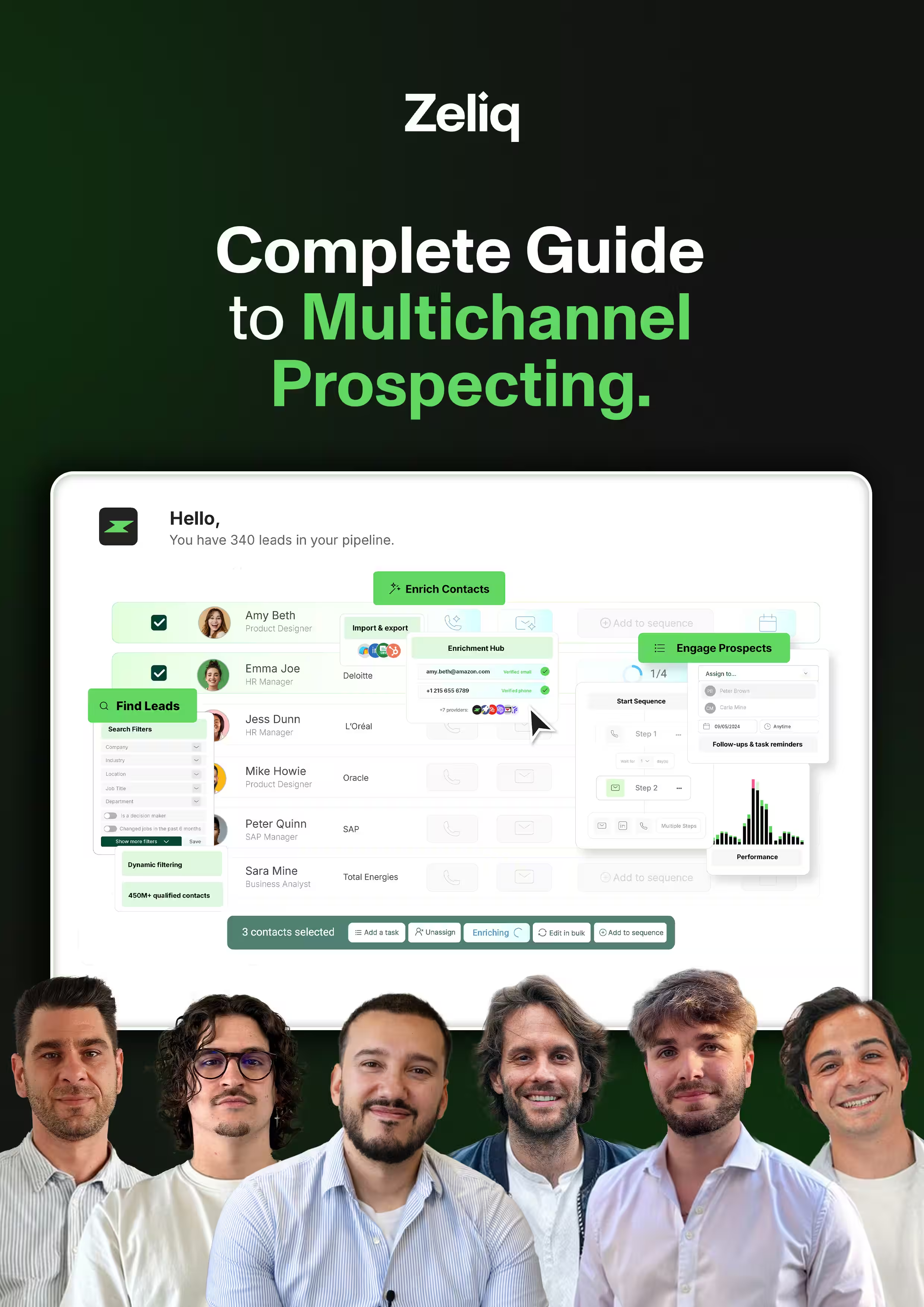
Zeliq’s multichannel sequences let you set per-step send windows and timezone localization, so every touchpoint in your sequence lands at the optimal time for each contact’s location.
Stagger Your Sends
Sending all your emails at exactly 9:00am Tuesday looks automated. Staggering sends across a 30 to 90 minute window (9:02, 9:07, 9:14…) mimics natural sending behavior and reduces the likelihood of triggering spam filters that flag bulk sends with identical timestamps.
Respect Opt-Out Behavior
If a contact has not replied after two to three well-timed emails and a LinkedIn touch, the timing is probably not the problem. Move them to a lower-frequency nurture sequence rather than continuing to push at higher volume. Persistent sends to disengaged contacts damage deliverability and waste capacity.
Summary: Best Time to Send Cold Emails
| Variable | Recommended setting |
|---|---|
| Best days | Tuesday, Wednesday, Thursday |
| Best times | 8am to 9:30am or 10:30am to 11:45am (local) |
| Secondary window | 1pm to 2:30pm |
| Timezone | Recipient’s local timezone, always |
| Primary KPI | Reply rate, not open rate |
| Testing approach | A/B by time window, 3 to 5 campaigns minimum |
| Highest-leverage optimizations | Deliverability, list quality, subject line, personalization |
Timing is one variable in a system. Get it roughly right, then focus on the variables that move results by 15 points instead of 5.
Build and send multichannel sequences with timezone-based scheduling and verified contact data.
Try Zeliq for free