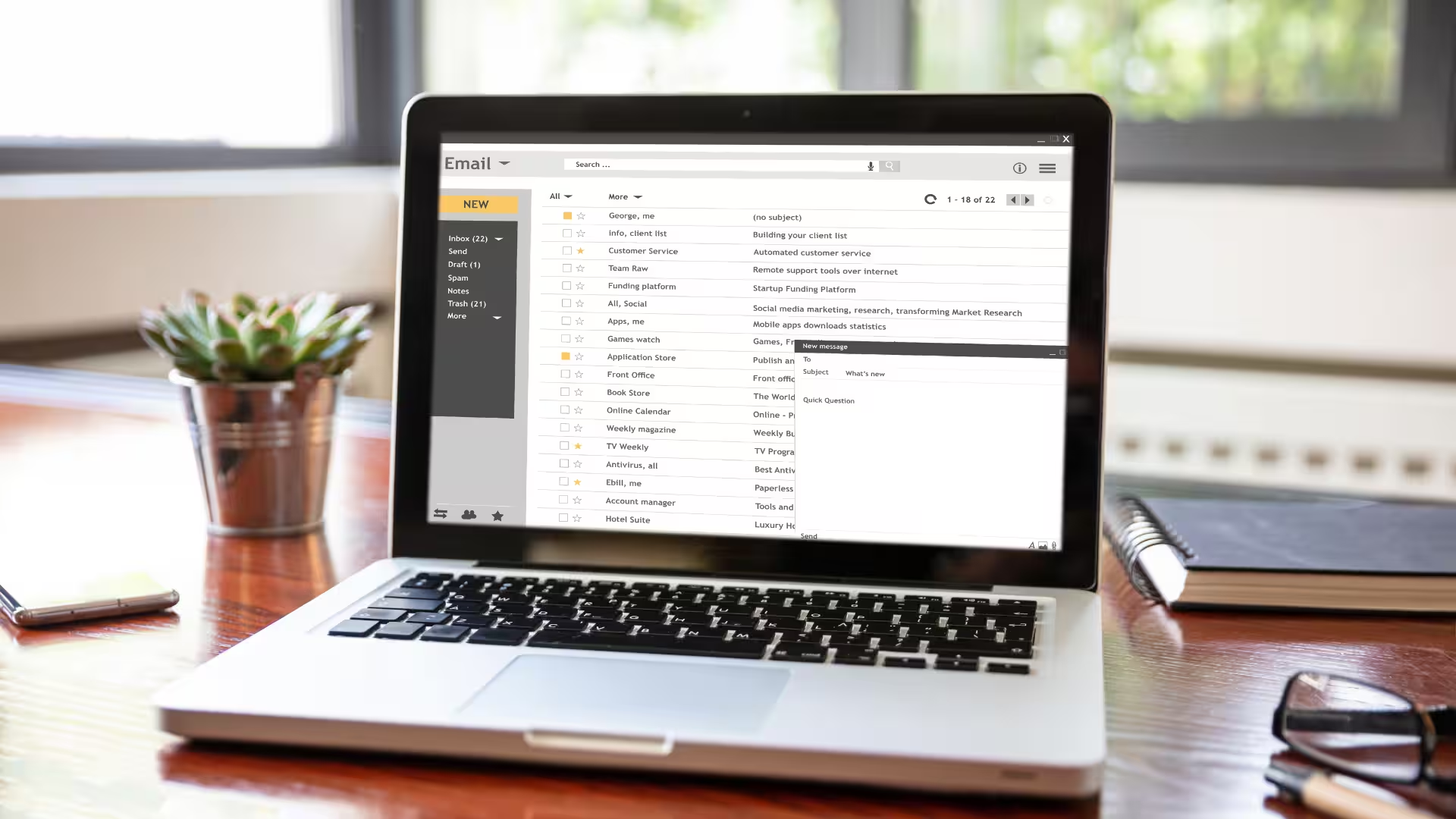

Votre objet des e-mails de prospection décide de tout. Avant même que votre argumentaire soigneusement élaboré n'ait une chance, la ligne d'objet attire l'attention ou se perd dans une boîte de réception bondée.
Réfléchissez à votre propre comportement : lorsque vous faites défiler les e-mails, ce sont les lignes d'objet accrocheuses qui vous font cliquer. En B2B, où les décideurs reçoivent des centaines de lignes d'objet d'e-mails de vente chaque semaine, vous démarquer devient votre première stratégie de vente.
Un sujet faible tue l'engagement. Un argument fort suscite la curiosité et crée de l'urgence. Cela ouvre la porte à une véritable conversation commerciale. Qu'il s'agisse d'envoyer l'objet d'un e-mail à de nouveaux prospects ou d'ajouter un objet à un e-mail de prospection commerciale, la règle est la même : sans objet convaincant, il n'y a pas d'e-mail.
La bonne nouvelle ? Les bons sujets ne sont pas le fruit du hasard, c'est un processus. Qu'il s'agisse d'utiliser la personnalisation et les liens mutuels ou de créer un sentiment d'urgence à l'aide de phrases telles que « temps limité » ou « question rapide », vous pouvez créer des sujets efficaces qui augmentent régulièrement les taux d'ouverture et renforcent votre visibilité.
Cet article propose des cadres, des exemples et des conseils pour les sujets qui fonctionnent dans tous les secteurs d'activité. Que vous recherchiez des modèles faciles à personnaliser ou des tactiques d'engagement commercial avancées, vous trouverez ici tout ce dont vous avez besoin pour maîtriser l'art de rédiger des sujets de vente qui attirent l'attention et engagent les prospects.
Pourquoi les lignes d'objet sont toujours importantes (et où elles induisent en erreur)
Les ouvertures seules ne permettent pas de conclure des affaires. Oui, la ligne d'objet des e-mails de prospection détermine ce premier clic, mais les taux d'ouverture ne sont qu'une mesure directionnelle. Avec les changements de confidentialité, le fait de se fier uniquement aux ouvertures peut induire en erreur. Ce qui compte, c'est la façon dont les lignes d'objet des e-mails commerciaux sont liées aux résultats : réponses, rendez-vous réservés et pipeline créé.
Les lignes d'objet bien définies pour les e-mails non sollicités ne font pas que susciter la curiosité. Ils influencent l'emplacement de la boîte de réception, réduisent le nombre de plaintes liées au spam, réduisent le nombre de suppressions sans lecture, et c'est ce qui permet d'assurer l'efficacité de votre communication. Un sujet captivant attire l'attention et un e-mail personnalisé semble pertinent, tandis qu'un hameçon clair augmente vos chances d'engager une véritable conversation commerciale
En B2B, les indicateurs de vanité restent secondaires, tandis que l'engagement commercial est en tête. Les meilleurs exemples de lignes d'objet apportent des réponses plus rapides et des réponses plus rapides qui se traduisent par des taux d'opportunité plus élevés. Lorsque vous considérez les sujets dans le cadre de votre stratégie de vente globale, ils deviennent un levier de revenus réels.
Qu'est-ce qui rend une ligne d'objet convaincante ?
L'objet d'un e-mail de prospection fonctionne lorsqu'il se connecte rapidement. Cela renforce la confiance et donne une raison claire d'ouvrir. Les lignées les plus résistantes présentent quelques caractéristiques communes :
La pertinence par rapport à l'intelligence
Les prospects réagissent lorsque le sujet parle de quelque chose de réel. Les meilleures lignes d'objet des e-mails de prospection commerciale mettent en évidence un problème spécifique, une tendance du secteur ou un KPI tel que la croissance du pipeline ou le taux de réussite.
Clarté, avantages et crédibilité
Un sujet efficace indique clairement ce que couvre l'e-mail et pourquoi il est important maintenant. Ajouter de la crédibilité grâce à un lien mutuel, une recommandation ou une preuve sociale rend la ligne plus fiable et augmente les chances d'engagement.
Brièveté avec valeur initiale
L'objet de la plupart des e-mails commerciaux est lu sur mobile. Conservez-les entre 35 et 50 caractères et placez l'avantage ou le sujet en premier. Cela garantit que la valeur est évidente en un coup d'œil.
L'urgence sans hype
L'urgence fonctionne lorsqu'elle est utilisée avec précaution. Des phrases comme « temps limité » ou « cette semaine » indiquent de l'importance sans pour autant avoir l'air du spam. L'urgence sécuritaire donne de l'élan tout en préservant la crédibilité.
Cohérence avec le message
Le sujet doit se connecter directement à la première ligne et au CTA. Lorsque le sujet promet de la valeur et que l'organisme tient ses promesses, il en résulte un engagement commercial plus fort et une plus grande chance de faire avancer le prospect.
Quels sont les conseils pour rédiger des e-mails de vente efficaces ?
Un e-mail de prospection commerciale efficace commence toujours par la ligne d'objet. Un objet d'e-mail de prospection clair donne le ton et la première phrase permet de retenir l'attention. Les deux doivent être connectés si vous voulez maintenir l'attention du prospect.
Un objectif, une action
Un seul CTA donne toujours de meilleurs résultats qu'une liste d'options.
- Exemple : « Ouvert à un appel rapide de 9 minutes, jeudi ? »
- Les CTA ciblés réduisent la friction et guident la prochaine étape.
Langage simple et humain
Les lignes d'objet des e-mails de vente les plus efficaces évitent le jargon.
- Reproduisez le ton de voix du destinataire.
- Faites en sorte que votre message soit simple et naturel.
Personnalisation avec contexte
Allez au-delà des jetons de base tels que le prénom ou l'entreprise.
- Mentionnez le rôle, le marché ou une publication qu'ils ont partagée.
- Utilisez un déclencheur de l'entreprise ou faites référence à sa pile d'outils.
Cela fait un objet de l'e-mail personnalisé pertinent et facile à rédiger.
Respectez le temps
Les prospects s'engagent lorsque vous faites preuve de brièveté.
- Des phrases comme « question rapide » ou « Lecture en 30 secondes » témoignent du respect pour leur journée.
- Les messages courts stimulent l'engagement commercial et augmentent le nombre de réponses.
Comment écrire l'objet d'un e-mail à froid ?
La rédaction de lignes d'objet d'e-mails froides est une question de précision. La première touche doit être immédiatement pertinente et attirer l'attention. L'ancrage sur un point sensible clair, un résultat tangible ou une nouvelle opportunité rend le sujet crédible et mérite d'être ouvert.
Le cadrage est important. Une ligne d'objet qui fait allusion à une petite question, comme « Ça vaut le coup d'aller faire une introduction de 10 minutes ? » , réduit la friction et affiche un aperçu du CTA. Cette approche « les pieds dans la porte » permet de réduire la barrière et de susciter une grande curiosité.
La conformité et la délivrabilité ne sont pas non plus négociables. Les en-têtes trompeurs, les mots déclencheurs contenant du spam ou les lignes d'objet écrites en majuscules détruisent la confiance et nuisent à l'emplacement de la boîte de réception. Un bon sujet protège la crédibilité tout en ouvrant la voie à des conversations.
Avec ZELIQ, les équipes commerciales peuvent aller encore plus loin. Les champs dynamiques permettent de personnaliser l'objet de chaque e-mail de prospection commerciale. Ils s'adaptent au rôle du destinataire, comme directeur des ventes ou directeur du marketing, et au secteur dans lequel ils travaillent, qu'il s'agisse du SaaS, de la santé ou de la finance.
Les variations de sujet basées sur les segments vous permettent d'ajuster le message pour chaque public afin que la ligne soit personnalisée plutôt que générique. Les fenêtres d'envoi aléatoires donnent à la diffusion un aspect naturel et assurent la cohérence des campagnes dans tous les secteurs.
Comment personnaliser l'objet d'un e-mail ?
L'objet d'un e-mail personnalisé augmente les taux d'ouverture car il indique que le message a été écrit pour une seule personne. La personnalisation la plus efficace fonctionne sur plusieurs niveaux. La personnalisation Lite utilise des champs simples tels que {{Prenom}} ou le nom de l'entreprise.
La personnalisation intelligente va plus loin en faisant référence à un KPI de rôle tel que la croissance du pipeline ou la performance régionale.
La personnalisation contextuelle est la solution la plus efficace : elle associe la ligne d'objet à une publication récente, à une annonce de financement ou à un changement de produit important pour le destinataire.
Une forte personnalisation repose sur des données fiables. La ligne d'objet d'un e-mail de prospection peut être alimentée par des informations CRM, l'activité LinkedIn, les données d'intention, l'utilisation du produit ou même un webinaire ou un événement sectoriel récent. Ces signaux créent de la pertinence et de la crédibilité, ce qui renforce taux d'engagement commercial et de réponse.
Les frameworks facilitent la mise à l'échelle de la personnalisation. Vous pouvez saisir les détails et faire en sorte que les lignes d'objet soient courtes, pertinentes et faciles à comprendre.
- « La {{métrique spécifique}} de {{Company}} » → « Croissance du pipeline d'Acme au quatrième trimestre »
- « Idée pour {{role}} à propos de {{topic}} » → « Une idée pour le vice-président des ventes concernant la précision des prévisions »
- « Félicitations pour {{event}}, question rapide » → « Félicitations pour votre promotion, petite question » ou « Félicitations pour la série A — Petite question »
Ces formules fonctionnent dans tous les secteurs car elles relient la ligne d'objet au contexte commercial réel. Ils créent également une ouverture naturelle pour une réponse sans avoir l'air forcée.
Comment créer de l'urgence dans les lignes d'objet des e-mails ?
Urgence éthique
L'urgence fonctionne quand elle semble réelle. L'objet d'un e-mail de prospection efficace doit renvoyer à de véritables événements commerciaux plutôt qu'à une fausse rareté. La clôture du trimestre, les dates de conformité ou une importante semaine de conférence sont des moments qui comptent. Ils donnent de la crédibilité au sujet et garantissent le professionnalisme du message. Ce type d'urgence renforce la confiance et accroît l'engagement commercial.
Spécificité
Plus le sujet est spécifique, plus l'attraction est forte. Une ligne comme « Les 6 dernières places pour l'atelier de jeudi » ou « Des créneaux pilotes pour {{industry}} cette semaine » fixe une limite claire et met en évidence la valeur directe. Ces lignes d'objet accrocheuses se démarquent dans la boîte de réception car le prospect peut en constater les avantages instantanément.
Déclencheurs de récence
Faire référence à quelque chose de récent ajoute de l'urgence sans exagération. « Suite à votre publication sur {{topic}} » ou « Après votre inscription au webinaire » veille à ce que la ligne d'objet de l'e-mail de vente soit pertinente et opportune. Un sujet lié à une nouvelle action ou à un nouvel événement est personnel et augmente les chances d'obtenir une réponse rapide.
Quelle est la meilleure stratégie pour la diffusion par e-mail ?
Séquençage axé sur le contexte
Une stratégie de diffusion par e-mail donne de meilleurs résultats lorsque chaque étape suit une séquence claire. Chaque étape crée un contexte et crée une raison de répondre.
- Sensibilisation: suscitez la curiosité et mettez en évidence une difficulté ou une tendance du marché.
- Problème: montrez que vous comprenez le défi auquel le prospect est confronté.
- Preuve: partagez une recommandation, un cas client ou une fonctionnalité crédible.
- Proposition: faites le lien entre leur douleur et votre service.
- Demande de réunion: établissez un calendrier simple et un objectif clair.
- E-mail de rupture: fermez la boucle en l'absence de réponse, tout en laissant la porte ouverte pour une autre conversation.
Assistance multicanale
Les lignes d'objet sont plus efficaces lorsqu'elles sont associées à d'autres points de contact.
- Combinez des lignes d'objet accrocheuses avec des messages LinkedIn et des appels téléphoniques rapides.
- Cela crée un sentiment de cohérence et donne aux gens de multiples moyens de s'engager.
- Les prospects sont plus disposés à répondre lorsque la communication semble naturelle sur tous les canaux.
Modèles pilotés par ICP
Les variantes de ligne d'objet doivent s'adapter au profil idéal du client.
- Le libellé spécifique à l'industrie attire une attention particulière.
- La définition des rôles de l'acheteur rend le sujet pertinent par rapport à son objectif.
- Le contexte de la taille de la transaction donne le bon ton à la conversation.
Orchestration ZELIQ
ZELIQ facilite le séquençage en automatisant les parties les plus difficiles. Vous pouvez créer votre liste, tester des variantes de lignes d'objet et accélérer les envois pour éviter la fatigue. L'arrêt automatique garantit qu'aucun contenu dupliqué n'est publié après une réponse.
Chaque réponse est suivie par segment afin que vous puissiez lire les données de performance réelles et les ajuster. Cette orchestration aide les commerciaux à créer une communication cohérente et à attirer l'attention pour faire avancer le pipeline jour après jour.
Quelles sont les lignes d'objet efficaces d'un e-mail de prospection ?
Priorité au résultat (avantage)
Les perspectives s'ouvrent lorsque les avantages sont évidents. Un sujet comme « Réduisez le temps d'intégration de 27 % chez {{Company}} » affiche une valeur immédiate. Ces lignes d'objet des e-mails de prospection mettent les résultats en avant et créent un sentiment de pertinence pour le lecteur.
Le problème d'abord (douleur)
La mise en évidence des points sensibles fait l'objet d'une attention particulière. « Visibilité du pipeline pour {{Team}}, deux solutions rapides » indique que vous comprenez le défi. Encadrer les lignes d'objet de cette façon permet d'entamer une véritable conversation commerciale.
La preuve d'abord (crédibilité)
La confiance est importante dans le B2B. Un sujet tel que « Comment {{PeerCompany}} a réussi à clôturer sa démonstration de 14 % » utilise un pouvoir de preuve et de référence. Cette approche ajoute de la crédibilité et fait en sorte que la diffusion ressemble moins à du contenu de courrier électronique à froid.
La curiosité d'abord (question)
Les questions attirent l'attention parce qu'elles suscitent la curiosité. « Ça vaut le coup de discuter de 9 minutes sur {{topic}} ? » est court, direct et facile à lire. Cela témoigne du respect du temps tout en ouvrant la porte à la conversation.
Événement/déclencheur d'abord (chronométrage)
Les événements déclencheurs rendent la sensibilisation opportune. « Idée post-{ {conférence}} pour {{Company}} » relie le sujet à quelque chose de récent. Cette stratégie de chronométrage augmente le taux d'ouverture et vous permet de suivre le contexte du secteur.
La relation d'abord (mutuelle)
Les références et les connexions mutuelles ajoutent une confiance instantanée. « {{MutualContact}} m'a suggéré de contacter » transforme un sujet froid en une introduction chaleureuse. Les gens sont plus disposés à répondre lorsqu'il y a un terrain d'entente.
Priorité aux ressources (valeur)
L'offre de ressources attire l'attention car elle apporte d'abord de la valeur. « 3 modèles que vos SDR pourront utiliser demain » se sent pratique et axé sur le client. Ce type de ligne d'objet crée de l'engagement en partageant immédiatement du contenu utile.
Quels sont les exemples de lignes d'objet des e-mails commerciaux ?
First-touch (nouveau lead)
La première ligne d'objet doit attirer une attention particulière et créer rapidement un sentiment de pertinence. Ces objet des e-mails de prospection ouvrez la porte à une nouvelle conversation :
- « Idée pour {{Rôle}} au sein de {{Company}} »
- « Deux options pour corriger {{metric}} »
- « Petite question sur l'utilisation de {{tool}} »
- « {{FirstName}}, ça vaut le coup d'être présenté en 10 minutes ? »
- « Résoudre {{douleur spécifique}} dans {{industrie}} »
- « Est-ce que {{topic}} figure sur votre feuille de route Q {{quarter}} ? »
- « Une courte vidéo pour {{team}} »
- « {{Company}} × {{YourBrand}} : hypothèse »
- « Réduire les absences pour {{team}} »
- « Re : {{titre de leur article}} »
- « Qu'est-ce qui ferait {{metric}} +15 % ? »
- « Les pairs de {{City}} font les choses différemment »
Suivi
Les suivis permettent de maintenir le fil en vie et signalent la persistance sans pression. L'objet de ces e-mails commerciaux est facile à lire et il est facile de répondre aux questions suivantes :
- « Toujours pertinent pour {{Company}} ? »
- « Boucler la boucle sur {{topic}} ? »
- « Deux lignes + un oui/non »
- « Revenir à {{benefit}} ? »
- « Dois-je le garder ou le fermer ? »
- « Mise à jour rapide pour {{team}} »
- « Nouvelles données sur {{topic}} »
- « {jour/heure} c'est toujours bon ? »
- « Si ce n'est pas maintenant, quand est-ce que ça marche ? »
- « Appuyez sur Répondre par 1, 2 ou 3 »
Après l'événement ou le webinaire
Les événements fournissent un contexte naturel pour la sensibilisation. Ces lignes d'objet suscitent la curiosité tout en renvoyant à du nouveau contenu :
- « Merci d'avoir rejoint le modèle à l'intérieur »
- « Diapositives + résumé de 90 secondes »
- « Votre question sur {{topic}} -answer »
- « Vous avez raté un concert ? enregistrement ici »
- « Idée issue de {{session}} pour {{Company}} »
- « Deux plats à emporter pour {{role}} »
- « Vous voulez le playbook au format PDF ? »
- « Prêt pour une visite rapide ? »
Réactivation ou réengagement
Lorsque les prospects se taisent, ces lignes d'objet accrocheuses permettent de relancer la conversation et de tester leur intérêt :
- « Appuyez sur pause ou continuez ? »
- « Vous voulez toujours obtenir des informations sur {{topic}} ? »
- « Nous avons créé ce que vous avez demandé »
- « Qu'est-ce qui a changé chez {{Company}} ? »
- « Puis-je fermer votre dossier ? »
- « 3 nouveaux témoignages de clients »
- « Est-ce toujours votre adresse e-mail ? »
- « Dois-je arrêter de tendre la main ? »
Cadres et formules de lignes d'objet (prêts à être copiés)
Les frameworks permettent de rédiger plus facilement des lignes de prospection commerciale cohérentes et puissantes. Chaque formule donne un sens au sujet et crée un sentiment de pertinence qui incite le lecteur à s'ouvrir.
Les formules axées sur les résultats fonctionnent bien, telles que « {{Résultat}} pour {{team}} en {{time}} » qui peut se transformer en « Des réunions plus qualifiées en 30 jours. » Les formules « problèmes et temps » attirent également l'attention, comme « Arrêtez {{pain}} avant le {{date}}. »
Les cadres basés sur les rôles permettent de maintenir le lien entre le sujet et l'acheteur. « Correctif de visibilité pour {{VP Sales}} : {{pipeline}} » rend la solution directe. La preuve sociale ajoute de la crédibilité lorsqu'elle est incorporée sous forme de question : « Cela vaut 10 minutes si nous montrons comment {{Peer}} a fait X ? »
Les déclencheurs constituent une autre option, qui vous permet d'inclure le contexte d'un événement ou d'une publication : « Après votre article sur {{topic}}, audit gratuit ? »
En proposant des formules simples et en intégrant l'automatisation, vous pouvez créer des lignes d'objet exclusives qui aident les prospects à planifier des rendez-vous et à rencontrer le bon contact afin de poursuivre les conversations commerciales dans un souci d'objectif.
Réalités textuelles mobiles et prévisualisées
La plupart des sujets des ventes sont d'abord lus sur mobile. Le nombre de caractères et l'aperçu du texte sont donc essentiels. La façon dont vous structurez ces lignes peut constituer un avantage en matière de développement des ventes, en particulier lorsque vous créez des lignes d'objet pour les suivis ou les demandes de réunion.
Budgets pour les personnages
Les boîtes de réception mobiles fixent les limites. Une ligne d'objet solide pour les ventes doit contenir entre 35 et 50 caractères afin qu'elle soit parfaitement lisible sur n'importe quel appareil. Le préen-tête laisse plus de place, généralement de 35 à 90 caractères, mais tout ce qui est plus long est supprimé.
Les sujets des suivis qui respectent ces budgets semblent plus précis, plus professionnels et plus faciles à lire. Pour les équipes de développement des ventes, cette discipline garantit que chaque ligne peut apporter de la valeur et fidéliser les prospects, qu'ils scannent sur ordinateur ou sur mobile.
Stratégie de pré-en-tête
Le préen-tête doit compléter le sujet, pas le répéter. C'est un espace idéal pour créer une attraction supplémentaire. Ajoutez un avantage lié à un produit ou à un service, mettez en avant un CTA ou ajoutez une preuve sociale qui renforce la crédibilité. Utilisez le préen-tête pour guider le lecteur vers l'étape suivante, qu'il s'agisse de réserver un appel ou de déplacer la conversation vers les lignes réservées aux demandes de réunion.
Garde-fous de délivrabilité pour les lignes d'objet
Même le meilleur sujet du mot échoue s'il n'arrive jamais dans la boîte de réception. La délivrabilité fait partie de l'argumentaire de vente et ne dépend pas seulement du contenu du corps. Le respect de quelques règles garantit la sécurité et la crédibilité de l'objet de vos e-mails de prospection commerciale, tout en créant un sentiment d'urgence et de valeur.
Termes et modèles de risque à éviter
Certains mots et formats déclenchent rapidement des filtres.
- TOUT EN MAJUSCULES ressemble à du spam.
- « GRATUIT ! ! ! » ou une forte ponctuation rompt la confiance.
- L'utilisation abusive de fils de discussion trompeurs tels que « Re : » ou « Fwd : » permet au sujet de se démarquer pour la mauvaise raison.
Cohérence d'en-tête
Les en-têtes doivent correspondre à la promesse du message.
- Veillez à ce que le nom de domaine et le domaine d'envoi soient alignés sur la marque.
- Évitez les changements fréquents qui font passer votre argumentaire de vente pour une ruse.
Contrôle de la qualité des listes et des plaintes
Une bonne diffusion dépend de l'hygiène et de la réputation de la liste.
- Les listes propres qui suppriment les rebonds brusques protègent la crédibilité.
- Incluez des liens de désinscription rapide pour prouver que votre offre est professionnelle.
- Suivez les plaintes au fil du temps, car la réputation de l'expéditeur dépend de la façon dont les gens réagissent à vos propos.
Plan de tests et de mesures A/B
Ce qu'il faut tester en premier
Les lignes d'objet du test vous permettent de mieux comprendre ce qui attire l'attention d'un prospect. Commencez par comparer le cadrage des valeurs, où un sujet met en évidence un avantage et un autre aborde un inconvénient.
Basculez entre une question et une déclaration pour voir ce qui génère le plus de réponses. Les chiffres et les résultats spécifiques sont souvent plus convaincants qu'une formulation vague. Les intégrer dans la ligne d'objet peut permettre de démarrer votre vente plus rapidement.
Tailles des échantillons et règles d'arrêt
Un test A/B nécessite suffisamment de données pour être fiable. Exécutez chaque variation jusqu'à ce que vous atteigniez son importance et bloquez les autres variables telles que l'heure d'envoi ou l'audience. Le résultat reste ainsi directement lié à la ligne d'objet plutôt qu'à l'influence du timing ou du ciblage.
Métriques à suivre
Les e-mails envoyés indiquent la portée, tandis que les ouvertures restent directionnelles. L'impact réel provient du CTOR, des réponses directes, du taux de réunions, des désabonnements et des plaintes pour spam. Ces chiffres révèlent si la ligne d'objet donne lieu à de véritables conversations et fait avancer la vente.
Cadence des rapports
Les rapports hebdomadaires permettent de suivre le rythme. La ventilation des résultats par segment, fournisseur de boîtes aux lettres tel que Gmail ou Outlook, secteur d'activité et type de campagne facilite la lecture des tendances. Cela vous permet de déterminer si une solution fonctionne pour tous les prospects ou uniquement pour un groupe de niche.
Assistance ZELIQ
ZELIQ simplifie les tests en combinant des expériences multivariées sur des sujets avec des déploiements de variantes par segment. Des alertes en temps réel vous avertissent en cas de baisse des performances. En associant les tests d'objet au marketing par e-mail, à des outils marketing et même à des suivis vidéo ou sur les réseaux sociaux, ZELIQ aide chaque offre à être diffusée avec plus de précision et à générer des résultats de vente cohérents.
Données de personnalisation et intégration CRM
La personnalisation ne fonctionne que si les données sont exactes. L'objet d'un e-mail de prospection efficace dépend des entrées CRM qui peuvent être mappées à des jetons et appliquées aux flux de travail sans interrompre le flux de sensibilisation. Avec la bonne configuration, chaque ligne d'objet semble naturelle et chaque e-mail semble avoir été écrit pour un prospect.
Entrées à collecter
- Rôle de l'acheteur
- Taille du compte
- Région
- Pile technologique
- Recrutement récent
- Cycle de financement
- Changements d'outils
Mappage avec les jetons et les règles
- Modèles basés sur les rôles pour des responsabilités spécifiques
- Texte conditionnel pour différents scénarios
- Des encarts sectoriels pour ajouter du contexte et de la pertinence
flux de travail
- Synchronisez automatiquement les données du CRM vers Zeliq
- Validez les champs pour éviter toute erreur de personnalisation
- Prévisualisez les champs de fusion à grande échelle avant de les envoyer
Conformité et éthique (centré sur les États-Unis)
La conformité est bien plus qu'une case à cocher ; c'est le fondement de la confiance dans la promotion des ventes. Dans le cadre de CAN-SPAM, l'objet de chaque e-mail de prospection doit correspondre au contenu du message. Les en-têtes doivent être exacts, l'adresse physique de l'entreprise doit être visible et les liens de désinscription doivent être faciles à trouver.
Les sujets trompeurs peuvent être rapidement ouverts, mais ils détruisent votre crédibilité et mettent votre vente en danger.
L'éthique va au-delà de la réglementation. Lorsque vous respectez les politiques de confidentialité, vous protégez votre réputation. La transparence quant à l'objet de votre e-mail et à la source des données de contact est essentielle.
Une ligne d'objet pour les ventes qui définit les bonnes attentes garantit que le corps de l'e-mail tient ses promesses. Lorsque les gens comprennent pourquoi vous les avez contactés, ils sont plus disposés à lire l'offre, à envisager la solution et à entamer une véritable conversation qui peut mener à une réunion.
Quelles sont les lignes d'objet efficaces d'un e-mail de prospection ? (fichier de balayage étendu)
Animé par la curiosité (10)
La curiosité fonctionne parce qu'elle crée des tensions dans l'esprit du lecteur. Ces lignes d'objet destinées à la prospection commerciale incitent le prospect à ouvrir et à poursuivre la conversation.
- « Les équipes {{Role}} sous-déclarent-elles {{metric}} ? »
- « Le tableau de bord que vos EA ouvrent réellement »
- « Tout le monde mesure {{metric}}, peu l'utilisent »
- « Ce que votre pipeline ne vous dit pas »
- « Une méthode plus simple pour préparer les QBR »
- « Pourquoi les leaders de {{industrie}} ont abandonné les feuilles de calcul »
- « Est-ce que {{tool}} cache votre taux de conversion réel ? »
- « Deux clics pour éviter les absences »
- « Lequel de ces 3 tue les réponses ? »
- « Une question plus intelligente qui consiste à « entrer les pieds dans la porte »
Direct et respectueux (10)
Les lignes d'objet directes apportent de la clarté et respectent l'heure du prospect. Ils montrent leur intention sans exagération et simplifient souvent la planification.
- « Ouvert à un appel rapide le jeudi 10 h 30 ET ? »
- « Personne appropriée pour {{topic}} chez {{Company}} ? »
- « Ça vaut la peine de prendre 9 minutes cette semaine ? »
- « Je souhaite obtenir des commentaires sur {{idea}} »
- « Une idée pour {{team}} —oui/non ? »
- « Le contact correct pour {{project}} ? »
- « Puis-je envoyer une vidéo de 90 secondes ? »
- « Brève remarque concernant le déploiement de {{product}} »
- « Deux dates qui pourraient fonctionner »
- « Boucler la boucle sur {{topic}} ? »
Preuve sociale et preuve (8)
Les sujets axés sur les preuves reposent sur la crédibilité. Ils sont solides lorsqu'ils incluent des métriques, des références de pairs ou une validation par un tiers de confiance.
- « Comment {{PeerCompany}} a réduit sa rampe de 18 % »
- « Trois histoires de pairs de {{industrie}} »
- « Manuel G2 Leader : gratuit »
- « Points de référence : {{métrique}} par secteur »
- « Vidéo de l'affaire : délai de traitement en 4 semaines »
- « SOC 2 avec références d'entreprise »
- « Calcul du retour sur investissement joint (aucun formulaire) »
- « Deck : adoption de {{feature}} dans 30 jours »
Quels sont les conseils pour rédiger des e-mails de vente efficaces ? (approfondissement grâce à l'alignement des sujets)
Un e-mail de vente efficace aligne toujours l'objet, la première ligne et le CTA. Le sujet donne un aperçu de l'offre, la première ligne prouve sa pertinence et le CTA demande un petit pas. Lorsque ces trois éléments sont liés, l'e-mail semble naturel et le prospect en comprend immédiatement l'objectif.
Évitez les appâts et changez à tout prix. Si la ligne d'objet promet une ressource, le corps de l'e-mail doit l'envoyer immédiatement, idéalement au-dessus du pli. Cette cohérence renforce la confiance et crée un sentiment de crédibilité qui augmente les chances d'obtenir une réponse.
Facilitez la réponse. Au lieu de vagues appels à l'action, utilisez des choix binaires, des extraits de calendrier ou deux plages horaires simples. En réduisant les frictions et en respectant le temps passé par le lecteur, les sujets de la prospection commerciale restent alignés sur le contenu et l'objectif de faire avancer la conversation.
Sujets par étape et scénario
Premier contact
La première ligne d'objet doit mettre en évidence un résultat, un point sensible ou un élément déclencheur récent. Gardez-le propre, sans pièces jointes ni liens sécurisés. L'objectif est d'attirer l'attention et d'engager une conversation, et non de présenter un argumentaire de vente complet.
Après une demande de réunion
Lorsque l'objectif est de bloquer le temps, la clarté gagne. Des sujets tels que « Deux options pour Thu » ou « Agenda pour 15 minutes de partage d'écran » permettez au prospect de lire, de décider et de planifier facilement.
En l'absence de réponse (e-mail de rupture)
Un e-mail de rupture est un signe de respect et ferme la page tout en laissant la porte ouverte. Des sujets tels que « Dois-je fermer votre dossier ? » ou « Pause pour le moment ? » se démarquent en étant courts, directs et à basse pression.
Dirigé par des recommandations
Les recommandations sont source de crédibilité. Un sujet comme « {{Mutual}} m'a recommandé de vous contacter » favorise la confiance et crée un sentiment de connexion qui augmente les chances d'engagement.
Expansion/ventes croisées
Pour les comptes existants, ce sont les sujets qui sont directement liés à la valeur qui donnent les meilleurs résultats. « Pour votre CSM : réduire le délai de rentabilisation » fournit une solution qui semble pertinente et opportune.
Succès client
La rétention repose sur une sensibilisation proactive. Un sujet tel que « Prévenir les risques liés aux renouvellements : idée rapide » prend conscience du parcours du client et positionne votre e-mail comme une invite utile pour agir avant que des problèmes n'apparaissent.
Quels sont les exemples de lignes d'objet des e-mails commerciaux ? (packs rôles/verticaux)
Pour les responsables des ventes (VP/responsable des ventes)
« Précision des prévisions plus rapide pour {{quarter}} »
« Une hausse du taux de victoire sans plus de prospects »
« L'hygiène des canalisations en 2 étapes »
Pour RevOps
« Consolider les outils SDR (conserver les données) »
« Un CRM plus propre en 10 jours »
« Dédupe + itinéraire en temps réel »
Pour les contrôleurs informatiques et de sécurité (si nécessaire)
« Présentation de la sécurité + paquet SOC 2 »
« Détails de conservation des données SAML/SSO + »
Pour les variantes SaaS, de fabrication et de services professionnels
Échangez des noms et des indicateurs de performance clés spécifiques à l'industrie pour faire ressortir le sujet. Un leader du SaaS répond à un taux de désabonnement ou à un ARR, les équipes de fabrication se soucient du temps de production et les responsables des services professionnels se concentrent sur les heures facturables. L'adaptation des lignes d'objet à ces indicateurs crée de la pertinence et montre que vous comprenez le contexte commercial.
Quels sont les meilleurs mots clés et modèles à tester ?
Certains mots clés et modèles stimulent constamment le nombre d'ouvertures et de réponses. Les tester vous permet de comprendre ce qui attire l'attention et ce qui rapproche les prospects d'une conversation.
- Mots d'action: « rapide », « idée », « correction » → vitesse et clarté du signal.
- Crochets de ressources: « modèle », « playbook », « benchmark » → promettre de la valeur sans argumentaire de vente précis.
- Noms de rôle: « SDR », « AE », « Ops » → faites en sorte que la ligne d'objet soit spécifique au travail du lecteur.
- Nombres: 1—3, pourcentages, dates ou heure → créez une impression concrète et simplifiez la numérisation.
- Jetons de personnalisation: « {{Company}} », « {{Role}} », ou sujet spécifique → prouver sa pertinence et donner l'impression que le sujet est adapté.
Ces modèles offrent un puissant mélange de curiosité, de contexte et de crédibilité. En les incorporant dans les lignes d'objet de votre prospection commerciale, vous pouvez tester ce qui ressort de la boîte de réception et quels mots génèrent le taux de réponse le plus élevé.
Quelles sont les meilleures pratiques en matière de placement et de réputation des boîtes de réception ?
Limitez le nombre de plaintes
La réputation de la boîte de réception dépend de la confiance. Des lignes d'objet honnêtes, une option de désactivation facile et l'arrêt de la séquence lorsqu'un prospect dit « non » protègent la crédibilité. Lorsque les gens se sentent respectés, le nombre de plaintes reste faible et l'argument de vente a une chance de réussir.
Fenêtres horaires et cadence d'envoi
Envoyez en tenant compte du calendrier. Alignez-vous au fuseau horaire du prospect et testez tôt dans la semaine, en particulier du mardi au jeudi matin. La cadence doit être constante mais jamais écrasante. Les explosions nuisent à la réputation ; des envois mesurés la renforcent.
Évitez les achats en liste
Les listes achetées nuisent rapidement à la réputation. La meilleure solution consiste à utiliser l'activité LinkedIn, les événements du secteur, les recommandations ou le contenu entrant. Ces sources fournissent des contacts plus propres, un engagement plus fort et une réputation d'expéditeur à long terme qui soutient les futures campagnes.
Quelle est la meilleure stratégie pour la diffusion par e-mail ? (rythme d'essai)
Un rythme de test permet de garder les sujets précis et empêche les équipes de deviner. Un plan 30/60/90 fournit une structure. Au bout de 30 jours, segmentez vos prospects et testez trois cadres de lignes d'objet pour déterminer lequel obtient le taux de réponse le plus élevé. Au bout de 60 jours, choisissez les gagnants par rôle ou par secteur d'activité afin que chaque groupe obtienne des sujets adaptés à son contexte. Au bout de 90 jours, automatisez les apprentissages au sein de l'équipe afin que l'ensemble du processus de développement des ventes en profite.
La distribution des playbooks est tout aussi importante que les tests. Standardisez les lignes d'objet les plus performantes de votre hub d'activation et simplifiez-les pour les commerciaux. L'exécution d'une simple expérience sur la « ligne d'objet de la semaine » permet à l'équipe de rester en phase et de garantir l'arrivée constante de nouvelles données. De cette façon, le rayonnement évolue en fonction du marché, et chaque argumentaire de vente est soutenu par des sujets éprouvés qui stimulent les conversations.
Une feuille de travail structurée pour les rédacteurs (à remplir)
Une feuille de travail simple aide les équipes commerciales et les spécialistes du marketing à créer des lignes d'objet d'e-mails de prospection avec un objectif plutôt que de deviner. Utilisez ce cadre chaque fois que vous rédigez une campagne de sensibilisation pour que les messages restent cohérents et prêts à être testés.
Qui est le bénéficiaire ?
Définissez le rôle et le secteur d'activité de manière à ce que le sujet soit pertinent.
Quelle douleur ou quel résultat ?
Identifiez le défi que vous résolvez ou le résultat que vous obtenez.
Quel élément déclencheur ou quel point de vue vous relie ?
Notez l'événement, la publication ou le point de données récent qui justifie le contact.
Quel CTA et quel créneau horaire ?
Décidez de la demande et de la date à laquelle vous souhaitez vous rencontrer (par exemple, « appel de 9 minutes le jeudi »).
Deux variantes de sujets au test A/B
Écrivez deux options courtes, l'une axée sur les résultats et l'autre motivée par la curiosité, puis mesurez celle qui génère le taux de réponse le plus élevé.
Cette feuille de travail conserve tous ligne d'objet pour les ventes ciblé, testable et lié à un objectif clair.
Quels sont les exemples de lignes d'objet des e-mails commerciaux ? (déclencheurs « après X »)
Les lignes d'objet basées sur des déclencheurs permettent de maintenir la pertinence de la sensibilisation en liant le message à une action récente.
Ces moments créent une impression de timing et donnent à l'argumentaire de vente un aspect naturel plutôt que forcé.
- Après avoir consulté les prix
« Des questions sur {{plan}} ? »
« Deux manières de démarrer avec un prix inférieur à $ {{price}} » - Après avoir utilisé un niveau sans outil
« Débloquez {{feature}} demandée par votre équipe » - Après l'engagement social
« À propos de votre commentaire {{platform}} sur {{topic}} »
Ces lignes d'objet se démarquent car elles sont directement liées au comportement d'un prospect. Ils sont courts, contextuels et faciles à lire, ce qui en fait des options intéressantes pour les équipes de développement des ventes qui cherchent à renforcer l'engagement et à faire évoluer la conversation vers une réunion.
Quels sont les meilleurs conseils pour assurer la cohérence au sein de l'équipe ?
La cohérence provient d'un système partagé que chaque représentant peut utiliser et auquel il peut faire confiance. Un processus rigoureux permet de tester, de mettre à l'échelle et d'améliorer les sujets plus facilement au sein de l'équipe.
- Créez une bibliothèque centrale de sujets et étiquetez chacune d'elles par public, taille de l'offre et stade.
- Éliminez rapidement les produits peu performants afin que seules les lignes éprouvées restent en circulation.
- Entraîneur avec des victoires enregistrées pour montrer comment un sujet fort a mené à une réunion ou à la clôture d'une vente.
Avec ces étapes, toute l'équipe travaille à partir du même manuel. Il en résulte des messages cohérents, des taux de réponse plus élevés et des lignes d'objet qui ne cessent de s'améliorer au fil du temps.
Outils et flux de travail
Comment ZELIQ peut vous aider
ZELIQ transforme les tests par sujet et la sensibilisation en un flux de travail reproductible. Vous pouvez créer des listes, enrichir vos contacts et les segmenter par rôle ou par secteur d'activité. Les variantes de sujet personnalisées s'insèrent automatiquement à grande échelle, ce qui supprime tout effort manuel tout en préservant la pertinence du message. L'optimisation de l'heure d'envoi garantit que la ligne d'objet apparaît au moment où le prospect est le plus susceptible de le lire. Chaque représentant dispose d'un tableau de bord pour suivre ses performances afin que les victoires puissent être partagées et que les lignes les plus faibles se retirent rapidement.
Pile de soutien
La pile plus large favorise la cohérence. Un CRM assure l'alignement des données entre les équipes, tandis qu'un moniteur de délivrabilité protège l'emplacement des boîtes de réception. Les analyses mettent en évidence les lignes d'objet qui génèrent des réponses, et des outils de préchauffage peuvent être utilisés lorsque le volume des envois augmente.
L'ajout d'une transcription pour les pistes de conversation permet de relier les performances de la ligne d'objet aux conversations en aval. Ensemble, ces outils marketing font des lignes d'objet un élément mesurable du processus de développement des ventes et relient chaque campagne à l'impact du pipeline.
L'objet d'un e-mail de prospection efficace ne se résume pas à quelques mots en haut de la boîte de réception. Il s'agit du premier filtre d'attention et de première impression de votre offre. C'est souvent le facteur décisif entre une conversation et le silence.
Qu'il s'agisse d'accroches motivées par la curiosité ou d'une crédibilité basée sur des preuves, les bonnes lignes d'objet créent un sentiment de pertinence et orientent les prospects vers une réunion.
Les tests de cadres, la prise en compte de la délivrabilité et l'alignement des lignes d'objet sur le corps de l'e-mail contribuent à renforcer la confiance. Lorsque les lignes d'objet concernent les données et l'objectif, elles entraînent des taux d'ouverture plus élevés et de meilleures réponses.
Prêt à le voir en action ?
ZELIQ vous aide à créer, tester et optimiser les sujets grâce à l'automatisation, à des informations basées sur les données et à la cohérence à l'échelle de l'équipe. Réservez votre démo dès aujourd'hui et commencez à créer des lignes d'objet qui attirent l'attention et convertissent les prospects afin d'améliorer vos résultats de vente.
Enter the future of lead gen
Table of contents
Placeholder Title
Table of contents
Placeholder Title
Placeholder Title