

Vous êtes-vous déjà demandé si le démarchage téléphonique fonctionnait toujours en 2025 ? La réponse est oui.
Lorsqu'elle est bien exécutée, elle reste l'une des techniques les plus efficaces pour atteindre les prospects et entamer des conversations qui débouchent sur de réelles opportunités.
Un appel à froid attire l'attention comme peu de chaînes peuvent le faire. Contrairement à un e-mail ou à une annonce, il crée un contact instantané. Vous entendez une voix, vous posez des questions et vous répondez aux objections de vente sur place. Cette connexion directe est la raison pour laquelle le processus de démarchage continue de donner des résultats pour les DTS et les équipes commerciales du monde entier.
Ce guide explore l'art du démarchage téléphonique avec des étapes pratiques que vous pouvez appliquer immédiatement. Vous découvrirez des astuces éprouvées pour le démarchage téléphonique, des scripts simples et des stratégies qui rendront votre argumentaire de vente clair et fiable. Chaque section se concentre sur ce qui fonctionne réellement, depuis les sept premières secondes d'un appel jusqu'à la gestion des objections courantes.
Le démarchage téléphonique est bien plus qu'une tactique. C'est une compétence qui stimule la génération de prospects lorsqu'elle est pratiquée de manière cohérente. Qu'est-ce qui fait qu'un appel échoue et qu'un autre réussit ? La réponse réside dans les détails du ton, du timing et de la structure. Découvrons-les ensemble.
Qu'est-ce que le cold calling ?
Le cold calling est une pratique qui consiste à contacter des clients potentiels sans interaction préalable. C'est un moyen direct d'entamer une conversation et de qualifier les intérêts. Cela oriente le prospect vers votre Processus de vente B2B. Contrairement aux prospects entrants, un appel à froid commence sans aucun contexte, ce qui rend la préparation et la structure encore plus importantes.
Le démarchage téléphonique a évolué au fil du temps. Il y a des décennies, les représentants travaillaient avec des annuaires téléphoniques imprimés et des numéros aléatoires. Aujourd'hui, ils s'appuient sur des systèmes CRM dotés d'outils d'enrichissement des données et d'automatisation. Cette évolution signifie que les techniques de démarchage sont désormais plus pointues et plus ciblées pour une meilleure intégration dans le développement commercial moderne.
Dans la plupart des équipes, le démarchage joue un rôle clé dans la génération du pipeline. Il met en relation les représentants du développement des ventes (SDR) avec les décideurs, organise des réunions et fait avancer l'entonnoir. Bien fait, cela devient l'un des moyens les plus efficaces de générer des prospects.
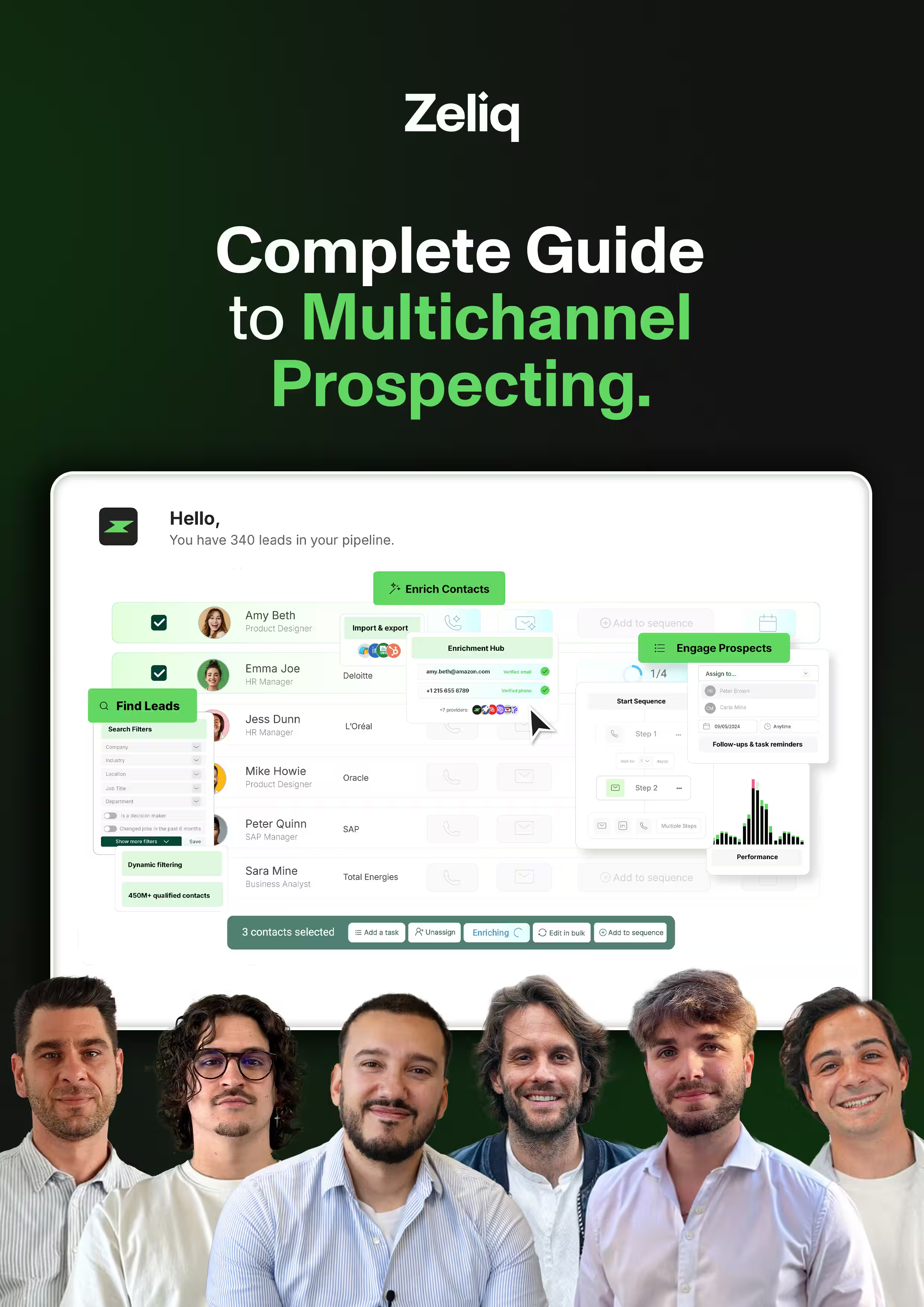
Grâce à ZELIQ, les commerciaux peuvent composer automatiquement des leads enrichis à partir d'un segment filtré de directeurs financiers en mode SaaS qui ont ouvert un e-mail de promotion au cours des dernières 24 heures.
Points clés à retenir :
- Définition du démarchage téléphonique : sensibilisation proactive sans contact préalable.
- Outils modernes : CRM, numéroteurs d'appels et listes de prospects enrichies.
- Objectif : établir des relations, qualifier les prospects et sécuriser les rendez-vous.
Le démarchage téléphonique sera-t-il mort en 2025 ?
La question revient souvent et la réponse courte est non.
Le démarchage téléphonique fonctionne toujours, mais uniquement s'il est effectué avec la bonne approche. Les prospects ne répondent plus aux présentations génériques ou aux scripts de vente précipités. Ils attendent de la pertinence et de la clarté d'une conversation qui respecte leur temps.
Des études récentes montrent que les appels à froid réussis génèrent toujours de bons rendements par rapport aux autres canaux. Les taux de conversion peuvent ne pas sembler aussi élevés que ceux de l'inbound marketing, mais le contact direct créé par un appel téléphonique est difficile à remplacer. Une courte discussion permet de qualifier un prospect et de le faire avancer dans le processus de vente en quelques minutes.
Il est important de se rappeler que « froid » ne signifie pas aléatoire.
Les techniques modernes de démarchage s'appuient sur des données enrichies, des listes de prospects segmentées et des outils qui aident les SDR à se concentrer sur les bons décideurs. Grâce à un meilleur ciblage, chaque appel a de meilleures chances de succès et ressemble plus à une introduction chaleureuse qu'à une interruption.
Un représentant utilisant ZELIQ a contacté 4 décideurs en un après-midi à l'aide d'une séquence pré-qualifiée contenant des signaux d'intention. Le démarchage téléphonique n'est pas mort, mais le mauvais appel l'est.
À quoi sert le démarchage téléphonique ?
L'objectif du démarchage téléphonique est simple : faire passer un étranger à une étape suivante, et non à une transaction conclue. Il permet de rester concentré sur l'élan et d'aligner chaque appel sur un résultat clair.
- Vendez la réunion, pas le produit : organisez l'appel en fonction de l'étape suivante (démonstration ou découverte de 10 minutes). Utilisez une courte déclaration de valeur liée à leur rôle ; ignorez la liste des fonctionnalités. Les appels à froid réussis se terminent par un événement du calendrier.
- Créer des liens humains à grande échelle : une voix en direct crée des relations plus rapidement qu'un texte. Les allers-retours en temps réel vous permettent de faire face aux problèmes et de gérer les objections commerciales sans délai. Faites preuve de légèreté dans votre argumentaire de vente ; posez une question pertinente, puis écoutez.
- Identification précoce des prospects qualifiés : utilisez deux diagnostics rapides (rôle et problème). Disqualifiez-vous rapidement lorsque l'ajustement est faible ; protégez votre pipeline. Un démarchage efficace améliore la génération de prospects en orientant rapidement les prospects solides vers le développement des ventes.
Cette discipline permet de garder l'entonnoir propre et de réduire le temps d'appel. Cela vous donne également des indicateurs plus clairs par rapport auxquels vous pouvez vous entraîner. Ces techniques de démarchage permettent de cibler les processus et de les rendre reproductibles, grâce à des indicateurs que vous pouvez suivre. Il transforme l'activité en pipeline et en revenus prévisibles.
En quoi consiste le processus de démarchage téléphonique ?
Le processus d'appel à froid suit un chemin clair qui consiste à prendre un nom sur une liste et à le transformer en une réunion réservée.
Cela commence par la prospection et doit s'inscrire dans un cadre clair plan de prospection qui aligne vos appels sur le reste de vos activités de sensibilisation.
Les représentants préparent des listes de prospects segmentées en fonction du rôle, du secteur d'activité ou de la taille de l'entreprise. Cela garantit que chaque appel commence dans son contexte et augmente les chances de réussite de la conversation.
Une fois la liste prête, le représentant entre dans la phase de préparation.
Une introduction courte est conçue, l'argumentaire de vente est simplifié et les objections de vente les plus courantes sont passées en revue. La préparation comprend également la pratique du ton et du rythme, car un appel à froid ne réussit que s'il semble naturel.
Pendant l'appel lui-même, l'objectif est simple.
Établissez rapidement une relation, expliquez la raison directe de votre contact et orientez la discussion vers la prochaine étape. Un appel à froid réussi permet rarement de conclure une transaction immédiatement, mais il permet de qualifier les intérêts et de garantir un rendez-vous qui fait avancer le processus de vente.
Les équipes de développement commercial modernes s'appuient sur les CRM, l'enrichissement des données et les numéroteurs d'appels pour assurer l'efficacité de ce processus. Avec les bonnes techniques de démarchage, les SDR peuvent filtrer les prospects faibles et se concentrer sur les meilleurs ajustements. Cela permet de maintenir la cohérence de la prospection. C'est ainsi que la structure transforme l'activité en pipeline.
ZELIQ vous permet de précharger votre ouvreur, de suivre les objections en temps réel et de créer des chemins de branchement en direct dans le flux d'appels.
Quels sont les 3 C du démarchage téléphonique ?
Chaque vendeur sait qu'un appel peut aller dans de nombreuses directions. Les 3 C structurent et font la différence entre une occasion manquée et un rendez-vous réservé.
- Clarté : Un appel à froid doit être clair dès le départ. Un représentant qui fait de la randonnée perd le prospect en quelques secondes. L'utilisation d'un script simple permet de transmettre un message précis : qui vous êtes, pourquoi vous appelez et quelle valeur vous apportez à leur entreprise. Clarity améliore le taux de connexion et témoigne du respect du temps passé par l'acheteur.
- Confiance : les prospects écoutent l'énergie avant de traiter les mots. Un ton confiant renforce la confiance, même lorsque le défi est difficile. La confiance est particulièrement importante lorsque vous parlez à un décideur qui reçoit des dizaines d'appels chaque semaine. Un représentant qui semble certain gagne la chance de poursuivre la conversation.
- Conversation : Le démarchage téléphonique n'est pas un monologue. Le représentant pose des questions, écoute les réponses et partage des informations importantes pour l'acheteur. Ce va-et-vient aide à établir des relations et donne au prospect le sentiment d'être entendu. Même lors d'un appel mobile, créer un dialogue transforme un simple pitch en un véritable échange.
Comment générer des prospects grâce au cold calling ?
La génération de prospects par le biais du démarchage commence par le bon sourcing. Les représentants ne se fient plus à des listes aléatoires. Ils utilisent LinkedIn Sales Navigator et des bases de données vérifiées pour identifier les meilleurs prospects. Cela garantit que chaque appel commence par un objectif clair.
L'étape suivante est la segmentation. Au lieu d'appeler tout le monde, les SDR organisent les prospects par rôle, taille de l'entreprise et point sensible. Un décideur d'une entreprise de taille moyenne est confronté à des défis différents de ceux d'un dirigeant d'une grande entreprise. Lorsque l'appel est adapté à la personne à l'autre bout de la ligne, le script semble pertinent et les chances de succès augmentent.
Un processus de démarchage efficace fonctionne également mieux lorsqu'il est soutenu par la technologie. Des plateformes comme ZELIQ permettent d'automatiser la prospection, d'enrichir les données de contact et de maintenir la cohérence du flux. Un représentant peut préparer un ouvre-porte en une minute. Cela leur permet de composer le numéro en toute confiance, puis d'envoyer un e-mail qui renforce l'appel.
L'objectif est de comprendre le prospect et d'évaluer s'il vaut la peine d'y consacrer plus de temps, c'est-à-dire qualifier un prospect avant d'investir davantage. Le cold calling génère de réelles opportunités lorsque chaque conversation est basée sur la pertinence et sur une prochaine étape claire du cycle de vente.
Qu'est-ce qu'un script de démarchage téléphonique ?
Un script de démarchage est un framework qui aide les commerciaux à orienter une conversation sans avoir l'air robotique. Il structure l'appel et garantit que les points essentiels sont couverts : ouvreur :
- hameçon
- proposition de valeur
- CTA clair.
Un bon script ne vous immobilise pas. Cela permet de rester concentré tout en s'adaptant aux besoins du prospect.
Les scripts commencent généralement par une courte introduction qui explique qui vous êtes et pourquoi vous appelez. À partir de là, le représentant utilise un crochet conçu pour capter l'attention dès les premières secondes. Il peut s'agir d'une référence spécifique au marché du prospect ou d'un aperçu rapide qui prouve que vous comprenez son défi.
Pendant l'appel, le script vous aide à qualifier les intérêts et à gérer les objections. Si vous faites face à un gardien, le script vous rappelle comment rester professionnel et vous rapprocher du décideur. Si vous contactez la bonne personne, le script garantit que vous apportez de la valeur avant de demander un rendez-vous.
Les scripts efficaces fonctionnent également sur tous les canaux. Lors d'un appel mobile ou d'une messagerie vocale, la clarté et le ton sont plus importants que la longueur. Un script bien préparé augmente le taux de connexion et transforme chaque appel en une opportunité de créer un pipeline.
Pour plus d'inspiration, vous pouvez explorer scripts d'appel à froid éprouvés qui ont été testés sur le terrain.
Quelle est la meilleure technique de démarchage ?
Il n'existe pas une seule astuce qui garantit le succès, mais quelques approches se démarquent car elles permettent de maintenir l'engagement du prospect et de faire passer l'appel à l'étape suivante. Les meilleures techniques allient structure et flexibilité, ce qui montre que le représentant comprend la personne qui se trouve de l'autre côté de la ligne.
- Interruption du schéma : la plupart des prospects s'attendent au même pitch. Briser ce rythme attire l'attention. Commencez par une question inattendue ou un aperçu rapide d'un rapport récent. Ce changement donne à votre campagne une sensation de fraîcheur et de simplicité.
- Promouvoir le « pourquoi maintenant » : au lieu de vous plonger dans les fonctionnalités, expliquez pourquoi le timing est important. Associez votre solution ou service à une évolution de leur marché ou à une politique qui a un impact sur leur travail. Faire preuve d'urgence facilite la clôture d'une réunion.
- Preuve sociale : au début de la conversation, mentionnez une entreprise qu'ils respectent ou un résultat de qualité que vous avez obtenu. Les prospects sont plus susceptibles d'écouter lorsqu'ils apprennent qu'une autre personne ou une autre équipe a résolu un défi similaire grâce à votre approche.
Comment gérer les objections au démarchage téléphonique ?
Chaque prospect a des objections, et cela signifie rarement que la conversation est terminée. La plupart sont des signaux qui indiquent qu'il faut plus de contexte ou de clarté. L'essentiel est de traiter les objections comme faisant partie du processus et non comme des obstacles. Une approche bien préparée permet de répondre plus facilement naturellement et de faire avancer l'appel.
Lorsqu'un prospect dit « pas intéressé », la meilleure pratique consiste à rediriger avec une valeur spécifique. Au lieu de clore l'appel, mettez en avant une idée pertinente ou racontez une courte histoire sur la façon dont d'autres entreprises ont résolu un défi similaire. Ce type de contenu attire l'attention et ouvre la porte à une seconde chance.
Une autre réponse courante est « envoyez-moi un e-mail ». Au lieu de le traiter comme un coup de pinceau, utilisez-le comme un outil de réengagement. Un court message contenant une offre ou une ressource claire peut vous aider à garder votre nom à l'esprit et à faciliter l'appel de suivi.
Les méthodes structurées telles que les arbres d'objections et la cartographie des réfutations aident les DTS à renforcer la confiance. Ils proposent des phrases testées et des scénarios pratiques qui améliorent les réactions lors d'appels réels. Gérer les objections ne consiste pas à pousser plus fort. Il s'agit de montrer que vous comprenez la cible et d'adapter la conversation jusqu'à ce que la prochaine étape de la vente vous paraisse naturelle.
Qu'est-ce que la règle des 80/20 en matière de démarchage téléphonique ?
La règle des 80/20 est l'une des techniques de démarchage les plus importantes. Il rappelle aux commerciaux qu'un appel doit être composé à 80 % d'écoute et à seulement 20 % de conversation. Trop de vendeurs se précipitent sur un argumentaire, mais les véritables progrès se produisent lorsque le prospect se sent entendu.
Une écoute attentive permet de repérer plus facilement les signaux qualifiés et d'éviter de perdre du temps avec le mauvais contact. Un client qui parle ouvertement d'un défi en est déjà à la moitié de l'évaluation de votre service. Le travail du représentant est de guider cette discussion, et non de la dominer.
- Posez de meilleures questions : les bonnes questions aident l'utilisateur à expliquer sa situation. Chaque réponse vous fournit des informations que vous pouvez utiliser pour personnaliser votre argumentaire de vente.
- Identifiez rapidement votre profil : si le prospect n'en a clairement pas besoin, disqualifiez-vous rapidement. Cela protège votre temps et votre pipeline.
- Parlez moins, écoutez plus : les gens font confiance aux représentants qui leur donnent de l'espace. Ils partageront des informations utiles si vous le leur permettez.
La règle des 80/20 est simple, mais elle change la façon dont vous apprenez de chaque appel. En écoutant d'abord, vous établissez un climat de confiance, vous découvrez des informations et vous n'orientez que les bons prospects vers l'étape suivante du processus de vente.
Quelles sont les 7 premières secondes d'un appel téléphonique ?
L'ouverture d'un appel à froid décide si le prospect reste en ligne ou raccroche. Au cours de ces sept premières secondes, le ton et le rythme comptent plus que les mots. Un départ confiant crée de la confiance, tandis que l'hésitation indique un ton faible. Maîtriser le démarchage téléphonique commence par la maîtrise de cette courte fenêtre.
- Ton et rythme : parlez clairement, avec une énergie qui vous semble naturelle. Si vous avez l'air pressé, le client n'écoutera pas. Si vous avez l'air plat, ils perdront tout intérêt. Gardez un rythme régulier que l'autre personne peut facilement lire.
- Écart de curiosité : au lieu de longues intros, suscitez l'intérêt avec un court commentaire ou un nouvel aperçu. Une phrase comme « J'ai remarqué que votre équipe vient de s'agrandir » donne envie au prospect de répondre à la question suivante.
- Des brise-glaces efficaces : utilisez des informations pertinentes à leur rôle ou à leur secteur d'activité. Cela montre que vous avez fait vos devoirs et donne l'impression que l'appel ne ressemble pas à un appel aléatoire.
- Évitez les phrases mortes : ne commencez jamais par « S'agit-il d'un appel de vente ? » ou des lignes génériques. Ils tuent Momentum instantanément.
Les sept premières secondes ont donné le ton à l'ensemble de la conversation commerciale. Si vous les gérez bien, il deviendra plus facile de faire un suivi, de poser de meilleures questions et de guider le prospect vers l'étape suivante.
Quel est le meilleur moment pour appeler à froid dans le domaine des ventes B2B ?
Le timing peut modifier le résultat d'un appel téléphonique. Dans les ventes B2B, les meilleurs résultats sont généralement obtenus le matin entre 8 h et 11 h, ou plus tard dans l'après-midi entre 16 h et 17 h 30. Pendant ces périodes, les décideurs sont plus disponibles et moins distraits par les réunions. Les appels passés à ces heures permettent souvent d'obtenir un taux de connexion plus élevé, ce qui signifie plus de chances de réserver des rendez-vous et de faire avancer la vente.
Il est tout aussi important d'éviter les heures de déjeuner et le lundi matin. La plupart des clients sont occupés à rattraper leur retard, et un appel à ces moments-là est plus susceptible d'être ignoré. Un vendeur intelligent prête attention à ces modèles et ajuste son plan.
Pourtant, il n'existe pas de réponse universelle. Les entreprises peuvent répondre à des heures différentes. La meilleure pratique consiste à effectuer des tests. Réalisez des expériences A/B, suivez les taux de connexion et affinez le calendrier en fonction de secteurs ou de postes spécifiques. Les logiciels modernes facilitent ce processus en enregistrant automatiquement les résultats.
Le démarchage téléphonique ne se limite pas au message. Il s'agit également de poser la bonne question au bon moment. Un commentaire bien placé ou un message d'ouverture prononcé alors que le prospect est disponible peut transformer une tentative ordinaire en une conversation productive.
Comment maîtriser le cold calling ?
Le démarchage s'améliore avec la pratique. Les représentants qui s'entraînent régulièrement améliorent leur prestation et réduisent les hésitations, ce qui finit par augmenter les taux de connexion. Le processus est similaire à celui de n'importe quelle compétence : la répétition permet de contrôler, tandis que la réflexion renforce la confiance.
Les appels simulés sont un moyen simple de progresser. L'écoute des enregistrements montre exactement où un terrain atterrit et où il perd la perspective. Vous entendez des moments où le ton baisse, lorsqu'une question ne semble pas claire ou lorsque le silence persiste trop longtemps. Chaque évaluation donne l'occasion de peaufiner.
Le coaching permet également d'accélérer les progrès. Les sessions entre pairs et les commentaires des managers fournissent des ajustements pratiques que vous pourrez appliquer lors du prochain appel. Un court commentaire après une conversation en direct peut modifier la façon dont un représentant gère les objections ou définit la valeur.
Les outils d'IA ajoutent désormais une couche supplémentaire. En analysant une série d'appels, ils mettent en évidence des tendances et fournissent des informations que vous pourriez ne pas remarquer vous-même. Cette vision axée sur les données transforme l'amélioration en quelque chose de mesurable et facile à suivre.
Maîtriser le cold calling signifie combiner la répétition, le feedback et la technologie en un seul système. Chaque appel fait partie d'un cycle plus vaste au cours duquel les compétences s'améliorent et la confiance en soi augmente. Le pipeline des ventes bénéficie de conversations de meilleure qualité.
Quelles sont les techniques de démarchage efficaces ?
Le démarchage téléphonique donne de meilleurs résultats lorsque l'approche va au-delà d'une simple conversation. Les représentants qui combinent les méthodes font avancer le pipeline et créent davantage d'opportunités de suivi. Quelques techniques éprouvées se démarquent car elles ajoutent de la structure sans donner l'impression que l'appel est scripté.
- Superposition de messages vocaux : au lieu de laisser un long message, laissez une séquence de courts messages vocaux sur plusieurs jours. Chacun ajoute un nouvel angle : une mise à jour, une statistique rapide ou un rappel. Cela permet de garder votre nom familier sans surcharger le contact.
- Combinaison d'appels et de réseaux sociaux : le fait de se connecter sur LinkedIn avant ou après un appel permet de mieux communiquer. Lorsqu'un prospect consulte votre profil, lit une publication récente ou remarque une connexion partagée, le prochain appel est moins intrusif. Ce mélange transforme une introduction à froid en un échange plus naturel.
- Des recommandations plutôt que des présentations : lorsqu'une conversation s'arrête, demandez si un autre membre de l'équipe bénéficierait d'une discussion. Les gens sont plus enclins à vous orienter vers un collègue qu'à accepter eux-mêmes un rendez-vous. Ce petit pivot permet souvent de découvrir de nouveaux contacts au sein d'un même compte.
Les techniques efficaces n'ajoutent pas de pression. Ils créent une dynamique et intègrent chaque tentative à un rythme plus large qui donne des résultats.
Une équipe a diffusé 3 courts messages vocaux via ZELIQ pendant 5 jours. Résultat : un taux de rappel de 12,5 %, soit le triple de la moyenne précédente.
Quels conseils améliorent le succès du démarchage téléphonique ?
De petits changements de comportement font souvent la plus grande différence lors d'un appel. Le démarchage téléphonique ne concerne pas seulement le script ou le timing, mais aussi la façon dont le représentant se présente au cours de ces quelques minutes de conversation.
Le fait de se lever pour appeler crée de l'énergie. Le langage corporel influe sur le ton, et les prospects remarquent immédiatement la différence. Une voix forte retient l'attention, tandis qu'une livraison plate la perd. L'utilisation d'une simple feuille d'appel permet de mettre de l'ordre dans le processus. Au lieu de jongler entre les notes et les onglets, le représentant suit les résultats au même endroit, voit les tendances et s'adapte plus rapidement.
Même quelque chose d'aussi subtil que le sourire a un impact. Les prospects entendent de la chaleur dans une voix. Un ton détendu renforce la confiance et rend l'échange moins transactionnel.
- Levez-vous : ton plus fort, meilleure concentration
- Feuille d'appel : structure et suivi clair
- Sourire : confiance et accessibilité
Ces conseils peuvent sembler basiques, mais ils influencent la façon dont les prospects réagissent. Un appel qui semble humain a plus de chances d'avancer. La maîtrise des petits détails crée de la cohérence, et la cohérence est source de résultats. Au fil du temps, ces habitudes transforment les appels à froid, issus de tentatives isolées, en un canal fiable de croissance.
Quels conseils de démarchage ajouteriez-vous ?
Les meilleurs conseils ne proviennent pas toujours des manuels de formation. Cela vient souvent des personnes qui passent chaque jour au téléphone. Les communautés d'appels à froid regorgent de leçons que les SDR peuvent appliquer immédiatement, et elles mettent en évidence ce qui fonctionne réellement dans la pratique.
- Contributions d'experts : les coachs de vente mettent l'accent sur les principes de base qui ne s'effacent jamais, un ton clair, une formulation simple et le respect du temps passé par le prospect. Ces rappels permettent de garder les appels ciblés et efficaces.
- Des informations issues de sources participatives : les plateformes telles que Reddit, SalesStack ou Bravado regorgent de fils de discussion dans lesquels les représentants partagent ce qui a fonctionné hier, et non l'année dernière. Qu'il s'agisse de nouveaux outils ou de nouvelles manières de gérer les objections, ces espaces proposent des tactiques qui semblent actuelles et réelles.
- Anecdotes des représentants : Les personnes les plus performantes expliquent souvent comment un petit ajustement a modifié leurs résultats. Il peut s'agir de faire une pause après une question, de recadrer un rejet ou d'effectuer un suivi à un autre moment de la journée. Ces histoires donnent vie à l'appel à froid et montrent comment de petits changements peuvent donner de meilleurs résultats.
L'ajout de ces voix crée une perspective. Le démarchage téléphonique n'est pas maîtrisé isolément, il s'améliore lorsque les représentants apprennent les uns des autres. Testez de nouvelles approches fondées sur des habitudes éprouvées issues directement du terrain.
Quel est le meilleur conseil d'appel à froid que vous puissiez donner à quelqu'un ?
Le meilleur conseil à donner à tous ceux qui débutent par le démarchage téléphonique est simple : ne vendez pas, qualifiez-vous. Un appel téléphonique n'est pas une étape pour un argumentaire raffiné, c'est un moment pour comprendre si la personne de l'autre côté vaut plus de temps. En mettant l'accent sur la qualification, vous protégez votre énergie et vous respectez le temps du prospect. Cela permet de maintenir la santé de votre pipeline.
Un autre principe est de diriger avec curiosité et de clôturer avec pertinence. La curiosité ouvre la porte car elle montre au prospect que vous voulez apprendre. Poser de véritables questions sur leur rôle, leurs défis ou leurs objectifs crée un espace pour un véritable échange. La pertinence ferme alors la boucle. Une fois que vous avez écouté, vous reliez votre offre à ce qu'ils ont partagé. Ce changement transforme un argumentaire générique en une conversation significative.
Enfin, la pratique est importante. Trop de représentants réfléchissent à leurs lignes en silence. Le démarchage téléphonique s'améliore lorsque vous vous entraînez à voix haute, que vous entendez votre propre ton et que vous ajustez votre rythme. Dire les mots renforce la confiance et élimine les hésitations lorsque cela compte.
Le démarchage téléphonique est un succès lorsque curiosité, pertinence et pratique cohérente se rencontrent. Ces habitudes transforment les appels interrompus en conversations qui font avancer à la fois le prospect et le représentant.
Le démarchage téléphonique est-il illégal ?
Le démarchage téléphonique est légal sur la plupart des marchés, mais il est régi par des règles strictes visant à protéger les particuliers et les entreprises. Les représentants qui ignorent ces cadres s'exposent à des amendes et à une atteinte à la réputation de leur entreprise.
Les différentes régions ont leurs propres normes. En Europe, le RGPD exige que les prospects aient un lien d'intérêt légitime avec la campagne de sensibilisation et qu'ils puissent facilement se désinscrire. Aux États-Unis, le CCPA et la liste fédérale des numéros de téléphone exclus fixent des limites quant aux personnes pouvant être contactées et à quel moment. De nombreux autres pays appliquent leurs propres lois locales que chaque vendeur doit comprendre avant de composer un numéro.
Quelques éléments essentiels ressortent du lot :
- Gestion des désinscriptions : respectez toujours la demande d'arrêt de communication d'un prospect.
- Listes DNC : consultez régulièrement vos listes d'appels pour éviter les numéros restreints.
- Outils conformes : utilisez des plateformes qui suivent le consentement et filtrent automatiquement les contacts bloqués.
Lorsque la conformité fait partie intégrante du processus, le démarchage devient un canal de croissance durable. Le respect des règles témoigne du respect pour le prospect et renforce la confiance dès la première interaction, ce qui facilite l'ensemble du processus de vente.
Comment obtenir une liste d'appels non sollicités ?
La qualité de votre liste d'appels à froid détermine la qualité de vos résultats. Une liste complète vous donne des contacts pertinents, tandis qu'une liste faible vous fait perdre du temps. Il existe plusieurs façons de le construire, chacune ayant ses avantages et ses inconvénients.
- Grattage : rapide mais risqué. Les données sont souvent obsolètes et des problèmes de conformité peuvent survenir.
- Achat : fournit du volume, mais les listes sont rarement précises et peuvent inclure de mauvais prospects.
- Enrichissement : la meilleure option. Des données vérifiées, mises à jour régulièrement et adaptées à votre profil client idéal.
Les flux de travail modernes associent LinkedIn à des outils tels que ZELIQ pour enrichir les contacts, qualifier les rôles et supprimer les doublons. Cela crée une approche ciblée où chaque numéro de la liste est contextualisé.
Les listes froides incluent les personnes qui n'ont jamais interagi avec votre marque. Les listes chaudes contiennent des contacts qui se sont déjà engagés, peut-être par le biais d'un téléchargement ou d'un événement. Connaître la différence aide les représentants à adapter leur portée.
Cold calling et cold emailing : quelle est la différence ?
Les deux canaux visent à démarrer des conversations, mais ils fonctionnent de différentes manières. Savoir quand composer et quand envoyer un e-mail aide les commerciaux à optimiser les résultats.
- Cold calling : idéal pour le dialogue en temps réel. Un appel crée un feedback instantané, établit une relation et permet de qualifier rapidement un prospect. Cela fonctionne bien lorsqu'il s'agit de cibler les décideurs ou lorsque des objections sont attendues.
- Courrier électronique à froid : évolue plus rapidement et est facile à automatiser. Les e-mails permettent de partager davantage de contexte, de liens ou de ressources. Ils laissent également le prospect répondre à son propre rythme.
- Taux de conversion : les appels atteignent souvent des taux de connexion plus élevés, tandis que les e-mails sont plus performants en termes de volume. La combinaison des deux augmente les chances de succès.
La stratégie de sensibilisation la plus efficace combine les deux. Un appel rapide après un e-mail, ou un e-mail après un message vocal, permet de maintenir l'attention et de faire avancer le processus de vente sans trop insister.
Si vous souhaitez avoir un aperçu plus large de la diffusion multicanale, vous pouvez également consulter notre guide ultime de la prospection commerciale.
Indicateurs de démarchage et indicateurs de performance clés à suivre
Le démarchage téléphonique ne s'améliore que lorsqu'il est mesuré. Sans indicateurs clairs, il est impossible de savoir si votre campagne de sensibilisation est efficace ou si des changements sont nécessaires. Le suivi des performances permet aux commerciaux de suivre les progrès, d'ajuster leur approche et de prouver l'impact de leurs appels sur le pipeline de ventes.
L'un des chiffres les plus importants est le taux d'appel pour se connecter. Cela montre combien de cadrans mènent réellement à une conversation avec un prospect. Un taux faible peut signifier que la liste est faible ou que l'heure des appels doit être modifiée. Le ratio de connexion par réunion mesure ensuite le nombre de conversations converties en rendez-vous planifiés. C'est là que l'habileté à établir des relations et à gérer les objections devient visible.
Un autre indicateur clé est le taux de retour des messages vocaux. Même lorsque le prospect ne répond pas, un message clair et professionnel peut générer un rappel. Lorsque ces trois indicateurs sont suivis de manière cohérente, les équipes commerciales obtiennent des informations sur la qualité, et pas seulement sur le volume, et créent un processus fiable de croissance.
ZELIQ connecte les données du composeur aux résultats du CRM. Vous pouvez voir non seulement qui a répondu, mais aussi qui s'est converti.
Comment ZELIQ vous aide à faire du démarchage téléphonique
Le démarchage téléphonique est plus facile à mettre à l'échelle lorsque la technologie appropriée prend en charge le processus. ZELIQ a été conçu pour simplifier le travail manuel afin que les représentants puissent se concentrer sur ce qui compte le plus : les conversations avec les prospects.
- Enrichissement et séquençage automatisés des leads : au lieu de perdre du temps à rechercher des contacts, ZELIQ enrichit les données instantanément. Les représentants obtiennent des chiffres précis, des rôles mis à jour et le contexte qu'ils peuvent utiliser dans les premières secondes d'un appel. Les séquences garantissent qu'aucun plomb ne passe entre les mailles du filet, et les suivis sont programmés pour un impact maximal.
- Intégration du CRM : chaque numéro, chaque messagerie vocale et chaque réunion réservée sont transférés directement dans le CRM. Cela simplifie les rapports et permet de garder le pipeline des ventes visible à la fois pour les DTS et les responsables. Un suivi clair montre comment chaque appel contribue à la conversion.
- Playbooks et modèles : ZELIQ fournit des scripts testés et des cadres d'appel qui guident les représentants dans différentes situations. Qu'il s'agisse de traiter une objection courante ou de prendre rendez-vous avec un décideur, le représentant dispose d'une référence qu'il peut adapter rapidement.
En combinant automatisation et structure, ZELIQ aide les équipes commerciales à rester cohérentes et à augmenter les taux de connexion afin de transformer le démarchage téléphonique en un moteur prévisible du pipeline.
Le cold calling n'a jamais disparu, il a évolué. En 2025, il reste l'un des moyens les plus fiables d'entrer en contact avec des prospects, de qualifier l'intérêt et de maintenir un pipeline de ventes solide. Qu'il s'agisse de comprendre l'objectif d'un appel ou d'appliquer les 3 C, chaque technique que vous utilisez crée une dynamique. Le succès provient d'une structure et d'une pratique cohérente associées à une utilisation intelligente des outils qui simplifient le processus.
Ce qui compte le plus, c'est que chaque conversation soit réelle. Les prospects réagissent lorsque les vendeurs écoutent et s'adaptent.
Avec des processus clairs, des scripts testés et un bon état d'esprit, même une introduction froide peut devenir une opportunité commerciale.
Le démarchage téléphonique n'est plus une conjecture, c'est une compétence qui peut être maîtrisée.
Êtes-vous prêt à faire passer votre stratégie d'appel au niveau supérieur ? Commencez avec ZELIQ dès aujourd'hui et transformez chaque appel de prospection en une étape mesurable vers la croissance.
Enter the future of lead gen
Table of contents
Placeholder Title
Table of contents
Placeholder Title
Placeholder Title